


Table of Contents
- A Few Words from the Heart
- What You Need to Know Before Buying Crypto
- How to Choose a Reliable Exchange
- Complete Exchange Registration Process
- First Trade Practical Guide
- Pitfalls I've Already Stepped Into
- FAQ
A Few Words from the Heart
To be honest, my hands were shaking when I first bought crypto.
It was an afternoon in 2021. I stared at the exchange interface for a full half hour—afraid of being scammed, afraid of making a mistake, afraid that once I sent the money, the coins would vanish. Finally, I gritted my teeth and bought 0.01 Bitcoin. I even took a screenshot and sent it to a friend, saying, "If this money disappears, remember to treat me to a meal."
Looking back now, most of those worries were unnecessary. But I understand that as a beginner, facing an unfamiliar trading platform, an unfamiliar interface, and unfamiliar blockchain concepts, it's normal to have concerns.
This article is written for myself from six years ago. I'll use the simplest language to tell you how to start from zero and safely buy your first cryptocurrency.
What You Need to Know Before Buying Crypto
What Exactly Is Cryptocurrency?
In plain English: A digital asset that exists only on the internet.
You don't need to understand terms like "distributed ledger" or "asymmetric encryption." Just know:
- Bitcoin (BTC) is like digital gold—limited supply, many use it for value storage
- Ethereum (ETH) is like digital oil—it powers various applications, more versatile
- Currently, one BTC is worth tens of thousands of USD, one ETH is worth thousands of USD (data from June 2026)
Frankly, these coins are highly volatile. You might buy today and see a 20% drop tomorrow, or a 20% gain. So my advice is: Only invest money you can afford to lose.
What Do You Need to Prepare?
Three things:
- ID card - Legitimate exchanges require identity verification (KYC)
- Phone number - To receive verification codes
- Bank card or Alipay/WeChat Pay - To deposit fiat currency
The whole process takes about 10-15 minutes, much simpler than opening a stock account.
How to Choose a Reliable Exchange
Comparison of Mainstream Exchanges
Currently, the more reliable exchanges on the market include:
| Exchange | Features | Suitable For |
|---|---|---|
| Binance | Largest globally, many coins, low fees | Experienced users, want to trade multiple coins |
| OKX | User-friendly interface, many beginner tutorials, good Chinese support | Best for pure beginners |
| Coinbase | US-listed, strictly regulated | Overseas users, seeking compliance |
I use both OKX and Binance myself. If it's your first time buying crypto, I recommend OKX—the registration process is smoother, and customer service responds faster.
A Real Judgment Standard
Just two things to check when choosing an exchange:
- Can you deposit and withdraw normally? - Some small exchanges make it easy to deposit but hard to withdraw
- Is there 24/7 customer service? - So you can reach someone if something goes wrong
Any platform that promises "high returns" or "guaranteed profits" should be blacklisted. Legitimate exchanges only provide trading services; they don't promise returns. To find the best fit for you, see our top 5 crypto exchanges for beginners in 2026.
Complete Exchange Registration Process
Step 1: Download the APP
Go to the app store and search for "OKX" or "Binance," making sure to identify the official icon. Alternatively, scan the QR code on the official website.
Important reminder: Don't search for "Bitcoin download" on Baidu—you might easily download a fake app. A friend of mine fell for that, and the money he transferred vanished.
Step 2: Register an Account
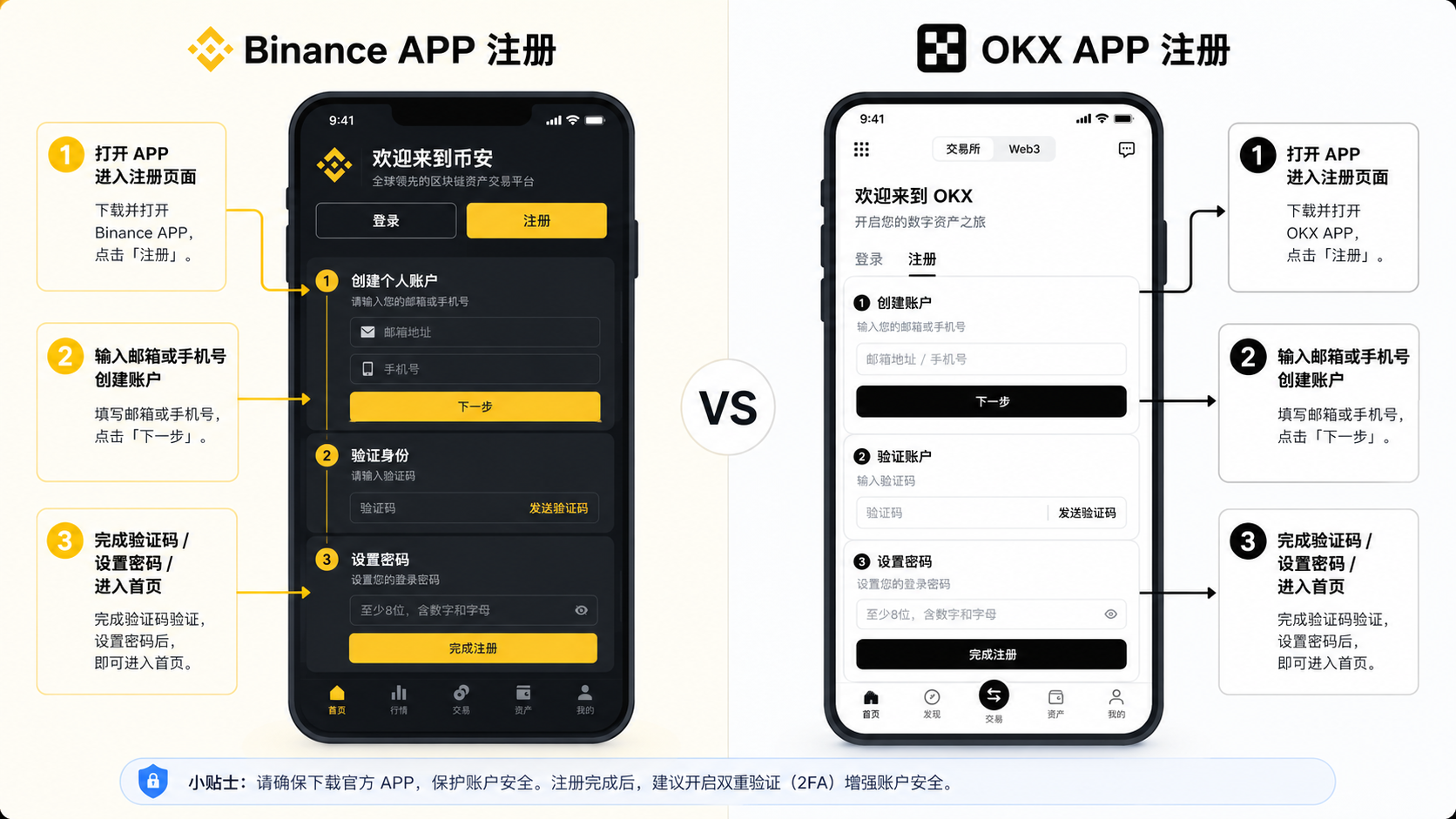
Open the APP and click "Register":
- Enter your phone number and get the verification code
- Set a login password (make it complex)
- Set a fund password (used for withdrawals, separate from the login password)
A small detail here: I recommend enabling Google Authenticator (2FA). It's a bit more trouble, but much more secure. I didn't bother at first, but after my account was hacked once, I was scared into binding it overnight.
Step 3: Identity Verification (KYC)
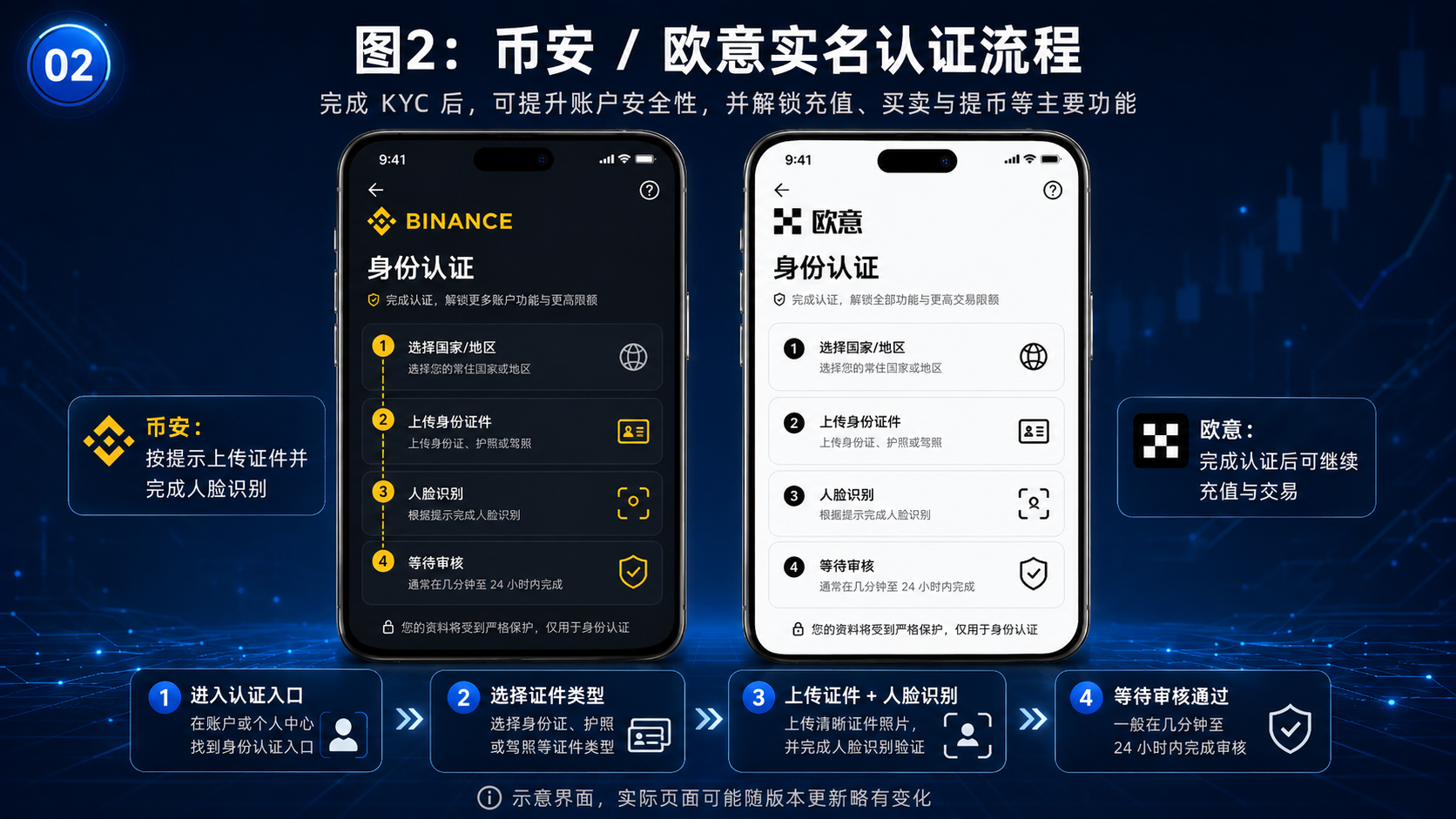
Click "Identity Verification," upload the front and back of your ID card, and complete a facial recognition scan.
The review usually takes a few minutes to a few hours. Mine passed in about 20 minutes. If it hasn't passed after 24 hours, contact customer service.
First Trade Practical Guide
Deposit Fiat Currency
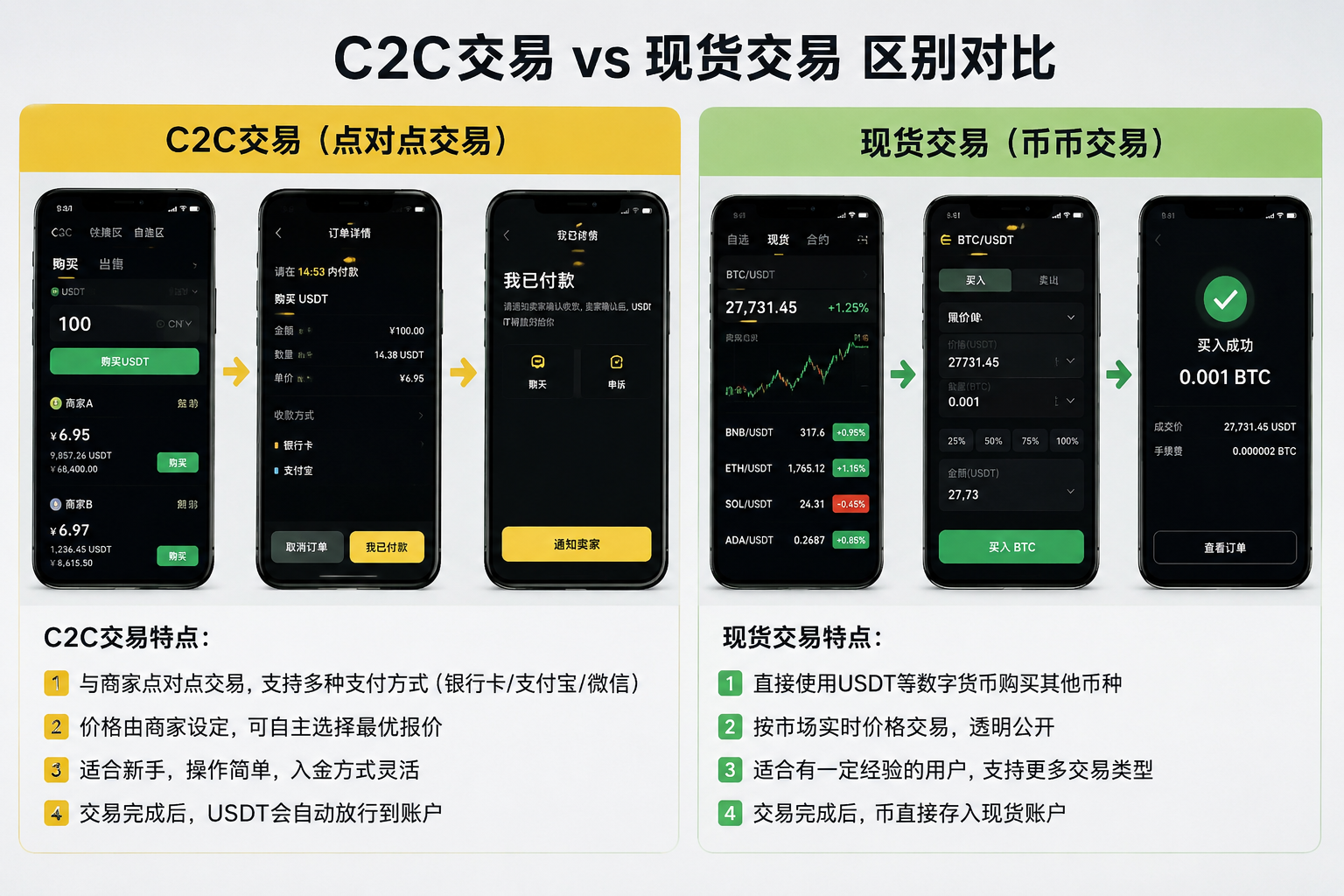
After registration, click "Buy Crypto" or "C2C Trading":
- Select "I want to buy crypto"
- Choose a payment method (bank card/Alipay/WeChat Pay)
- Enter the amount you want to buy, e.g., 100 CNY
- The system will match you with a merchant; follow the prompts to pay
- After payment, click "I have paid" and wait for the merchant to release the coins
This process is called C2C trading, essentially a private transaction guaranteed by the platform. You send money to the merchant, and the merchant sends the coins to your exchange account. For tips on avoiding frozen cards during C2C, see our Binance C2C guide: anti-freeze tips and full workflow.
Note: Be sure to include the memo requested by the merchant when transferring; don't write words like "Bitcoin" or "buy crypto"—the bank might flag it. I once wrote "BTC" and my transfer was stuck for 3 days.
First Purchase
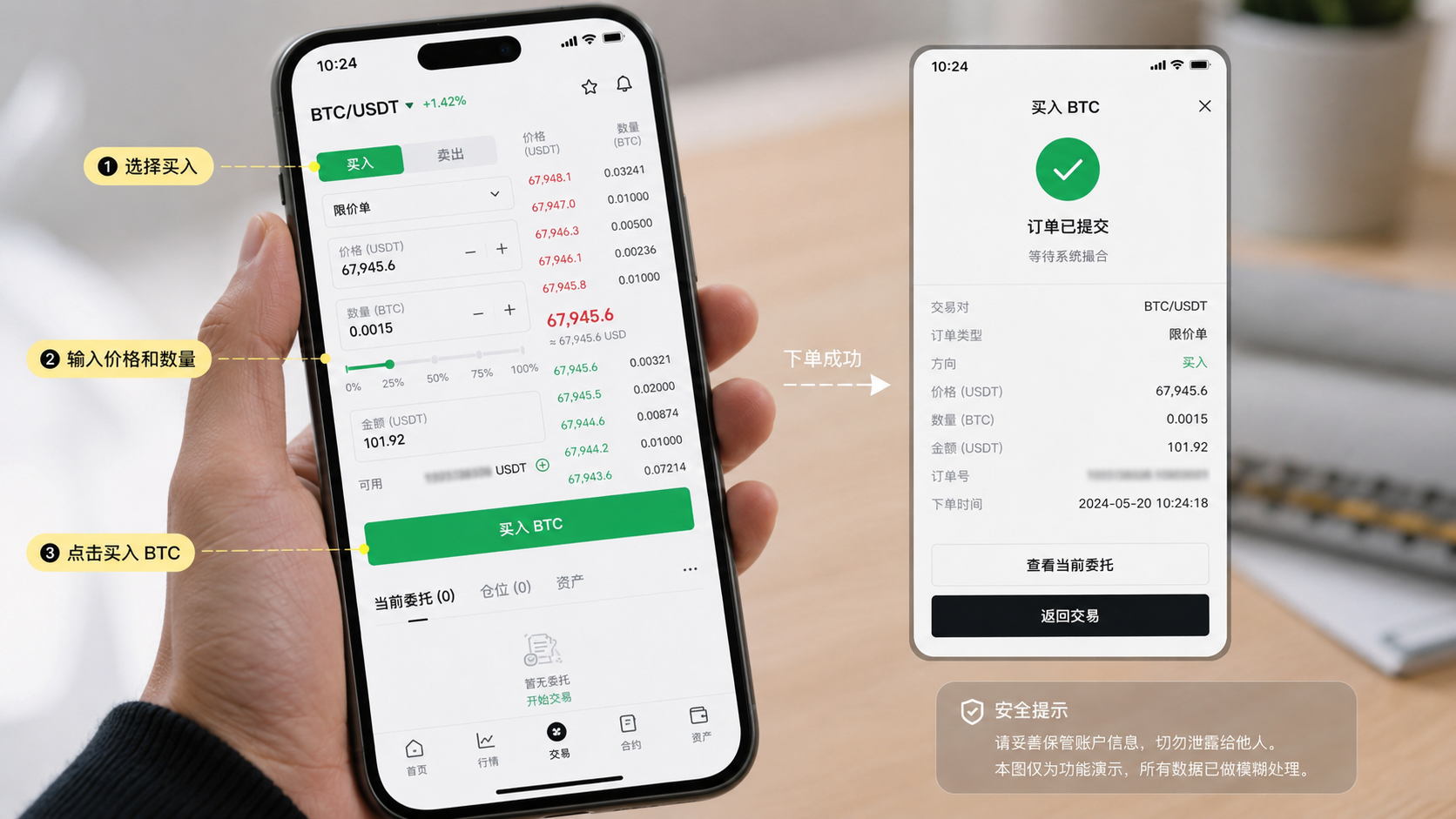
Once the funds arrive, click "Trade" → "Spot":
- Search for the coin you want to buy, e.g., "BTC" or "ETH"
- Choose "Limit Order" or "Market Order"
- Market order: Executes immediately at the current price, suitable for beginners
- Limit order: Set a target price, and it buys automatically when reached
- Enter the amount to buy and click "Buy"
After a successful purchase, the coins will be in your account. You can see your holdings on the "Assets" page.
Small Test
I strongly recommend starting with just 100-200 CNY to test the waters. Once you're familiar with the whole process, consider increasing the amount. Every experienced player I know started small.
Pitfalls I've Already Stepped Into
Pitfall 1: Fees Eating Profits
Exchange fees vary widely. Spot trading fees are usually around 0.1%, but some small platforms charge 0.5% or even more.
Also, watch out for merchant premiums when buying via C2C. Some merchants quote prices 1-2% higher than the market rate, which adds up. Compare multiple options.
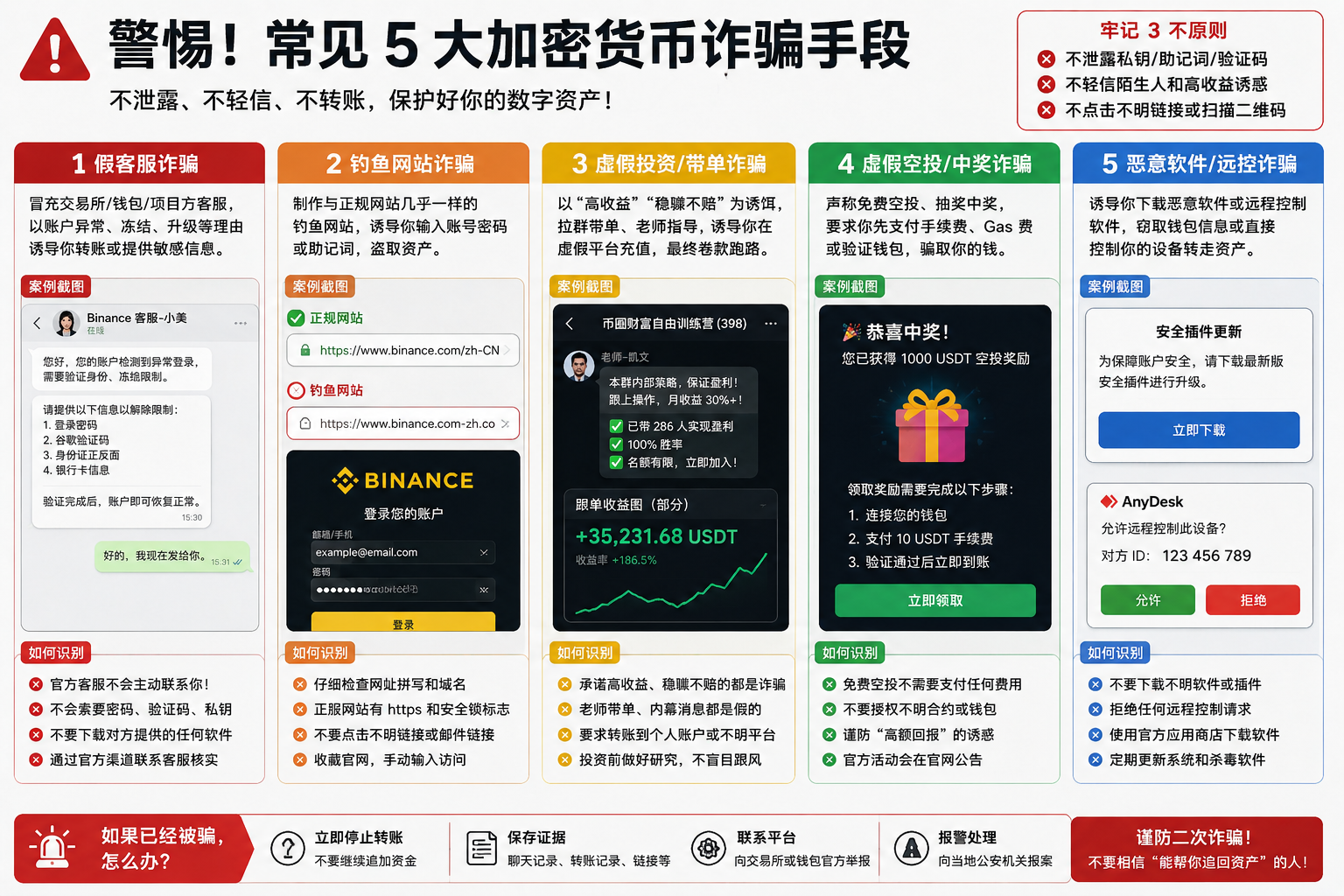
Pitfall 2: Fake Customer Service Scams
This is the most common scam. Scammers pose as exchange customer service, adding you on WeChat or QQ, claiming "account anomaly" or "need verification."
Remember: Legitimate exchange customer service will never proactively add you on WeChat, let alone ask you to transfer funds to a "secure account." For issues, contact official customer service within the APP.
Pitfall 3: Seed Phrase Leak
If you buy coins and want to transfer them to your own wallet, you'll generate a seed phrase (12 English words). This is equivalent to your bank password + bank card—never tell anyone.
I've heard too many stories: someone took a photo of their seed phrase and stored it in the cloud, and hackers stole it; someone told "customer service" to verify their identity, and their coins were transferred away.
Pitfall 4: High Leverage Liquidation
Exchanges offer "futures trading" with leverage (e.g., 10x, 50x). This means gains and losses are amplified.
Beginners should never touch this. I've seen too many people who just wanted to buy some coins but accidentally got into futures and lost everything overnight. Just stick to spot trading and avoid leverage.
Summary
Buying crypto is actually not that complicated. The core steps are just three:
- Register an exchange account and complete identity verification
- Deposit fiat currency via C2C
- Buy on the spot market
The whole process is similar to online shopping, except the product is cryptocurrency.
But I must remind you again: Cryptocurrency is a high-risk investment—you can make money or lose money. My advice is to start with a small amount to learn, and only consider increasing your investment once you truly understand it.
Honestly, after years in crypto, I've seen people get rich overnight and others lose everything. Staying rational and controlling risk is more important than any technique.
FAQ
Q1: What's the minimum amount needed to buy crypto? A: Most exchanges allow you to start with 100-200 CNY. BTC and ETH can be bought in fractions, e.g., 0.001 BTC. It's recommended to start small to learn the process, rather than going all in immediately.
Q2: Will the exchange run away? Is my crypto safe? A: Choosing large platforms like Binance or OKX carries very low risk of exit scams. However, if you hold a significant amount (e.g., over 100,000 CNY), consider buying a hardware wallet (cold wallet) and transferring your coins there. The exchange is like a "bank," while a hardware wallet is like a "home safe."
Q3: Will my bank card be frozen? A: It's possible. If a merchant is involved in money laundering, and their funds pass through your account, the bank may flag it. It's advisable to use a less frequently used bank card for transactions, keep individual amounts small (under 50,000 CNY is relatively safe), and avoid frequent transfers.
Q4: Is it too late to buy crypto now? Is entering in 2026 too late? A: This is a difficult question to answer. The market goes up and down, and the situation in 2026 is completely different from 2021. I can only say: don't enter with a mindset of "guaranteed profits." Treat cryptocurrency as an asset allocation (like gold) rather than a get-rich-quick tool, and your mindset will be much better.
Q5: Besides Bitcoin and Ethereum, what other coins are worth buying? A: For beginners, it's recommended to first understand BTC and ETH before buying others. There are thousands of coins on the market, most of which are scams or "air coins." If you really want to diversify, you can look at the top 20 coins by market cap (check on CoinMarketCap), but don't exceed 20% of your total funds.