


Table of Contents
- What Are Perpetual Futures?
- Introduction to Binance Futures Trading Interface
- How to Choose Leverage?
- Cross vs Isolated: Margin Mode Explained
- Funding Rate: The Cost You Must Monitor When Holding Positions
- How to Execute Your First Futures Trade
- Risk Control Strategies for Futures Trading
- Common Beginner Mistakes and Avoidance Tips
- Further Reading
What Are Perpetual Futures?
Perpetual futures are cryptocurrency derivative contracts with no expiration date, allowing you to go long (betting on price increases) or go short (betting on price decreases) and amplify investment returns using leverage.
Unlike traditional futures contracts, perpetual futures do not expire or settle, so you can hold them indefinitely—as long as your position is not liquidated. They use a funding rate mechanism to keep the contract price closely aligned with the spot price.
💡 Not registered on Binance yet? If you don't have a Binance account, you can first spend 5 minutes completing the account opening and deposit process with the 2026 Binance Registration Complete Guide.
Perpetual Futures vs Spot Trading
| Comparison | Spot Trading | Perpetual Futures |
|---|---|---|
| Asset Ownership | ✅ Actually hold coins | ❌ Only price contracts |
| Leverage | 1x (no leverage) | Up to 125x |
| Short Selling | ❌ Not supported | ✅ Supported |
| Liquidation Risk | ❌ None | ✅ Yes |
| Suitable For | Beginners, long-term holders | Advanced traders, hedging needs |
If you are not yet familiar with spot trading, it is recommended to first read Binance Spot Trading Complete Tutorial to master the basics before attempting futures trading.
Introduction to Binance Futures Trading Interface
📺 Prefer a visual walkthrough of the order panel and leverage? Watch the Binance futures trading panel video.
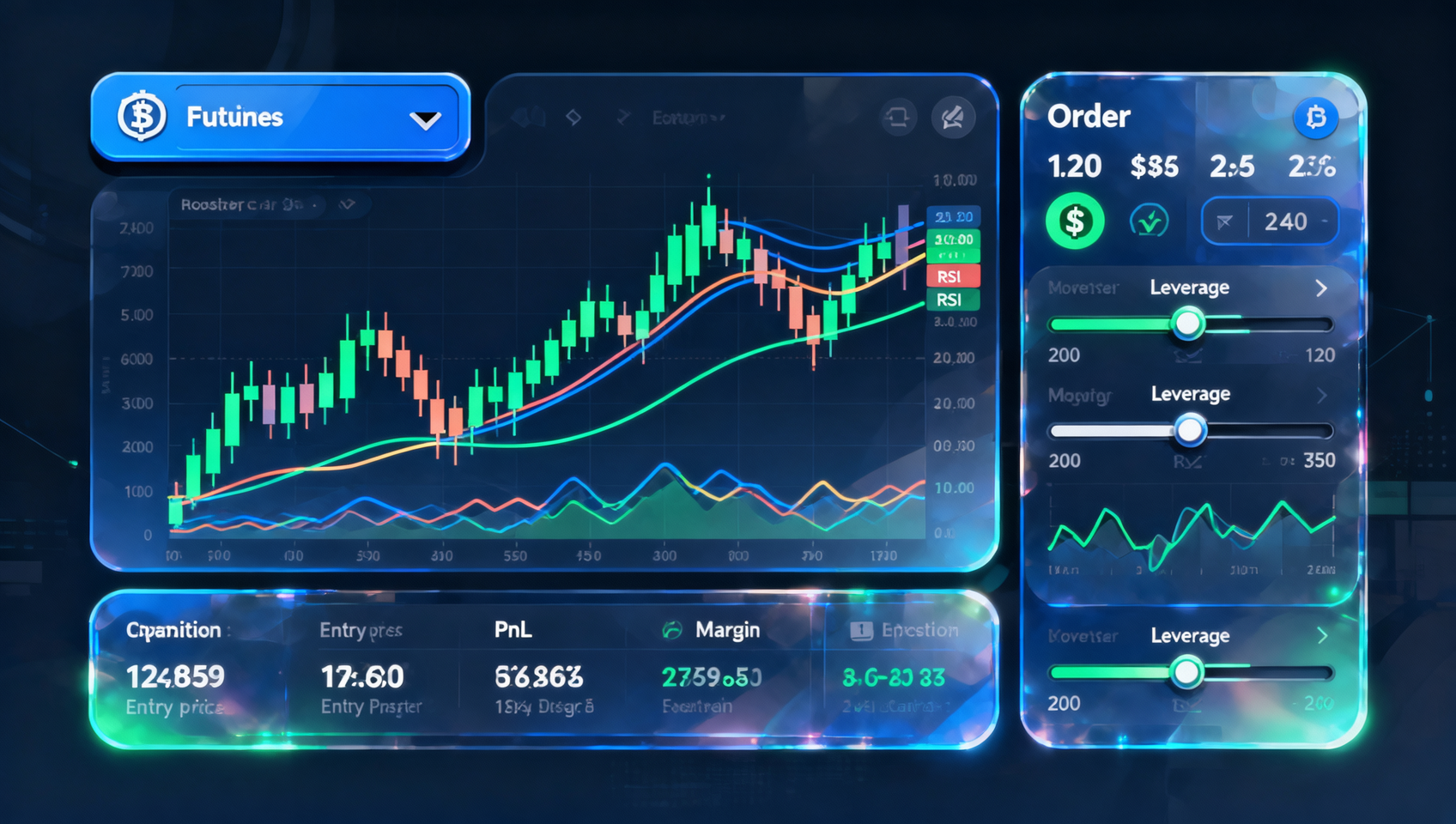
After logging into Binance, click "Trade" → "Futures" in the top menu to enter the USDT-margined perpetual futures interface. The entire interface is mainly divided into several areas:
| Area | Location | Function Description |
|---|---|---|
| Trading Pair List | Left side | Select the contract coin you want to trade |
| Candlestick Chart | Middle area | Display price trends and technical indicators |
| Order Panel | Bottom right | Set leverage, choose order type, enter price and quantity |
| Position Information | Bottom | View current positions, P&L, and margin status |
How to Choose a Trading Pair?
Binance futures supports hundreds of trading pairs, including:
- Major Coins: BTC/USDT, ETH/USDT—best liquidity, lowest slippage
- Large Altcoins: SOL/USDT, XRP/USDT, DOGE/USDT
- Stock Tokens: NVDA/USDT, TSLA/USDT (via equity perpetuals)
- Small Market Cap Tokens: Various newly listed contracts
Beginners are advised to trade only BTC/USDT and ETH/USDT, as these trading pairs have the best liquidity, most stable funding rates, and are the least manipulated contract markets.
How to Choose Leverage?
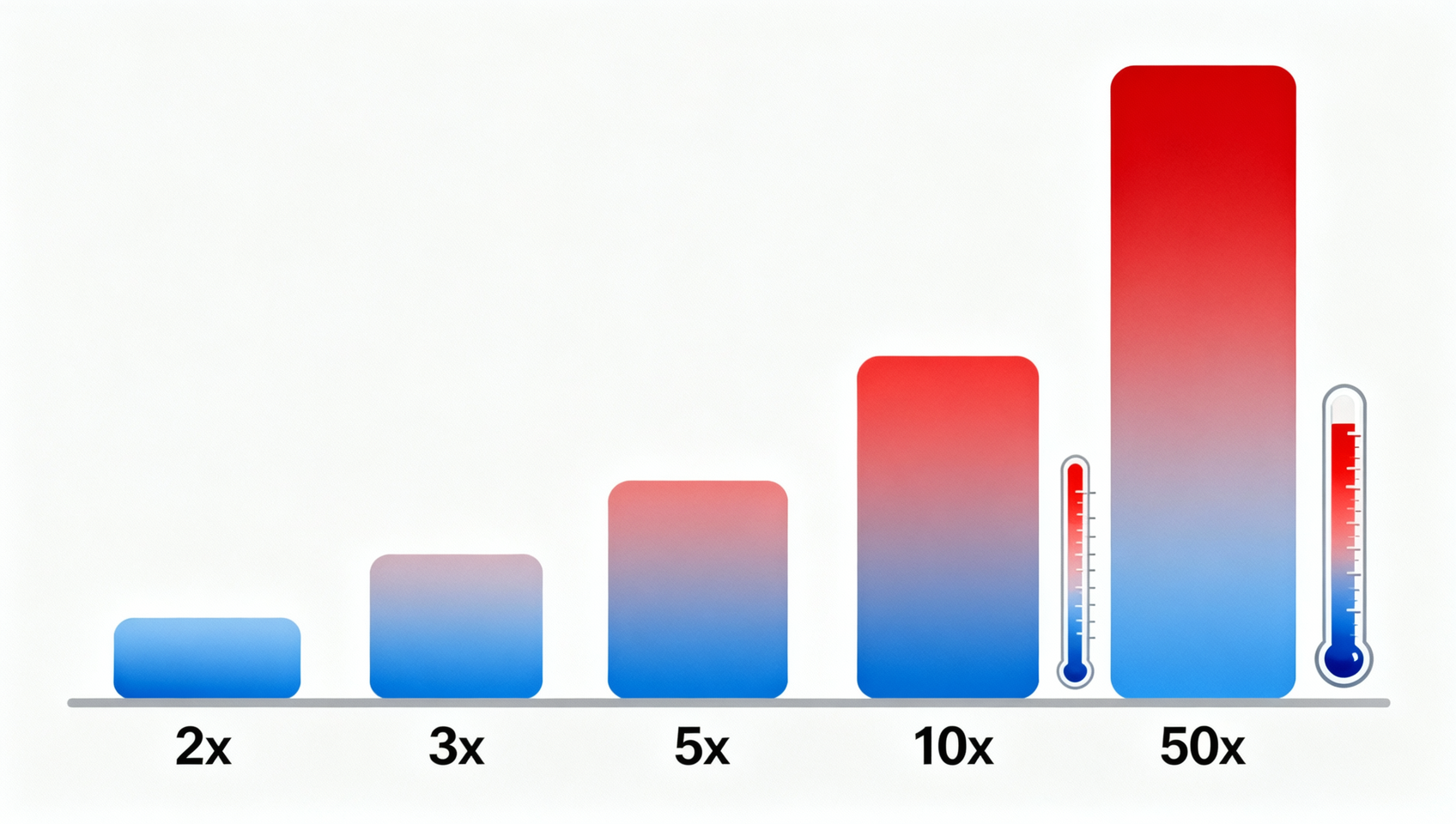
Leverage is a double-edged sword—it can amplify gains, but it also amplifies losses. Choosing your leverage multiple is the first decision you need to make before trading futures.
Actual Impact of Different Leverage
Assume you use 100 USDT as capital to go long on BTC:
| Leverage Multiple | Controlled Position | BTC Up 2% Profit | BTC Down 2% Loss |
|---|---|---|---|
| 2x | 200 USDT | +4 USDT (+4%) | -4 USDT (-4%) |
| 5x | 500 USDT | +10 USDT (+10%) | -10 USDT (-10%) |
| 10x | 1,000 USDT | +20 USDT (+20%) | -20 USDT (-20%) |
| 20x | 2,000 USDT | +40 USDT (+40%) | -40 USDT (-40%) |
| 50x | 5,000 USDT | +100 USDT (+100%) | Liquidation |
A 2% price fluctuation in BTC is perfectly normal. With 50x leverage, a small pullback can liquidate you.
Recommended Leverage Multiples
| Trading Experience | Recommended Leverage | Reason |
|---|---|---|
| Futures Beginner | 2x - 3x | Even if direction is wrong, no liquidation; suitable for practice |
| Some Experience | 3x - 5x | Balances risk and return |
| Experienced | 5x - 10x | Combined with stop-loss orders, can control single trade risk |
| Not Recommended | Above 20x | Unless you have very extensive experience and strict risk control |
⚠️ Core Principle: Never use leverage larger than you can afford to lose. The root cause of many futures liquidations is not wrong direction judgment, but too high leverage. Long-term profitable futures traders typically use leverage no higher than 5x.
Cross vs Isolated: Margin Mode Explained
📺 From opening a futures account to choosing a position mode, watch the Binance futures tutorial video.
Binance futures offers two margin modes, which you need to choose before opening a position.
Isolated Margin Mode
In isolated margin mode, you set independent margin for each position. The maximum loss for each position is limited to the funds allocated to it, without affecting other funds in your account.
Applicable Scenarios:
- When beginners start trading
- When trading multiple pairs simultaneously, wanting to isolate risk
- When doing high-risk, high-leverage trades
Cross Margin Mode
In cross margin mode, all your account balance is shared as margin. When a position incurs a loss requiring additional margin, it is automatically deducted from the account balance. This mode is less prone to liquidation, but if liquidation occurs, you may lose all funds.
Applicable Scenarios:
- You have extensive trading experience
- Doing low-leverage hedging strategies
- When margin is insufficient and you don't want forced liquidation
How to Choose?
For beginners, it is recommended to start with isolated margin mode. For example, if you have 1,000 USDT capital, only use 100 USDT for isolated margin futures. Even if that 100 USDT is liquidated, you still have 900 USDT to continue. This is the most basic risk isolation method in futures trading.
Funding Rate: The Cost You Must Monitor When Holding Positions
The funding rate is a unique mechanism of perpetual futures. Many beginners overlook this cost, only to find after holding a position for a while that the profit after closing is much lower than expected.
How Does the Funding Rate Work?
- Settled every 8 hours (UTC times: 00:00, 08:00, 16:00)
- Positive funding rate → Longs pay shorts
- Negative funding rate → Shorts pay longs
- Normal range: around ±0.01%
- Extreme conditions: up to ±0.3%
What Does It Mean for Traders?
| Market Condition | Funding Rate | Impact on Longs | Impact on Shorts |
|---|---|---|---|
| Strong uptrend | Positive (high) | Longs pay fees | Shorts receive fees |
| Range-bound | Alternating (near 0) | Minimal impact | Minimal impact |
| Strong downtrend | Negative (low) | Longs receive fees | Shorts pay fees |
Real Example: Assume you have a long position worth 1 BTC (approximately 60,000 USDT), with a funding rate of +0.01%. Every 8 hours you pay 6 USDT, which is 18 USDT per day, accumulating to about 540 USDT per month.
Suggestions:
- Check the current funding rate before opening a position
- When holding long-term, enter at times when the funding rate is low or negative
- When the funding rate is abnormally high (e.g., above 0.05%), it indicates market overheating; be cautious about chasing highs
How to Execute Your First Futures Trade
Step 1: Transfer Funds
Enter the futures wallet, click "Transfer," and move USDT from the spot wallet to the futures wallet. For the first time, it is recommended to transfer 50-100 USDT to test the waters.
Step 2: Choose Trading Pair and Leverage
Select the BTC/USDT perpetual futures. Before opening a position, click the leverage setting button and adjust leverage to 2x or 3x. Remember: for your first trade as a beginner, do not exceed 3x.
Step 3: Choose Order Type and Open Position
- Market Order: Directly enter the quantity to buy (long) or sell (short), executed immediately at the best current price
- Limit Order: Set your desired entry price, and the order will be executed automatically when the price reaches it
Step 4: Set Stop-Loss and Take-Profit
Among the most common mistakes beginners make, not setting a stop-loss ranks first. When opening a position, set a stop-loss order:
- Stop-loss level: Recommended to set 2%-5% below the entry price
- Take-profit level: Set reasonable profit targets and take profits in batches
Step 5: Monitor and Close Position
You can view your position in the "Current Positions" area. Manually close the position when the target is reached, or wait for the stop-loss/take-profit order to execute automatically.
💡 Invite Friends: If you haven't registered on Binance yet, you can use the following link to register and enjoy fee discounts: Register Binance
Risk Control Strategies for Futures Trading
1. Single Trade Risk Not Exceeding 2% of Capital
This is the golden rule for professional traders. If you have 1,000 USDT capital, the maximum loss per trade is 20 USDT. Achieve this by adjusting position size and leverage.
Calculation Formula:
Position Size = Capital Risk Within Stop-Loss Percentage ÷ Stop-Loss Percentage
Example: Capital 1,000 USDT, single trade risk 20 USDT (2%), stop-loss set at 5% → Position Size = 20 ÷ 5% = 400 USDT.
2. Always Set a Stop-Loss
"Futures trading without a stop-loss is gambling." No matter how bullish you are on a direction, always set a stop-loss. The market can remain irrational longer than your position can survive.
3. Don't Chase Pumps and Dumps
Chasing long when BTC surges and short when it plummets is the most common mistake beginners make. Wait for a pullback to enter, rather than chasing the price.
4. Diversify Trading Times
Don't enter a heavy position at a single point in time. Entering in batches allows you to get a better average entry price and reduces the impact of a single wrong judgment.
5. Pay Attention to Market Volatility
Around major news releases (such as CPI data, Fed interest rate decisions), market volatility is intense. At such times, either reduce leverage or stay out of the market; don't bet on direction.
Common Beginner Mistakes and Avoidance Tips
| Mistake | Consequence | Correct Approach |
|---|---|---|
| Using 50x-100x high leverage | Small fluctuation leads to liquidation | Start with 2x-3x |
| No stop-loss | Zero on liquidation | Always set stop-loss when opening |
| Doubling down after loss (averaging down) | Losses increase until liquidation | Stop out, calm down, then trade again |
| Using all capital in cross margin mode | One liquidation wipes out everything | Isolated margin + small capital test |
| Frequent trading chasing pumps and dumps | Double loss from fees and losses | Plan before trading |
A Simple Position Management Method
Divide your futures funds into 10 parts. Use only 1 part per trade. For example, if your futures wallet has 1,000 USDT, only invest 100 USDT per trade with 3x leverage to go long. This way, even if you are wrong 5 times in a row, you still have 500 USDT capital. This is the most important thing in futures trading—survive.
Further Reading
- Binance Spot Trading Complete Tutorial: Limit Orders, Market Orders, Stop-Loss Orders Explained
- Binance vs OKX 2026 In-Depth Comparison: Fees, Coins, Security Full Review
- 2026 Beginner's Guide to Buying Cryptocurrency: Exchange Registration and Trading Complete Guide
- 2026 Common Cryptocurrency Scams Encyclopedia: Identify Tactics, Protect Assets
- On-Chain Knowledge Base — Learn More About Blockchain and Cryptocurrency Basics
FAQ (Frequently Asked Questions)
Q1: What is the maximum leverage for Binance perpetual futures?
A: The maximum leverage for Binance perpetual futures varies by trading pair. BTC/USDT and ETH/USDT support up to 125x-150x leverage (depending on position size), major altcoins typically 50x-75x, and small market cap coins 10x-25x. Note that the larger the position size, the lower the available leverage, which is Binance's risk control mechanism.
Q2: What are the Binance futures trading fees?
A: The base fee rate for Binance USDT-margined futures is Maker 0.02% (limit order) and Taker 0.05% (market order). Using BNB to pay fees gives a 10% discount. High-volume traders can upgrade to VIP levels, with fees as low as 0.016%/0.04%. Using limit orders as Maker is more than half cheaper than market orders.
Q3: What is the funding rate?
A: The funding rate is a unique mechanism of perpetual futures, settled every 8 hours (00:00, 08:00, 16:00 UTC), designed to keep the contract price close to the spot price. When the funding rate is positive, longs pay shorts; when negative, shorts pay longs. The funding rate typically fluctuates around ±0.01%, and can reach ±0.3% in extreme conditions.
Q4: What is the difference between cross and isolated margin?
A: In isolated margin mode, you allocate fixed margin to each position, and liquidation only loses that specific margin without affecting other positions. In cross margin mode, all your account balance is shared as margin, with lower liquidation risk but potentially losing all funds if triggered. Beginners are advised to start with isolated margin mode.
Q5: How is futures trading different from spot trading?
A: Spot trading involves directly buying and selling the cryptocurrency itself; you own the real asset. Futures trading involves buying and selling contracts based on price movements, using leverage to amplify returns and risks, without holding the actual asset. Futures support short selling (profiting from price declines), while spot only allows going long. Futures carry liquidation risk, while spot at most loses the principal.
Q6: What happens if a futures position is liquidated?
A: Liquidation means your position is forcibly closed to repay the borrowed funds and fees. In isolated margin mode, you lose the entire margin of that position, but other funds in your account balance are unaffected. After liquidation, you can continue trading, but you need to replenish margin. Setting a stop-loss order is the most effective way to prevent liquidation.
Disclaimer: This content is for educational reference only and does not constitute investment advice. Cryptocurrency investment carries risk, and futures trading carries higher risk. Please make decisions carefully based on your own circumstances.