

⚠️ Read this first: if you have not registered yet, use the registration link (e.g. "Sign Up") or invite code BINANBT — registering directly inside the app gets you none of the new-user rewards, and the $19,800 welcome package and 20% fee rebate will not apply. Downloading is free. Any "paid download" or "internal installer" is a scam.
Key takeaways (TL;DR):
- Binance has exactly one official download entry: the Binance website. The brand entry is
binance.com, installers are distributed by Binance, and the app stores are official distribution points. Search results, download portals and mirror pages are not entries.- Counterintuitive point one: downloading is easy, confirming you clicked the official link is hard. The top search result is often not the official site, and a page title saying "official download" proves nothing. Only the domain, the file properties and the installed package name count.
- Counterintuitive point two: "one entry" is not one button, it is a three-layer relationship. The website domain, the download domain and the official distribution channel must all line up. If only one layer matches, the package can still be repackaged.
- Counterintuitive point three: an install failure can be good news. When Android says "app not installed" or reports a signature conflict, the two packages usually came from different sources — that is a free package check.
- Three steps each: Android = download the APK → allow install → check the package name; iPhone = get an overseas Apple ID → switch Media & Purchases → switch back; desktop = download the client → check the publisher → fall back to the web app.
- Four-layer APK check: source (domain) → file (about 306 MB, Android package) → install (package name
com.binance.dev) → behaviour (never asks for a seed phrase).
With a Binance download, the thing that actually costs people money is not failing to find an installer — it is installing a fake package that looks identical. A fake can copy the icon, the interface and the splash screen, but it cannot copy the download domain, the file properties or the installed package name. And it cannot copy one more thing: Binance is a custodial exchange, so its app does not hold your private keys and will never ask for your seed phrase.
This guide follows the official entry points as of November 2026, gives three steps for Android, iPhone and desktop, and ends with a four-layer check that stops fake packages before you log in. HarmonyOS NEXT and other platform differences are handled in the FAQ so they do not blur the main path.
What is the one official entry for a Binance download?
Short answer: the download page on binance.com. Android installers are distributed by Binance, iPhone goes through the App Store, and desktop goes through the client on the official download page. There is no second "official entry".
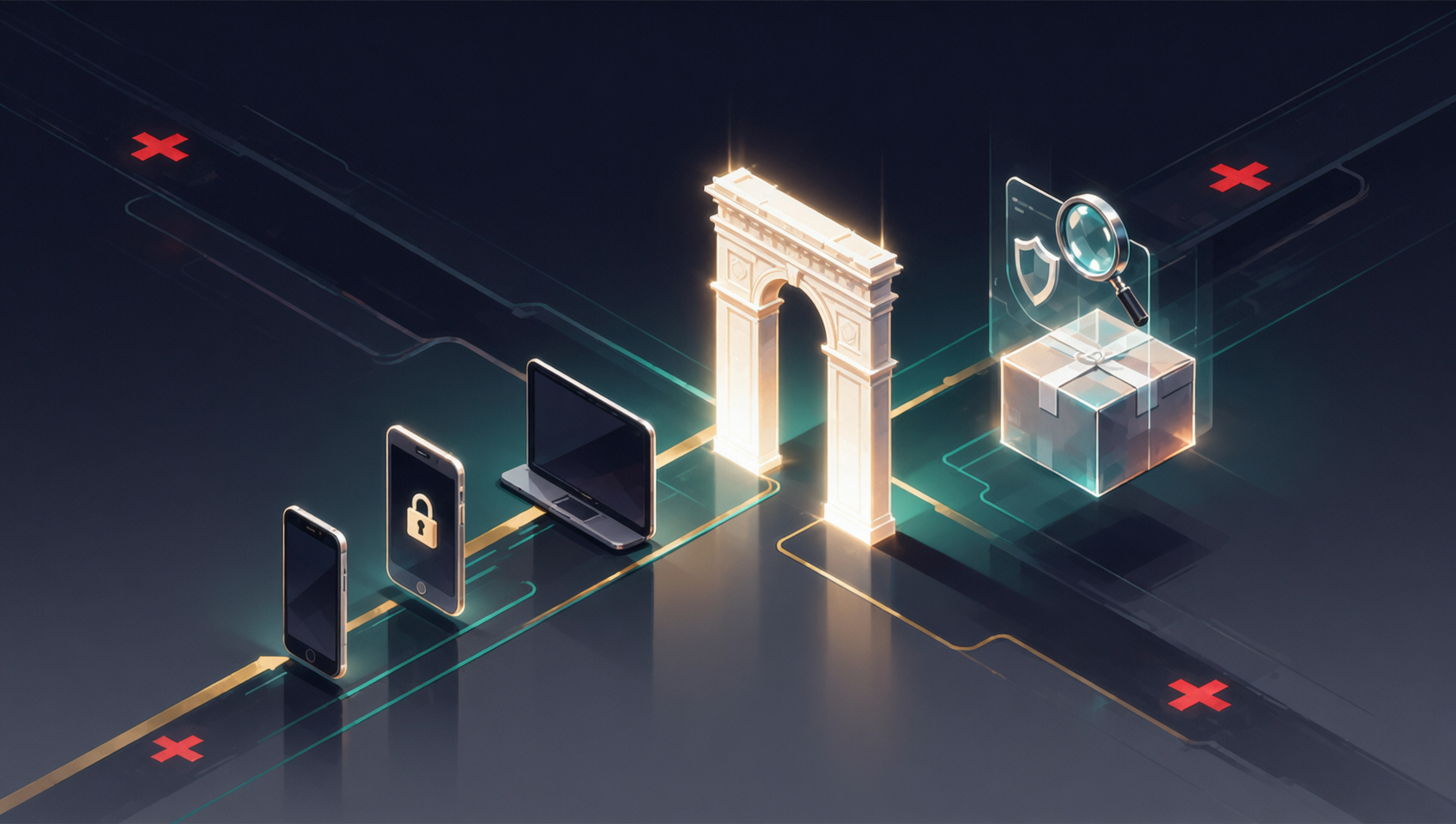
"One entry" has three layers, and missing any one of them means it is not official:
- Brand layer: the page sits on the
binance.comdomain. Third-party domains with words like "download", "fast", "Chinese", "mirror" or "entry" are not the official site, however convincing they look. - File layer: the installer is supplied directly by Binance, and clicking the button starts the download. If you are told to install a "high-speed downloader" or a "security assistant" first, there is already a middleman who can swap the package.
- Distribution layer: the official listing in the App Store, Google Play or Huawei AppGallery. Being able to install from a store does not prove every app called "Binance" in that store is official — check the developer name too.
⚠️ A quick rule: the official download page will never charge you, never ask you to disable antivirus software, and never ask for a seed phrase. If any of those three happens, the entry is fake — stop there.
Three steps to install: match the device first
Each of the three main paths has exactly three steps, and the order cannot be swapped. If step one is wrong, steps two and three are just troubleshooting on a broken foundation.
| Device | Step 1 | Step 2 | Step 3 |
|---|---|---|---|
| Android | Download the APK from the official APK direct link | Allow the browser to install and install it | Confirm the package name com.binance.dev |
| iPhone / iPad | Prepare a non-mainland Apple ID | Switch only Media & Purchases and download | Check the seller, then switch back |
| Windows / macOS | Get the client from the official download page | Check the publisher and notarization | Use the web app if it will not install |
| HarmonyOS NEXT | Confirm the system is 5.x or later | Use Huawei AppGallery or the official HarmonyOS build | Do not try to install the Android APK |
The last column is the step most people skip: installed is not the same as installed correctly. Android needs a package-name check, iPhone needs a seller check, desktop needs a publisher check, and HarmonyOS needs confirmation that you have a native build rather than a renamed Android package.
Android in three steps: download, install, verify
On Android phones without Google Play, the official APK is the most direct official path. The official APK direct link is https://download.bsmkweb.cc/pack/BNApp_F0002087.apk?utm_medium=web_share_copy — open it in your phone browser.
Step 1: download. Open the link in the phone browser and let it finish without switching networks or letting the screen sleep. The file manager should show a file of about 306 MB, typed as an Android package.
Step 2: install. When the system blocks installation from unknown apps, grant the current browser permission and tap the package again. Two outcomes are common:
- It installs: continue to step 3.
- "App not installed" or a signature conflict: uninstall the old Binance app, any cloned version and any third-party modified build, reboot, then install again. If the old package came from an official channel and the new one refuses to overwrite it, the new package is not from the same source — more reliable than any written claim.
Step 3: verify. Open the app and confirm three things: the version number displays normally in the app info, the package name is com.binance.dev, and there is no "import seed phrase / import private key / restore wallet" entry anywhere in the app. The third one matters most: Binance is a custodial exchange, so the real app neither needs nor should request a seed phrase.
If you are also registering and making a first deposit, the Binance registration and APK install walkthrough covers the order. For Android-specific install failures, see the Binance Android APK install guide.
iPhone in three steps: the hard part is the Apple ID
On iOS the barrier is never the app, it is the account. Binance is not listed in the mainland China App Store, so you need a non-mainland Apple ID.
Step 1: prepare a non-mainland Apple ID. Choose a region where the App Store actually lists Binance, and make sure the account can sign in to the App Store normally.
Step 2: switch only Media & Purchases. Go to Settings → your name → Media & Purchases → sign out → sign in with the overseas Apple ID. Do not sign out of iCloud — that affects photos, backups and installed apps and has nothing to do with downloading. Then open the App Store, search for Binance and check the developer before downloading.
Step 3: switch back. After the download, switch Media & Purchases back to your usual account. The installed app keeps working, and you only need to switch again for updates.
If the App Store cannot find Binance, first confirm you changed Media & Purchases rather than the whole iCloud account, then check the account's region. Do not install "iOS enterprise" or "TestFlight beta" builds from third-party sites: they expire without warning and cannot be verified. Full details are in the Binance iOS app download guide.
Desktop in three steps: the client is optional
Ask one question first: do you actually need the desktop client? If you open the exchange once or twice a week, the web app is enough. If you watch charts, place orders and use multiple screens for hours every day, install the client.
Step 1: download from the official site. Choose Windows or macOS on the Binance download page; the installer downloads directly from the official domain.
Step 2: check the publisher. Windows installers show publisher information, and macOS shows the developer and notarization status. If the publisher is unfamiliar, or the system says the developer cannot be verified and the file did not come from the official page, stop.
Step 3: fall back to the web app. Leftover old versions, permissions, security software and outdated operating systems can all stop the client from installing or launching. The web app and the client share the same account, the same permissions and the same API access — installing the client does not make you safer; enabling 2FA and a withdrawal whitelist does.
Windows and macOS installation details, plus fixes for a client that will not open, are in the Binance desktop app download guide.
APK verification: the four-layer check
Verification is not checking one number; it is eliminating risks layer by layer from source to behaviour. If any layer fails, do not log in.
| Layer | What to check | Red flag |
|---|---|---|
| Source | The Binance download page or the official APK direct link | Download portals, mirror pages, a "high-speed downloader" first |
| File | About 306 MB, an Android package, named BNApp_*.apk |
Only a few MB, an .apk.exe or .zip suffix, a renamed file |
| Install | Whether an overwrite triggers a signature conflict; whether the package name is com.binance.dev |
"App not installed" while the old package came from an unknown source |
| Behaviour | Whether it asks for a seed phrase, private key, accessibility access or SMS permissions | Asking for a seed phrase = 100% fake |
The signature conflict deserves its own paragraph: Android only allows an app to overwrite another app with the same signing key. If your existing app is the official package and the new file is a repackaged fake, the system refuses the install. But if you never had the official app and your first install is a fake, nothing warns you — which is why the source and file layers have to be checked by you on that first install.
About checksums: plenty of pages publish an "official SHA-256 table", but that page is not part of your trust chain either; whoever can replace the package can replace the numbers next to it. Rather than trusting a third-party hash list, run the four layers and use the signature-conflict test as a second opinion.
Five fake-package signals: stop at the first one
- It asks for a seed phrase or private key — the real Binance app has no such feature. Asking for one means it is fake.
- It asks you to disable antivirus or system security — an official installer never needs you to remove your defences.
- The file is only a few MB but claims to be the full client — the official Android package is around 306 MB.
- You must install a "downloader", "accelerator" or "security assistant" first — every extra middleman is another chance to swap the package.
- Someone contacts you offering to install it remotely — screen sharing exposes verification codes, and remote control hands over the phone.
One rule to remember: downloading is something you can do yourself. Any situation where "someone else installs it for you" deserves a pause.
After installing: registration order matters more than the build
Installing the right app is only the entry ticket; doing the next steps in the wrong order means redoing them. The recommended order is: download → register (through the registration link or with an invite code) → KYC → 2FA and anti-phishing code → first deposit.
Only two steps are irreversible: installing the wrong package means uninstalling and starting again, and if no invite relationship was bound at registration, it is usually impossible to add later. The full account and identity flow is in the Binance registration guide, and the four security settings are in the Binance account security guide.
Do these four things after installing, in this order:
- Enable 2FA, preferably with an authenticator app rather than SMS alone.
- Set an anti-phishing code — any "Binance email" without it is phishing.
- Review logged-in devices — sign out unknown devices and change your password.
- Configure a withdrawal whitelist — new addresses usually take effect after a delay, which blocks most theft.
If the package source is doubtful, do more than these four: treat the account as possibly compromised, change the password, reset 2FA, and review API keys and withdrawal history.
💰 Binance rebate: invite code BINANBT
Downloading and registering are free. What affects your long-term cost is the trading fee: register with invite code BINANBT to get a 20% fee rebate. Important: do not register directly inside the app — that binds no invite relationship, so neither the $19,800 welcome package nor the 20% rebate applies. Only the registration link or the invite code BINANBT does.
- Rebate: 20% of trading fees, ongoing, more savings as you trade more.
- Welcome package: up to $19,800, unlocked by tasks, not cash on signup.
- How to check: the invite code field on the registration page should not be empty, and the rebate relationship should appear in your account afterwards.
👉 Register on Binance and claim the 20% fee rebate
FAQ
Which one is the official Binance download entry?
The download page on binance.com. Android installers are distributed by Binance, iPhone goes through the official App Store listing, and desktop goes through the client on the official download page. Judge by source and file properties, not search ranking.
Does downloading the Binance app cost anything?
No. Downloading, registering and using the app are all free. Any "paid download", "paid acceleration" or "internal installer" offer is a scam. The only long-term cost is the trading fee, which an invite code can reduce.
How do I install Binance on Android without Google Play?
Use the official APK direct link: https://download.bsmkweb.cc/pack/BNApp_F0002087.apk?utm_medium=web_share_copy . After downloading, confirm it is about 306 MB and an Android package, and after installing confirm the package name is com.binance.dev.
Do I need an overseas Apple ID for iPhone?
The mainland China App Store does not list Binance, so a non-mainland account is required. Switch only Media & Purchases, never iCloud, and switch back after downloading.
Is the desktop client required?
No. If you use the exchange occasionally, the web app is always current and takes no disk space. Install the client only if you watch charts or place orders for long sessions. Both share the same account and permissions.
What should I do about "app not installed" or a signature conflict?
Uninstall the old Binance app, any cloned version and third-party modified builds, reboot and install again. If the old package came from an official channel and the new one cannot overwrite it, the new package is probably from the wrong source — download it again from the official site.
Can HarmonyOS NEXT install the Android Binance APK?
No. HarmonyOS NEXT (5.x and later) no longer supports Android APKs and needs the native HarmonyOS build; HarmonyOS 4.x and earlier can still use the Android package. Check the system name and version under Settings → About phone. See the Binance HarmonyOS download guide.
What should I check first if the download or update fails?
Separate "cannot download" from "cannot install". Download failures are usually network paths and CDN reachability; install failures are usually leftover versions, signature conflicts or unsupported systems. See the Binance download failure fixes and the latest version and update guide.
What is the first thing to do after installing?
Enable 2FA and set an anti-phishing code, then complete KYC and your first deposit. The version number is not the priority; account security settings are.
Verification note
The official entry, Android APK direct link, file size and package name in this guide were checked in November 2026. Binance may change the download page structure, package size or supported systems; always defer to the official download page, the app store listing and the app information on your device. This guide does not provide third-party installers, does not recommend disabling system security to force an install, and is not investment advice.
Final reminder: a package can be downloaded again. Handing your account to someone who offers "remote installation help" usually cannot be undone.