
Stablecoin
A complete stablecoin guide for 2026: how USDT, USDC, USDS and USDe hold their $1 peg, what the GENIUS Act and MiCA changed, the depeg history, and a five-point checklist to choose the right stablecoin for trading, DeFi collateral, cross-border payments or large savings.
Stablecoins are crypto tokens pegged near $1 and the cash layer of the crypto market. In late October 2026 the market held about $300–304 billion, with USDT and USDC together near 84% of supply. With the US GENIUS Act and EU MiCA now in force, a stablecoin’s legal status depends heavily on where you are. This hub is organized around four questions: mechanism, risk, regulation and how to choose.
Stablecoins in 2026 at a glance
| Type | Examples | Size (Oct 2026) | Main risks |
|---|---|---|---|
| Fiat-backed | USDT, USDC, PYUSD, RLUSD | About $250B | Issuer credit, reserves, custodial bank, freezes |
| Crypto over-collateralized | USDS (formerly DAI) | About $6.8B | Collateral crashes, oracles, liquidations |
| Synthetic / delta-neutral | USDe | About $4.7B | Negative funding, exchange counterparty |
| Algorithmic | DJED and similar | Very small | Death spiral |
Comparisons
- What Is a Stablecoin? 2026 Guide to Types, Risks and How to Choose: mechanisms, risks, regulation and a decision table.
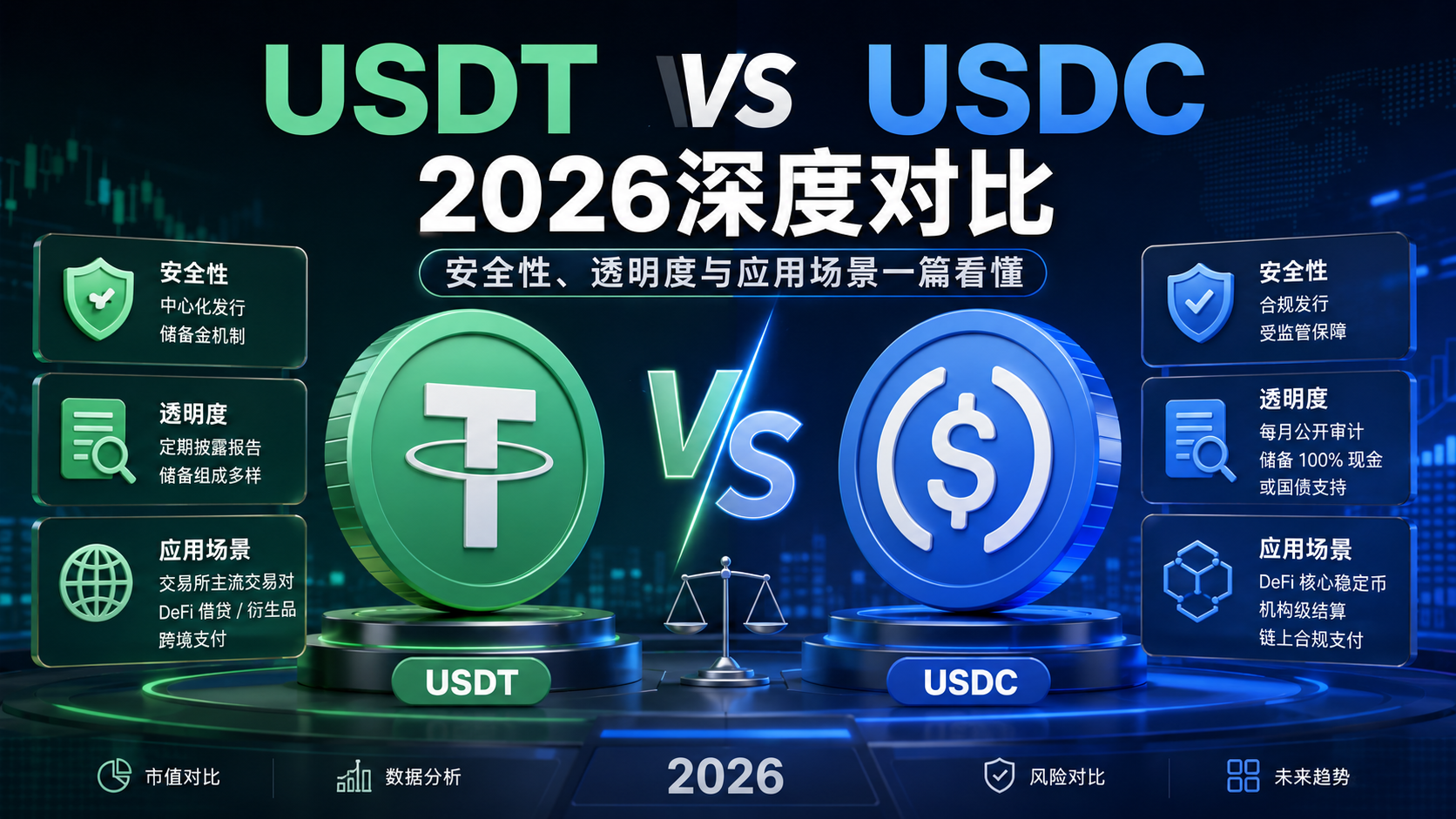
- USDT vs USDC in 2026: market cap, reserve transparency and MiCA/GENIUS compliance, side by side.
- What Is USDT? How to Buy It in 2026: reserve structure, depeg history and the real cost of wrong-chain transfers.
💡 How to use this: USDT for exchange pairs; USDC for EU compliance and DeFi collateral; split large savings between USDC and T-bills or money funds. The US and EU now bar issuers from paying interest, so do not treat a stablecoin as a high-yield deposit.
Regulation: GENIUS versus MiCA
- US: the GENIUS Act was signed in July 2025; its July 2026 rulemaking deadline passed without final rules. The statutory backstop takes effect on January 18, 2027, when unlicensed issuers may no longer issue payment stablecoins, and issuers may not pay yield.
- EU: MiCA’s transition window closed on July 1, 2026, and platforms must be licensed. USDT was delisted by major European platforms for non-compliance, while USDC became the first “significant e-money token” designated by the EBA in October 2026.
- Elsewhere: Hong Kong issued its first two issuer licences in April 2026; the UK’s full regime takes effect in October 2027; Japan’s revised Payment Services Act took effect in June 2026.
Depegs and risk
Two serious depegs stand out: UST went to zero in days in May 2022, erasing about $40 billion, and USDC briefly fell to about $0.87 in March 2023 after the Silicon Valley Bank failure before recovering within days. To screen any stablecoin, check five things in order: issuer and licence, reserve composition and audit, redemption terms, secondary-market depth and depeg history, and chain/contract risk (native issuance versus a bridged wrapper).
Cross-chain bridging
The same USDT is a different contract on Tron, Ethereum, BNB Chain and Base, and a bridged version carries an extra layer of risk over the native one. Confirm which network the recipient accepts before withdrawing, compare the live fee, and test with a small amount first; check a bridge’s security record separately.
- How to Move Stablecoins Across Chains in 2026: Bridge vs Exchange Withdrawal vs CCTP — native versus bridged assets, why USDT0 and CCTP take different routes, how to add up the five cost segments, what the $292 million KelpDAO exploit taught, and a six-point pre-transfer checklist.
Frequently Asked Questions (FAQ)
What are stablecoins and why are they needed?
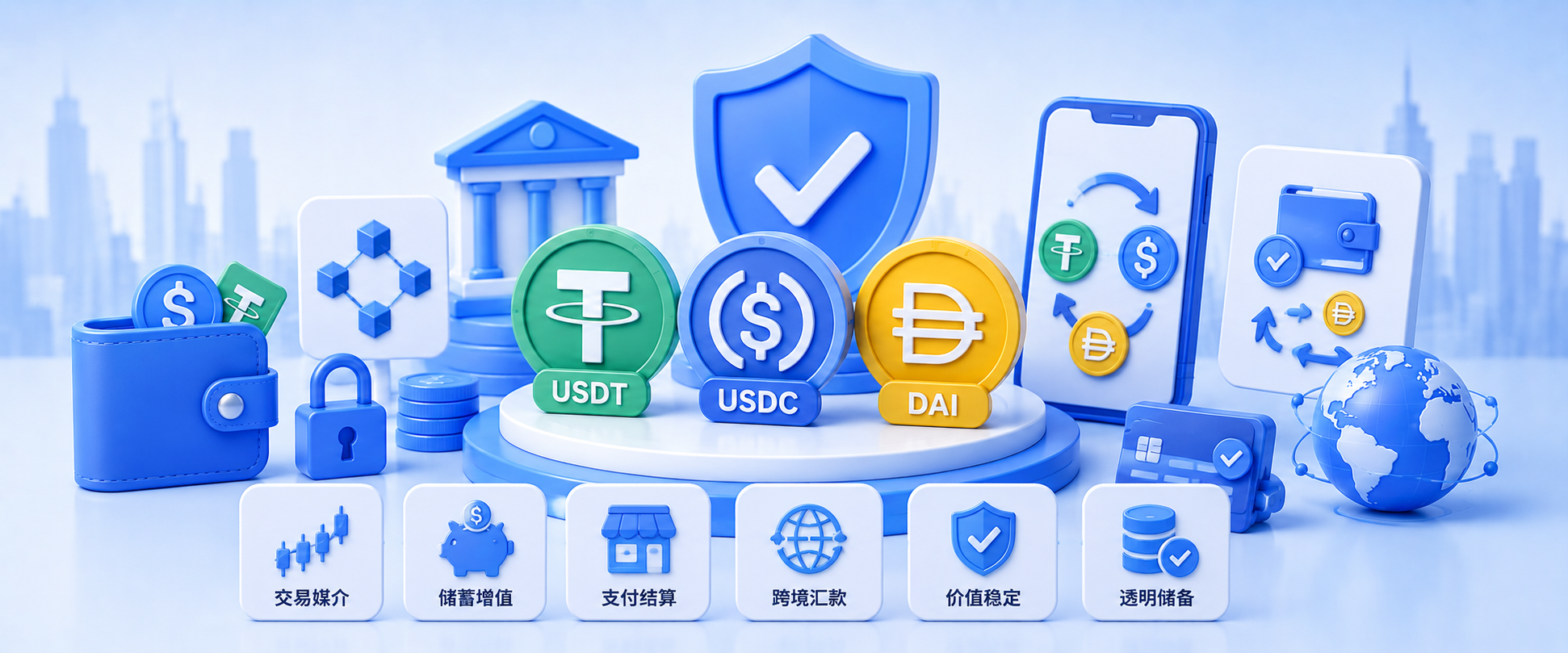
Stablecoins are crypto tokens pegged 1:1 to fiat currency (usually USD) that solve crypto’s extreme price volatility. They serve four jobs: a unit of account for trading, a safe haven, a cross-border settlement rail and an on-ramp bridge. The peg rests on reserves, collateral or hedges — not a promise — and it can break.
What’s the difference between USDT, USDC and USDS?
USDT (Tether) is the largest and most widely accepted, backed mostly by US Treasuries, with about $4.1B of excess reserves in Q2 2026. USDC (Circle) discloses more often, is regulated at the US state level and leads on EU MiCA compliance. USDS (Sky, formerly DAI) is crypto over-collateralized: no central issuer, but it carries collateral and liquidation risk.
Are stablecoins really 100% safe? Can they depeg?
No. Fiat-backed coins carry issuer, reserve and custody risk; crypto-backed coins carry collateral and liquidation risk; synthetic coins carry funding-rate and exchange counterparty risk. UST went to zero and USDC briefly traded at $0.87. Mitigate by diversifying, checking reserve audits and avoiding opaque designs.
Which stablecoin should I choose?
By use case: exchange trading → USDT (deepest liquidity); EU users and DeFi collateral → USDC; large savings → split between USDC and T-bills or money funds; chasing yield → only products whose yield source you can explain. Availability differs by jurisdiction, so check local rules.
What can stablecoins be used for?
Main uses: ① trading and hedging; ② earning yield through lending protocols or exchange products; ③ cross-border settlement, including B2B payments; ④ as an on-ramp, buying USDT before other coins. They are core infrastructure for crypto workflows, but true consumer payments remain a small share of volume.
Why do stablecoins sometimes drift from $1?
Small moves around $1 are normal and driven by supply, demand and liquidity: buying can push the price to $1.01 and selling to $0.99. A real depeg is a significant, sustained break (for example below $0.90), usually tied to a reserve crisis, redemption congestion or panic — confirm the issuer can still redeem.
Can stablecoins still pay interest?
The US GENIUS Act and EU MiCA both bar issuers from paying interest or yield, because stablecoins are defined as payment instruments. Exchange savings, staking and lending products earn from borrowers or platform subsidies, so the ban does not directly apply — but the risk shifts to the platform and the borrower.