


Table of Contents
- How Close Are Scams to You?
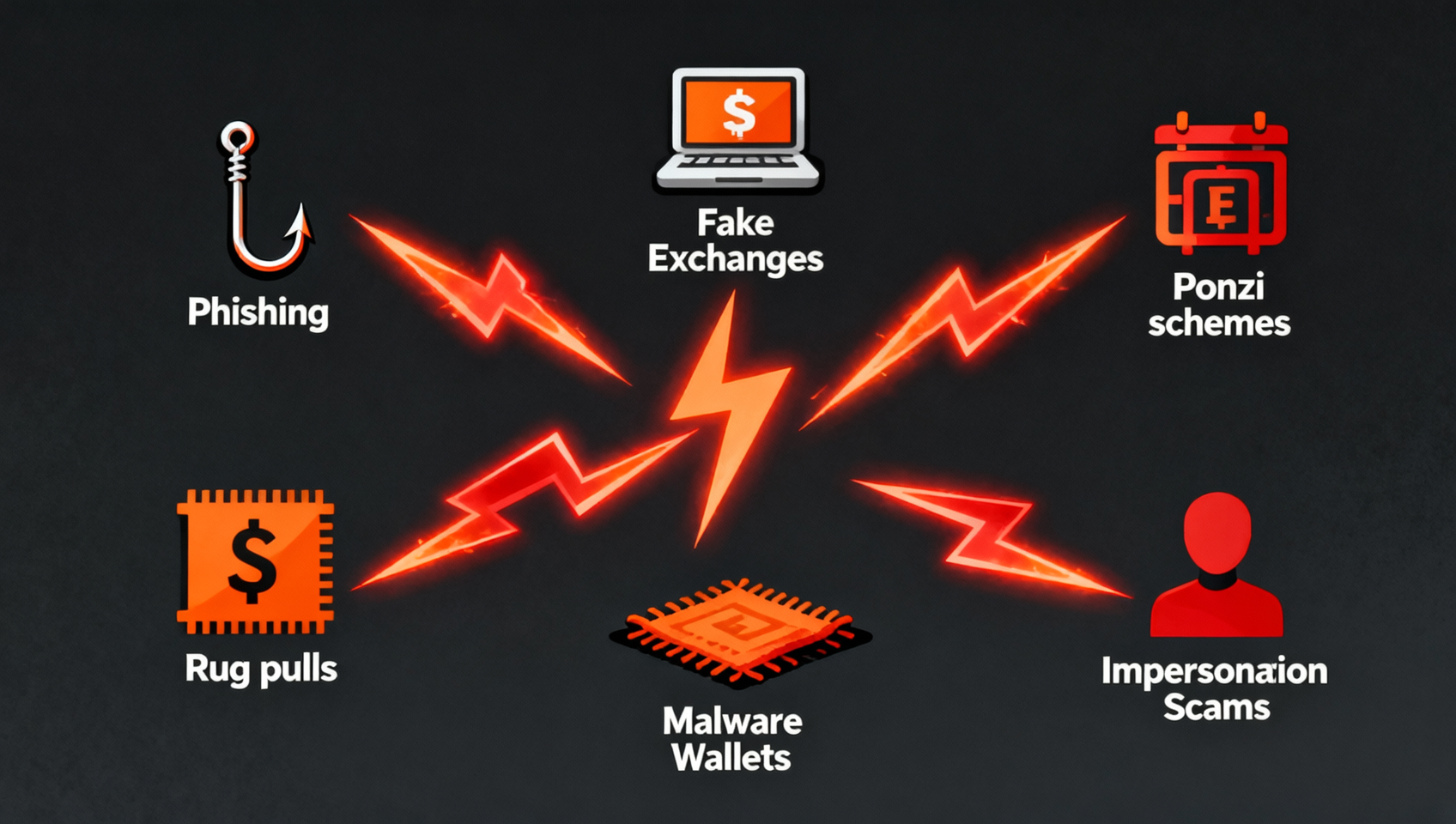
- Top 10 Common Crypto Scams Explained
- 1. Rug Pull
- 2. Phishing Websites and Fake DApps
- 3. Crypto Romance Scams (Sha Zhu Pan)
- 4. Fake Deposit/Double-Spend Attack
- 5. Pump and Dump
- 6. SIM Swap Attack
- 7. Fake Customer Support and Airdrop Scams
- 8. Malicious Airdrops and Malicious NFTs
- 9. Fake Trading Tools/Wallet Apps
- 10. Social Media Impersonation and Deepfake Scams
- Anti-Fraud Principles: Stick to These Seven
- Emergency Measures After Being Scammed
- Further Reading
- FAQ (Detailed Scam Questions)
How Close Are Scams to You?
You might think, "I don't have money, scammers won't target me." But the truth is: in the cryptocurrency world, scams are everywhere and becoming increasingly sophisticated.
In 2025, global losses from cryptocurrency scams exceeded $14 billion. From phishing websites that look identical to the real thing to Deepfake scams using AI face-swapping to impersonate project teams, scammers' methods upgrade every year.
What's scarier is that many scams aren't targeting "rich people" — they target everyone who "wants to make money."
In this article, I've compiled the top ten most common cryptocurrency scams in 2026, each with real cases and identification methods. Whether you're a newcomer or an experienced veteran, it's worth 5 minutes to read through.
Remember: In crypto, security awareness is your first line of defense.
Top 10 Common Crypto Scams Explained
1. Rug Pull
Rug Pull is the most notorious scam in DeFi, bar none.
Scammers create a seemingly legitimate token project — a nice website, a promising whitepaper, and even an audit report (some real, some fake). They promote it through various channels, attracting users to buy tokens and provide liquidity. Once the pool accumulates enough funds, the project team suddenly calls a privileged function in the contract, draining all liquidity pool funds, and the token price instantly crashes to zero.
Real Case:
In 2024, the XXX project invited many KOLs to endorse it, and its TVL once exceeded $50 million. Just two weeks after launch, the project team executed a Rug Pull at 3 AM, transferring approximately $46 million in LP funds. Tokens in retail investors' hands became worthless.
How to Identify:
- Team is anonymous or has fake identities
- Liquidity lock-up period is too short (be wary if less than 6 months)
- Promises ridiculously high returns (daily 1%+ is basically a trap)
- Code not audited by a reputable firm
- Token holdings are highly concentrated
2. Phishing Websites and Fake DApps
This is the most overlooked but easiest to fall for scam.
Scammers create fake websites almost identical to official ones, using similar domain names (e.g., using blnance.com to impersonate binance.com), and then place ads on Google Search. When you search for "Binance" or "MetaMask," the top ad result is very likely a phishing site. Once you enter your seed phrase or private key on the fake site, your assets are immediately transferred out.
Real Case:
A user clicked on a Google search result ad (actually a phishing site) when searching for "OKX login," entered their account password and Google Authenticator code. Within 5 minutes, $85,000 worth of assets were withdrawn from their account.
How to Identify:
- Carefully check the URL domain (look for spelling errors)
- Don't access exchanges through search engine ads
- Use browser anti-phishing plugins
- Major exchanges usually support "anti-phishing codes" — enable them
- Bookmark official websites and access them from bookmarks
3. Crypto Romance Scams (Sha Zhu Pan)
Romance scams are a variant of social engineering fraud in crypto.
Scammers pose as attractive professionals on social platforms (WeChat, Telegram, Tinder, even LinkedIn), spending days or weeks building a "trust relationship" with you. Then they "casually" share how they "made a lot of money" through some crypto project, luring you to invest. The money you put in goes straight into the scammers' pockets.
Real Case:
A victim met a "financial analyst" on a dating app who shared investment screenshots daily. Guided by this person, the victim downloaded a fake app called "CoinHUB" and deposited $32,000 to buy "mining machine hashrate." The account showed daily profits, but when trying to withdraw, customer service demanded a "20% tax fee." The victim lost everything.
How to Identify:
- If an online romantic interest suddenly recommends investments, block them immediately
- Promises of "guaranteed profits" or "inside information" are scams
- Refuse to download apps from unknown sources
- If withdrawal requires paying "tax" or "deposit," it's 100% a scam
4. Fake Deposit/Double-Spend Attack
This attack exploits technical vulnerabilities in blockchain network confirmation delays.
An attacker initiates a transaction, and before it's fully confirmed by the network, they exploit the exchange's logic flaw of crediting deposits upon detection, withdrawing equivalent real coins first. When the transaction ultimately fails verification, the attacker has already completed the arbitrage.
How to Identify:
- Wait for sufficient network confirmations before processing large transactions
- Exchanges should use mature detection systems
- User level: confirm enough on-chain confirmations before withdrawing
5. Pump and Dump
You've definitely seen people in groups saying, "Brothers, XXX coin is about to pump! Get on!"
This is the classic pump and dump. The project team or whales (often called "market makers") accumulate a large position at a low price, then create hype through social media, paid KOL shilling, and FOMO. Retail investors rush in, driving the price up. The whales sell off heavily at the peak, causing a price crash, leaving retail investors holding the bag.
Real Case:
In 2024, a certain Meme token surged 200x in two days, with many retail investors chasing the rally. On the third day, addresses linked to the project team sold 40% of the total supply, causing the price to drop 98% within an hour. It's estimated that over 20,000 retail investors lost a total of about $30 million.
How to Identify:
- Unknown small coins suddenly heavily promoted on social media
- Highly concentrated holder addresses (top 10 addresses hold over 80%)
- Project has no actual product
- Promotional language full of "100x," "get rich," "get in early"
6. SIM Swap Attack
This isn't unique to crypto, but it's especially deadly in the crypto world.
Attackers use social engineering (e.g., pretending to be you calling your mobile carrier, using stolen personal info for verification) to transfer your phone number to a SIM card they control. Once successful, your SMS verification codes and phone verifications are intercepted, allowing them to reset exchange passwords, wallet passwords, or even withdraw assets directly.
Real Case:
After a Twitter influencer's phone was hit by a SIM Swap attack, the attacker reset their Coinbase account password and withdrew about $100,000 in crypto assets. Although the user had SMS verification enabled, the SIM Swap bypassed this protection.
How to Prevent:
- Don't use SMS verification codes; switch to Google Authenticator or hardware security keys
- Contact your carrier to enable SIM card change protection (some carriers support this)
- Don't casually disclose your phone number online
7. Fake Customer Support and Airdrop Scams
"Hello, I'm Binance customer support. We've detected unusual login activity on your account..."
This scam is especially common in crypto. Scammers privately message users on Telegram, Discord, etc., claiming to be exchange or project customer support, saying there's an "account risk" or "congratulations on a limited-time airdrop," leading users to click phishing links or directly asking for private keys and seed phrases.
Remember this iron rule: Any "customer support" or service that asks for your private key, seed phrase, or password is 100% a scam.
How to Identify:
- Legitimate customer support won't proactively message you
- No platform will ask for your private key
- Airdrops don't require you to pay gas fees (unless it's a scam)
- Verify customer support identity through official channels
8. Malicious Airdrops and Malicious NFTs
You open your wallet and find tokens or NFTs you've never seen before. "Free money?" — No, it's a trap.
Scammers airdrop malicious tokens to many wallet addresses, with contracts containing malicious code. When you try to trade or transfer these tokens, the approval operation allows the attacker to transfer other valuable assets in your wallet (like USDT or ETH). Similarly, malicious NFTs lure you to "view" or "approve" them, leading to loss.
How to Identify:
- Don't touch unknown tokens that suddenly appear in your wallet!
- When using tools like DeBank or Zapper to view assets, ignore tokens from unknown sources
- Regularly use Revoke.cash to check and revoke suspicious approvals
- Don't connect to unknown DApps just to "claim an airdrop"
9. Fake Trading Tools/Wallet Apps
MetaMask, Trust Wallet, Binance App… all have fake versions.
Scammers develop fake apps with identical names and icons, listing them on unofficial app markets (or even bypassing reviews on official stores in some regions). When users download them, all entered seed phrases and passwords are recorded and sent to the attacker.
How to Identify:
- Only download apps from official website links
- Check download counts — legitimate apps usually have millions of downloads
- Verify the publisher information — check the official publisher name
10. Social Media Impersonation and Deepfake Scams
This is the fastest-growing scam type in 2025-2026.
Scammers use AI technology to replicate the voices and faces of well-known KOLs, project founders, or even your friends, creating realistic videos or voice messages. They might "video call" you or release Deepfake videos in news flashes claiming "a big shot recommends this project." Advances in AI make these scams increasingly hard to identify.
How to Identify:
- Be skeptical of any investment advice on social media
- Even if a recommendation comes from a "friend," verify through other channels
- During video calls, ask the person to perform specific actions (turn head, blink)
- Set up a "verification code" with family and friends
Anti-Fraud Principles: Stick to These Seven
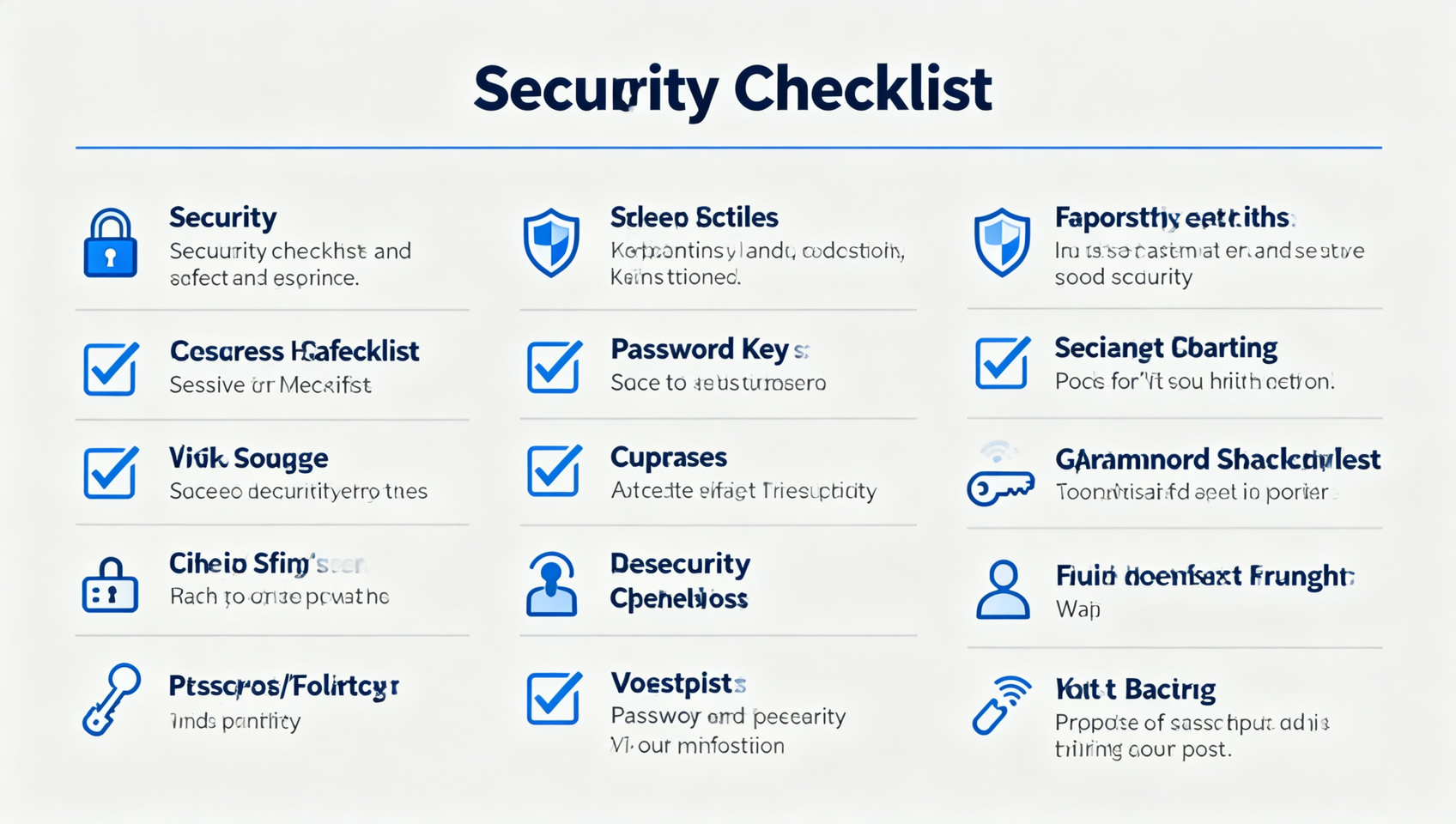
The ten scams above seem complex, but the core principles are just a few. Stick to these seven, and 99% of scams won't get past you:
| Principle | Explanation |
|---|---|
| 1. Never share private keys | Anyone asking for private keys or seed phrases, block them immediately. This is the highest rule. |
| 2. Don't click unknown links | If unsure, better not to click. Access exchanges through official channels. |
| 3. Don't believe in "guaranteed profits" | Any promise of high returns with no risk is definitely a scam. |
| 4. Only download from official sources | Download all wallet and exchange apps from official website links. |
| 5. Enable two-factor authentication | Use Google Authenticator, not just SMS verification. |
| 6. Test with small amounts first | For first-time operations, use the smallest amount to test, then proceed with larger amounts. |
| 7. Regularly check approvals | Use Revoke.cash to regularly clean up wallet approvals, leaving no vulnerabilities. |
Emergency Measures After Being Scammed
If you find yourself scammed, time is money. Follow these steps immediately:
- Freeze accounts urgently — Immediately log into exchanges, change passwords, and revoke API keys. If there are still assets in the account, try to withdraw them.
- Revoke contract approvals — If you approved a malicious contract, immediately use Revoke.cash or Etherscan to revoke approvals to prevent further losses.
- Contact the exchange — Contact the exchange's official customer support, explain the situation, and request to freeze related accounts. While recovery isn't guaranteed, it can help.
- Preserve evidence — Screenshot all chat records, transaction records, scammer addresses, and website links. Note: Trying to negotiate with scammers usually doesn't work and may lead to secondary scams.
- Flag scammer addresses — On blockchain explorers like Etherscan, mark the scammer's address as "Scam" to help other users avoid it.
- Report to authorities — In mainland China, you can report to the local police station with a complete chain of evidence. Although the cross-border nature of crypto scams makes recovery extremely difficult, a police report is still valuable.
Most importantly: Prevention is key. Once scammed, recovery chances are very low. Keep the seven principles above firmly in mind — that's true protection.
Further Reading
If you're interested in more about cryptocurrency security, these resources are worth checking out:
- On-Chain Guide — Continuously updated learning resource library for crypto beginners
- Binance Registration and KYC Guide — First step to safely using an exchange
- What Are On-Chain Assets? From Wallets to RWA Explained — Understand the underlying logic of wallets and asset security
- Blockchain Basics Introduction — Build a solid foundation to avoid being fooled
FAQ (Detailed Scam Questions)
Q1: What is a Rug Pull? How to identify it?
A: Rug Pull is one of the most common scams in DeFi. The project team creates a seemingly legitimate token project, attracts user investment, then suddenly drains all liquidity pool funds and runs away. Identification methods: check if the project has been audited, if the team is doxxed, if the lock-up period is reasonable, and if there are excessively high APY promises.
Q2: How to identify phishing websites?
A: Phishing websites disguise themselves as official exchange or wallet sites, spread through search engine ads, fake links, or social media. Identification tips: carefully check if the URL is correct (e.g., binance.com not blnance.com), don't click ad links to access directly, use browser anti-phishing plugins, and enable anti-phishing code features.
Q3: What is a crypto romance scam (Sha Zhu Pan)?
A: Romance scams are social engineering frauds where scammers build trust relationships on social platforms and then lure victims to invest in fake crypto projects. Prevention: don't trust investment opportunities recommended by online acquaintances, don't download apps from unknown sources, and promises of "guaranteed profits" are basically scams.
Q4: What is a fake deposit/double-spend attack?
A: Fake deposit attacks exploit delays in blockchain network confirmations. Scammers initiate a transaction and, before it's fully confirmed, deposit fake coins on an exchange and withdraw real coins. Prevention: wait for sufficient network confirmations before processing large transactions and use deep detection tools.
Q5: What is a Pump and Dump?
A: Project teams or whales hype low-priced coins on social media, attracting retail investors to buy and drive up the price, then sell off heavily to profit. Newcomers often buy at the peak. Identification: avoid chasing unknown coins hyped on social media and check if holder addresses are overly concentrated.
Q6: What is a SIM Swap attack? How to prevent it?
A: SIM Swap is when attackers use social engineering to trick mobile carriers into transferring the victim's phone number to their own SIM card, thereby intercepting SMS verification codes. Prevention: use Google Authenticator instead of SMS verification, and contact your carrier to set up SIM card change protection.
Q7: What are fake customer support/airdrop scams?
A: Scammers impersonate exchange customer support or project teams, claiming "account issues" or "limited-time airdrops," luring users to click malicious links or provide private keys. Legitimate platforms won't ask for passwords or private keys via private messages. Any request for private keys or seed phrases is a scam.
Q8: What are malicious airdrops/NFTs?
A: Scammers airdrop malicious tokens or NFTs to users' wallets, luring them to approve or trade, which signs malicious contracts and drains assets. Prevention: don't interact with unknown airdropped tokens, use Revoke.cash to regularly check approvals, and don't visit airdrop project websites.
Q9: How can crypto beginners avoid being scammed?
A: Core principles: 1) Never tell anyone your private key or seed phrase; 2) Don't click unknown links; 3) Don't trust promises of high returns; 4) Only download apps from official channels; 5) Enable Google Authenticator two-factor authentication; 6) Test with small amounts before large operations; 7) Regularly check wallet contract approvals.
Q10: What should I do if I get scammed?
A: If scammed, immediately: 1) Change all passwords and API keys; 2) Revoke problematic contract approvals; 3) Contact exchange customer support to freeze accounts; 4) Preserve evidence and report to police (though recovery chances are low); 5) Flag scammer addresses on blockchain explorers to prevent more victims. Most importantly, prevention is key.
Disclaimer: This content is for educational reference only and does not constitute investment advice. Cryptocurrency investment carries risks; please make decisions carefully based on your own situation.