

Key takeaways:
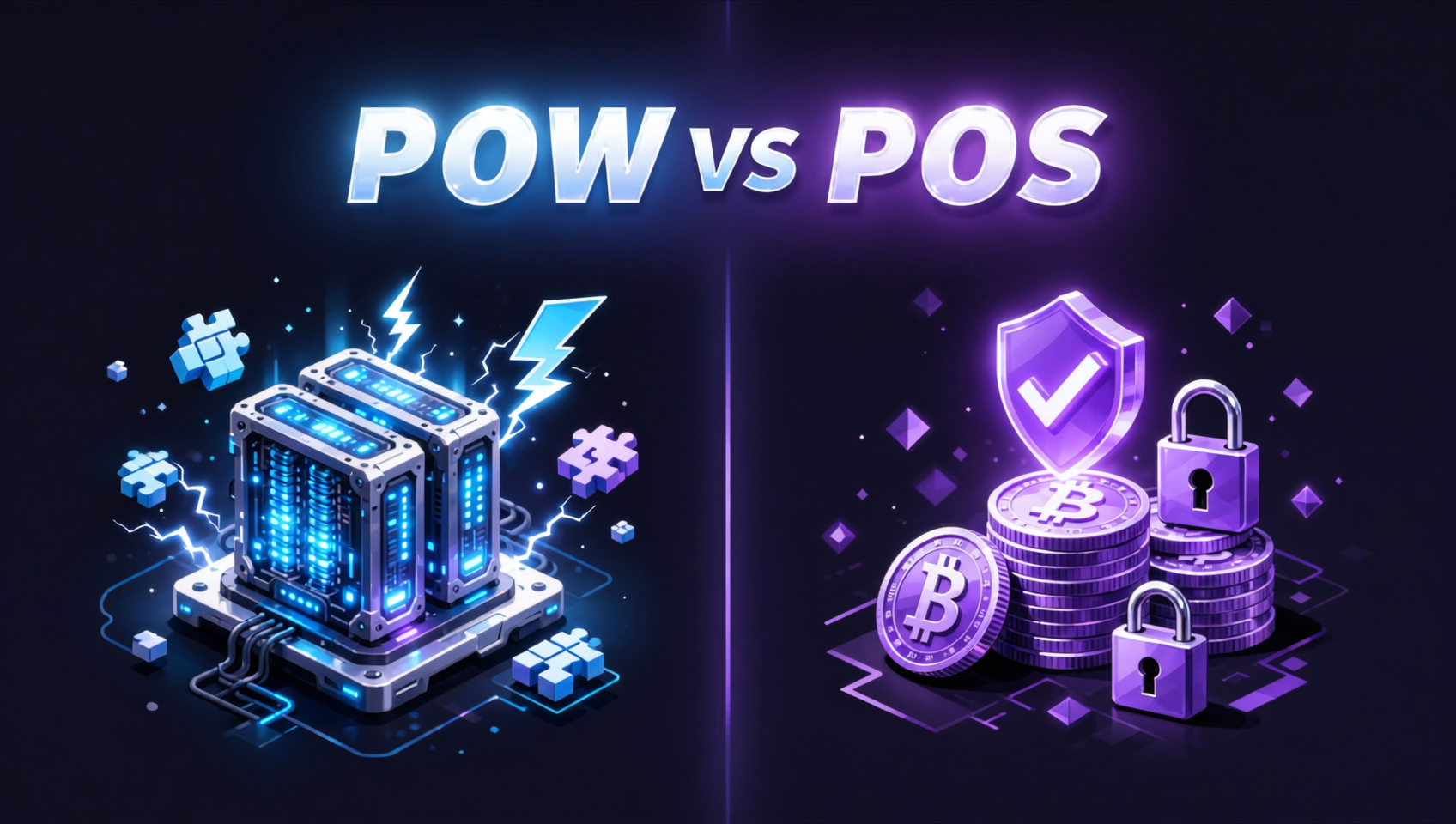
- PoW and PoS arrive at the same place: both keep the network safe by making "cheating cost more than it pays" — the only difference is that PoW burns electricity + hardware, while PoS locks coins + reputation.
- One line to remember: PoW = buy consensus with electricity; PoS = buy consensus with staked coins. Bitcoin and Dogecoin use PoW; Ethereum has used PoS since 2022.
- The biggest misunderstanding: "ETH got faster and cheaper after PoS" is wrong — The Merge cut energy use by ~99.95% but did not lower fees or speed things up (that's Layer 2's job).
- How to put it to use: once you understand it, sign up on Binance (invite code BINANBT for a 20% fee rebate) to buy or stake the coins you've researched.
Table of contents
- What is a consensus mechanism?
- PoW: buying consensus with electricity
- PoS: buying consensus with staked coins
- PoW vs PoS at a glance
- Ethereum's Merge: what it changed, and what it didn't
- So which is more secure or decentralized?
- What this means for buying and staking
- Next step: put it to use
- FAQ
- Further reading
What is a consensus mechanism?
A consensus mechanism is the set of rules a blockchain uses to decide "who gets to write the next block," letting nodes that don't know each other agree on "who owns what" without a bank.
If anyone could write the ledger freely, it would instantly collapse. So every blockchain must agree: who writes the next block, why it's their turn, and what it costs them to cheat. PoW and PoS are the two main answers, and their underlying logic is identical — make "maintaining the ledger" profitable and "breaking it" expensive. To brush up on the ledger and hash-chain basics first, see What is blockchain?.
PoW: buying consensus with electricity
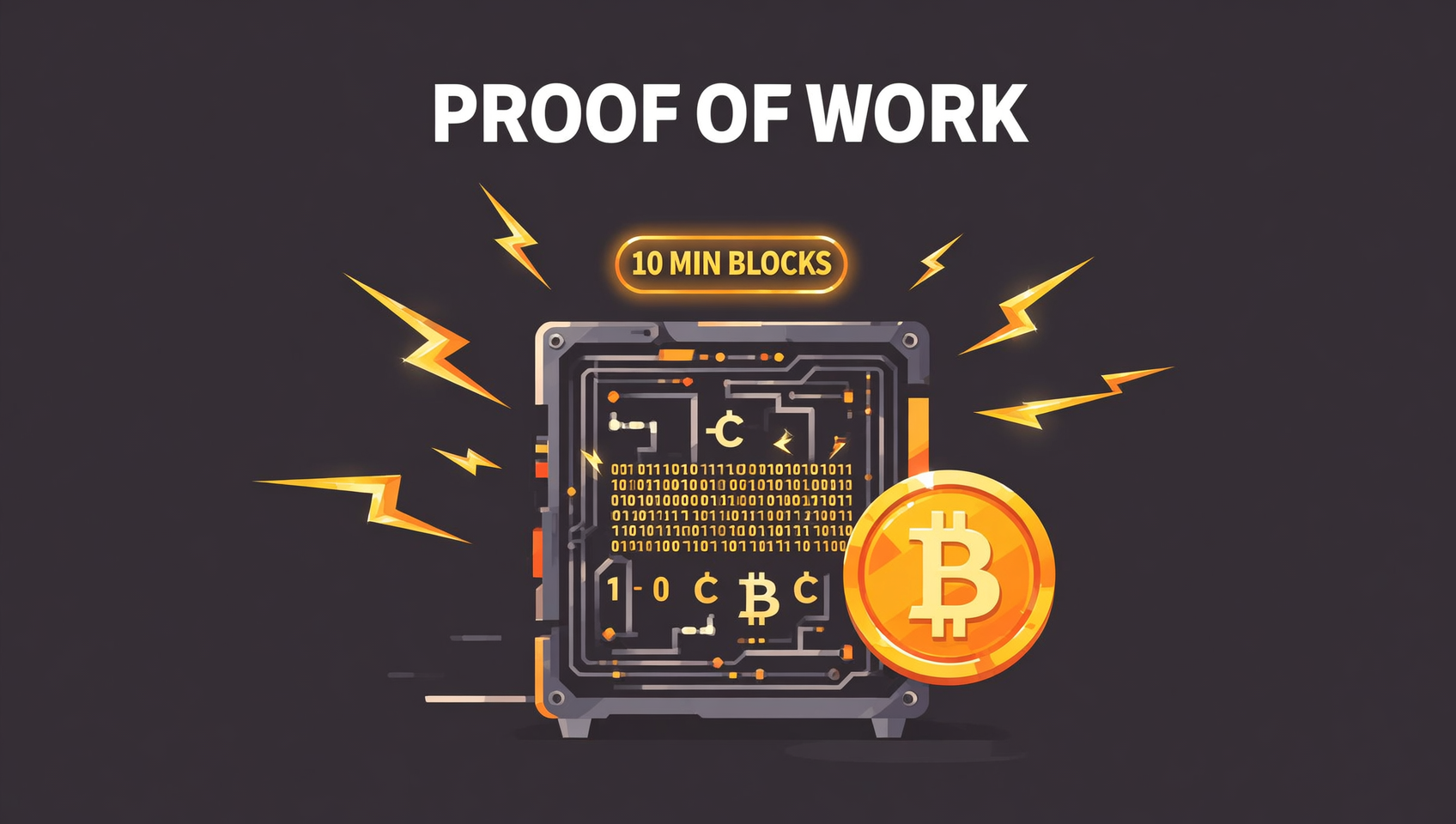
PoW (proof of work) has participants race to solve a hash puzzle using electricity + hardware; whoever solves it first wins the right to write the next block.
For Bitcoin, a miner's job is to feed a batch of transactions, the previous block's hash and a random number (nonce) into a hash function, repeatedly trying nonces until they get a hash that meets the difficulty target. There's no shortcut — only brute force — so it costs real money in mining hardware and electricity.
- Honest mining pays: the first to solve the puzzle earns the block reward and fees, incentivizing miners to bundle transactions honestly.
- Cheating burns real money: to rewrite history you'd have to redo the hashing work of every block after it — electricity in the billions of dollars.
- The cost is energy: the network-wide arms race means huge power consumption, the most common criticism of PoW.
Typical PoW chains: Bitcoin (SHA-256), Dogecoin and Litecoin (Scrypt). Dogecoin is a PoW chain that mints a new block every minute — see What is Dogecoin?.
PoS: buying consensus with staked coins
PoS (proof of stake) gives participants the right to validate by locking up coins as collateral; the system randomly picks a validator, and cheating gets their stake slashed — no electricity needed.
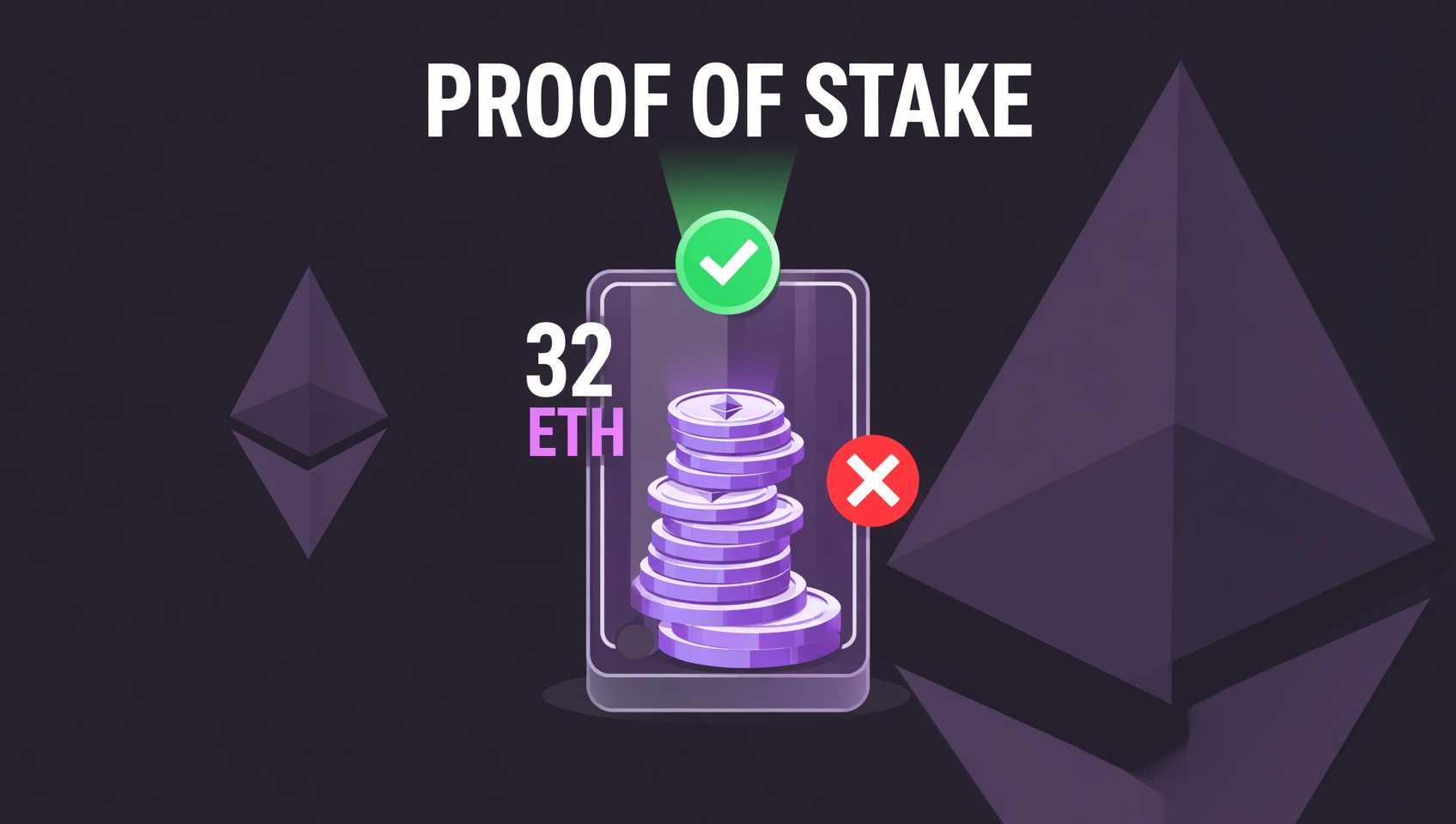
After Ethereum switched to PoS in 2022, anyone who wants to validate must first stake 32 ETH in a smart contract as a deposit1. The system randomly selects one validator to propose a block while others vote to confirm it.
- Honest validating earns yield: selected validators earn staking rewards, a bit like "interest on your coins."
- Cheating gets slashed: a validator that tries to cheat or stays offline too long gets slashed — from losing part of the deposit to being ejected. The deposit is exactly why it won't cheat.
- The cost is the entry bar: running a solo validator requires 32 ETH (a real bar). Those without it can go through staking pools or liquid staking protocols and participate with a few dollars.
💡 Common myth: PoS "not burning electricity" doesn't mean "no cost" — it just swaps PoW's "electricity + hardware" for "locked coins + slashing risk." Cheating still loses you real money.
PoW vs PoS at a glance
Put them side by side and the core difference is obvious: they burn different forms of "cheating cost."
| Dimension | PoW (proof of work) | PoS (proof of stake) |
|---|---|---|
| Who writes a block | Whoever solves the hash puzzle | A randomly chosen staker |
| Cost of cheating | Electricity + mining hardware | Slashed staked coins |
| Energy use | Very high (arms race) | Very low (~99.95% less) |
| Hardware bar | Specialized miners | A normal computer |
| Capital bar | Miners + electricity | 32 ETH (solo validator) |
| Example chains | Bitcoin, Dogecoin | Ethereum, Solana, BNB Chain |
| Main concern | Energy, hashrate concentration | Rich-get-richer, staking centralization |
The subtext of this table: PoW vs PoS isn't "which is more advanced" — it's "what resource you pledge for security." Neither is better on every dimension.
Ethereum's Merge: what it changed, and what it didn't
On September 15, 2022, Ethereum switched its consensus from PoW to PoS in "The Merge" — but people credit it with things it never did.
What The Merge changed:
- Energy use dropped ~99.95%: mining was permanently retired, so Ethereum no longer needs miners — a rare, drastic carbon reduction2.
- The security model changed: from "computing power rules" to "staked ETH rules," with slashing replacing wasted electricity.
- Mining is gone for good: ETH can no longer be "mined"; participating means staking or buying.
What The Merge did NOT change (the misunderstanding minefield):
- It didn't lower gas fees — high fees come from network congestion, not the consensus mechanism.
- It didn't make Ethereum "faster" — block time went from ~13 seconds to ~12 seconds, barely a change2.
- It didn't make ETH "cheaper" — The Merge included no change to issuance or burn policy.
Conclusion first: "faster and cheaper" is Layer 2 scaling's achievement, not PoS's. Mixing the two up is the most common beginner misreading of The Merge.
So which is more secure or decentralized?
There's no simple "PoS is safer" or "PoW is safer" — each has its own trade-offs in security and decentralization.
- PoW's concern: hashrate naturally concentrates where electricity is cheap and in large pools, so "pool monopoly" is a theoretical worry. But it doesn't depend on how much you hold, and an attacker must buy hardware with real money — no hit-and-run.
- PoS's concern: staking concentrates with whales and exchanges (many people delegate their coins), so "rich-get-richer" is more visible. The upside is that a cheater's deposit gets slashed — the attacker's own money is the collateral, making hit-and-run harder than in PoW.
So the honest statement is: PoS sacrifices PoW's simple "pure physical scarcity" for vastly lower energy and a more flexible penalty; PoW keeps "hashpower is power" simple and robust, at the cost of high energy use. They suit chains with different goals.
What this means for buying and staking
The most practical use of understanding PoW/PoS is judging whether a project's staking yield is actually legitimate.
- PoW chains have no "staking": any product promising "stake Bitcoin or Dogecoin for interest" is just lending out your coins — the risk/reward doesn't add up (Dogecoin is the textbook case, see What is Dogecoin?).
- PoS staking yield comes from issuance and fees: Ethereum's staking reward comes from protocol issuance — it's "built in" — while some projects' high yields may come from new-user deposits, so ask "where does this yield actually come from."
- Don't let "no electricity = always better" lead you: PoS saving energy is real, but it introduces new centralization risks — it's not a free lunch.
One line: when you see "high staking yield," first ask "where does the yield come from" — that single question dodges most of crypto's traps.
Next step: put it to use
After understanding PoW and PoS, the most direct way is to experience both: buy a PoW coin and stake a PoS coin.
- Sign up on Binance with invite code BINANBT for a 20% trading fee rebate (registration costs you nothing extra).
- Buy a little BTC (the PoW representative) or ETH (the PoS representative), then check their staking/earn options in the Binance app.
- Compare the yield source and entry bar of each, and your understanding of consensus will instantly "land."
👉 Register on Binance with invite code BINANBT and claim your 20% fee rebate
FAQ
What's the difference between PoW and PoS?
PoW competes for the right to write blocks with "electricity + hardware" — whoever solves the hash puzzle first bundles the block. PoS earns that right by staking coins — the system randomly picks a validator and slashes them for cheating. The core difference is the form of the cheating cost: electricity vs staked coins.
Does Bitcoin use PoW or PoS?
Bitcoin uses PoW (proof of work), maintained by miners' computing power, with no staking. Any product claiming you can "stake Bitcoin for interest" is lending your coins to someone else — it isn't a native Bitcoin mechanism.
When did Ethereum switch to PoS?
On September 15, 2022, Ethereum switched from PoW to PoS in "The Merge," cutting energy use by ~99.95% and retiring mining permanently.
Did Ethereum get cheaper after switching to PoS?
No. The Merge only cut energy and changed the security model; it did not lower gas fees or make blocks faster. Fee and speed improvements come from Layer 2 scaling solutions, not PoS.
How much ETH do I need to stake?
Running a solo validator requires staking 32 ETH. Those without it can participate through staking pools or liquid staking protocols (like Lido), staking a few dollars' worth of ETH for proportional rewards.
Is PoS always better than PoW?
No. PoS saving energy is real, but it introduces new problems like staking centralization and rich-get-richer; PoW is energy-hungry but has a simpler security model and is harder to hit-and-run. It's a trade-off, not a strict "better."
Further reading
- What Is Blockchain? How It Works & Why It Can't Be Changed
- What Is Dogecoin (DOGE)? How to Buy It in 2026 — Beginner's Guide
- Binance Registration 2026: Sign Up, KYC & Buying Crypto
- More Crypto Basics: the Crypto Basics Hub
- On-chain guide: Bitcoin, Ethereum and more
Disclaimer: This content is for educational purposes only and is not investment advice. The technical parameters cited (32 ETH threshold, energy reduction, merge timing) are public information; verify against the Ethereum Foundation's official documentation2. Cryptocurrency investing and staking carry risk — decide according to your own situation.