

⚠️ Read this first: opening an account? Don't tap "sign up" inside the app — only registrations through the registration link (e.g. "Sign Up") or with invite code BINANBT unlock Binance's new-user rewards (20% fee rebate plus a welcome package worth up to $19,800). Before any cross-chain transfer, confirm which chain and which contract the recipient supports.
Key takeaways (TL;DR):
- Crossing chains does not "move a coin"; it locks or burns on the source chain and reissues or releases on the destination chain. What you end up holding is another contract on the destination chain, not the coin you started with.
- Three routes: exchange withdrawal, Circle's CCTP, and third-party bridges. For most people the steadiest option is not the most "decentralized" bridge but an exchange withdrawal; for USDC, CCTP first; third-party bridges suit small amounts, speed and destinations no exchange serves.
- USDT has no official unified bridge. USDT0 is a 1:1 extension built on LayerZero's OFT, and bridged versions such as USDT.e are a different contract from native USDT, with different liquidity, redemption and risk.
- Ethereum gas cost only a few cents in 2026, so gas is no longer the big line item. What actually drives cost is bridge fees, fixed exchange withdrawal fees and swap slippage.
- Bridges remain the biggest target for attackers. Since 2021, bridge losses total roughly $4 billion; in April 2026, KelpDAO's rsETH was drained of about $292 million through a 1-of-1 verifier configuration.
- Six checks before you transfer: native or bridged, destination-chain gas, contract address, limits and pause status, a small test first, and whether the recipient supports that chain.
Contents
- The short answer: what cross-chain actually transfers
- Three routes in one table
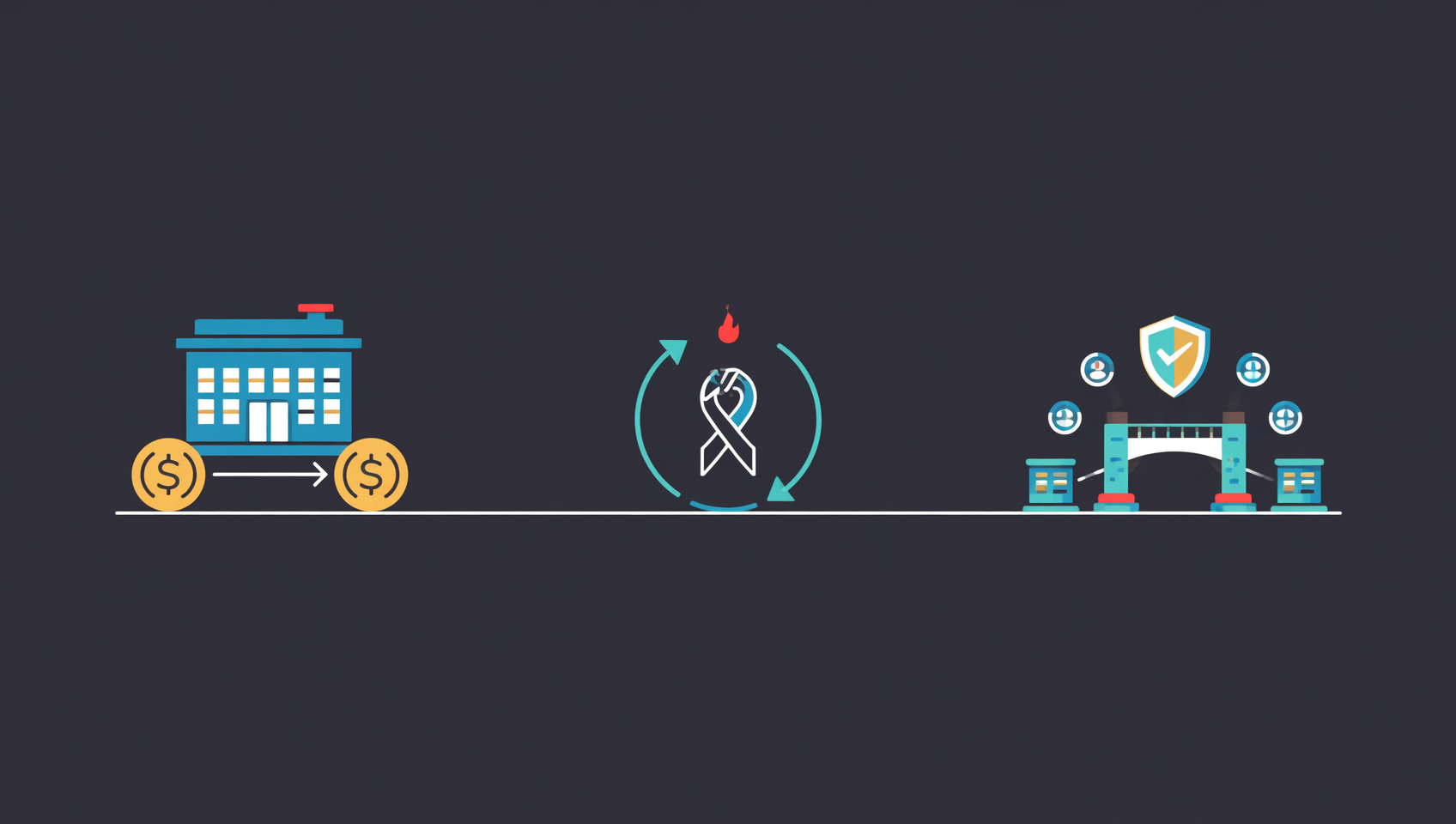
- Native vs bridged: same address, different coin
- Why USDT and USDC cross-chain differently
- Cost breakdown: five fees and one worked example
- Time and limits: why "fast" and "cheap" can't both be true
- Risk: bridge hacks and the 2026 KelpDAO case
- Route one: exchange withdrawal (the beginner default)
- Route two: CCTP (USDC only)
- Route three: how to choose a third-party bridge
- Six checks before you transfer
- Sent to the wrong chain: what can and cannot be recovered
- 💰 Binance rebate: invite code BINANBT
- FAQ
- Further reading
The short answer: what cross-chain actually transfers
Suppose you hold 1,000 USDT on Ethereum and want it on Tron. There is no operation that "carries the same coin across." There are only two mechanisms:
- Lock-and-mint: the USDT on the source chain is locked into a bridge contract, and the bridge mints a "bridged USDT" to you on the destination chain. What you receive is not the USDT Tether issues natively on Tron — it is the bridge's IOU.
- Burn-and-mint: the coin on the source chain is destroyed, and the issuer mints native coins on the destination chain. Circle's CCTP follows this path, which is why the destination chain receives native USDC rather than a bridge wrapper.
Understand that, and every choice that follows becomes clear: what you are really comparing is not "which bridge is faster" but "whether the destination chain gives you the native coin or a bridge's IOU — and who redeems that IOU."
In one line: the first risk of crossing chains is not the fee; it is believing you received USDT when you actually received some bridge's version of USDT.
Three routes in one table
| Dimension | Exchange withdrawal | CCTP (USDC only) | Third-party bridge |
|---|---|---|---|
| Best for | Beginners, large amounts, destinations an exchange supports | Native USDC, low cost and speed | Small amounts, destinations no exchange serves, multiple assets |
| What you receive | Native coin on the destination chain (exchange payout) | Native USDC on the destination chain | Usually a bridged version |
| Cost | Fixed withdrawal fee + source-chain gas | Source-chain gas + fast-transfer fee (0–14 bps) | Bridge fee + gas on both ends + slippage |
| Time | Minutes to hours | Standard 13–19 minutes; fast 8–20 seconds | Seconds to tens of minutes |
| Main risks | Exchange custody, wrong withdrawal network | Circle's centralized freezes, destination-chain gas | Bridge contract, validators, liquidity |
| Limits | Exchange daily limits, minimum withdrawal | Per-transaction limits, destination liquidity | Bridge TVL, per-transaction cap |
| Recommendation | ⭐⭐⭐⭐⭐ (most people) | ⭐⭐⭐⭐ (USDC) | ⭐⭐ (conditional use) |
Native vs bridged: same address, different coin
The same stablecoin is a different contract on each chain. Taking USDT, the onchain distribution as of October 31, 2026 was roughly:
| Chain | USDT size | Share |
|---|---|---|
| Tron | About $92.4B | About 51% |
| Ethereum | About $70.8B | About 39% |
| BSC | About $9.2B | About 5% |
| Solana | About $2.4B | About 1.3% |
| Others | About $5B | About 3% |
USDC is more concentrated on Ethereum: about $44.4B on Ethereum, about $7B on Solana, about $6.7B on Hyperliquid and about $4.3B on Base.
These numbers say two things:
- USDT's main battleground is Tron and Ethereum, and not every chain has enough native USDT liquidity.
- USDT and USDC of the same name are different contracts on different chains. The USDT you see on BSC is the BSC contract; the one on Tron is the Tron contract. The two cannot be sent to each other directly.
The three differences of a bridged version
- Different contract: bridged USDT (such as USDT.e) is a claim issued by the bridge, not a native Tether issuance.
- Different redemption path: native USDT can be redeemed with Tether; a bridged version can only be redeemed through the bridge, so if the bridge pauses, you are stuck.
- Different liquidity: trading depth in bridged versions is usually thinner, and the discount during a depeg is larger.
In one line: a similar-looking address does not mean the same coin; check the contract address first, then the balance.
Why USDT and USDC cross-chain differently
USDC: CCTP, native burn-and-mint
Circle's CCTP (Cross-Chain Transfer Protocol) burns USDC on the source chain and mints native USDC on the destination chain against a signed attestation from Circle. No wrapped coin, no pool to drain, and a protocol fee of zero.
The key parameters in 2026:
- CCTP V2 covers about 27 mainnet chains, including Ethereum, Arbitrum, Base, OP Mainnet, Polygon, Solana, Aptos, Sui, Stellar and others.
- Standard transfer: about 13–19 minutes at a protocol fee of 0; about 8 seconds on chains with instant finality.
- Fast transfer: about 8–20 seconds, with a fee of roughly 1–14 bps depending on the source chain (Ethereum, Arbitrum, Base and OP commonly 1 bp; Linea up to 14 bps).
- CCTP V1 is being retired: deprecation starts on October 31, 2026, and a full contract pause is planned for December 1; confirm you are on V2 before relying on it.
CCTP is not risk-free: it hands trust to Circle — the USDC issuer can freeze addresses, and the attestation service carries an availability risk. But at least what you receive is native USDC, not a bridge's IOU.
USDT: no official bridge, USDT0 is an "extension layer"
Tether has no official cross-chain protocol comparable to CCTP. What the market calls "crossing USDT" falls into three categories:
- Exchange withdrawal: the exchange moves funds out on one chain and in on another — the most common route.
- Third-party bridges: lock-and-mint, and you receive bridged USDT.
- USDT0: an Omnichain Fungible Token (OFT) authorized by Tether that locks native USDT on Ethereum and mints USDT0 1:1 on other chains, with LayerZero carrying the cross-chain messages.
The key USDT0 facts (public data, 2026):
- Operated by Everdawn Labs under Tether's authorization, not by Tether directly.
- Deployed on more than 20 chains, with about $3.4–3.7 billion locked in the Ethereum OFT Adapter.
- Uses 3-of-3 DVN verification (LayerZero's DVN, USDT0's own DVN and the Canary Protocol DVN) — sturdier than a 1-of-1 setup, though still dependent on validators staying online.
- Cumulative cross-chain volume exceeds $100 billion, yet USDT0 circulation is still only a single-digit share of total USDT.
In one line: USDC has an official burn-and-mint route; crossing USDT relies more on the credit of an exchange or a bridge.
Cost breakdown: five fees and one worked example
The true cost of crossing chains is not a single "bridge fee" but five components added together:
- Source-chain gas: the fee to send the transaction.
- Bridge or protocol fee: charged as a percentage of the amount or as a flat sum.
- Destination-chain gas: some bridges require you to hold destination-chain gas before you can claim.
- Swap slippage: once to swap on the source chain and once to swap back on the destination.
- Fixed fees: exchange withdrawal fees and a bridge's minimum service fee.
Worked example: 10,000 USDC from Ethereum to Arbitrum
Using October 2026's low-gas environment (Ethereum around 0.5–2 gwei, a USDC transfer around $0.01–0.03):
| Route | Cost components | Estimated total | Time |
|---|---|---|---|
| CCTP standard | Source gas about $0.02 + protocol fee 0 | About $0.02–0.05 | 13–19 minutes |
| CCTP fast | Source gas about $0.02 + 1 bp ($1) | About $1.02 | 8–20 seconds |
| Exchange withdrawal | Deposit gas about $0.02 + withdrawal fee about $0.10–1 | About $0.10–1 | 5–30 minutes |
| Third-party bridge | Bridge fee 4 bps ($4) + gas on both ends | About $4–5 | Seconds to minutes |
The conclusion is clear: for USDC from Ethereum to Arbitrum, CCTP standard is the cheapest, and even the fast version costs only $1 more; the third-party bridge is in fact the most expensive of the four. That runs against the common impression that "bridge fees are cheap," because in 2026 gas has fallen low enough to ignore while percentage fees have become the bigger item.
Worked example: 10,000 USDT from Ethereum to Tron
| Route | Cost components | Estimated total | Time |
|---|---|---|---|
| Exchange withdrawal | Deposit gas about $0.02 + TRC20 withdrawal fee about $1.50 | About $1.50 | 5–30 minutes |
| Third-party bridge | Bridge fee 5–10 bps ($5–10) + gas on both ends | About $5–10 | Minutes to tens of minutes |
| Direct wallet transfer | Not possible; crossing chains requires a bridge or an exchange | — | — |
Fixed fees hurt most on small amounts: withdrawing 20 USDT to Tron makes the $1.50 withdrawal fee 7.5%; withdrawing 10,000 USDT makes it only 0.015%. So for small cross-chain transfers, either accumulate a larger amount first or pick a route that charges proportionally and has a lower minimum fee.
Time and limits: why "fast" and "cheap" can't both be true
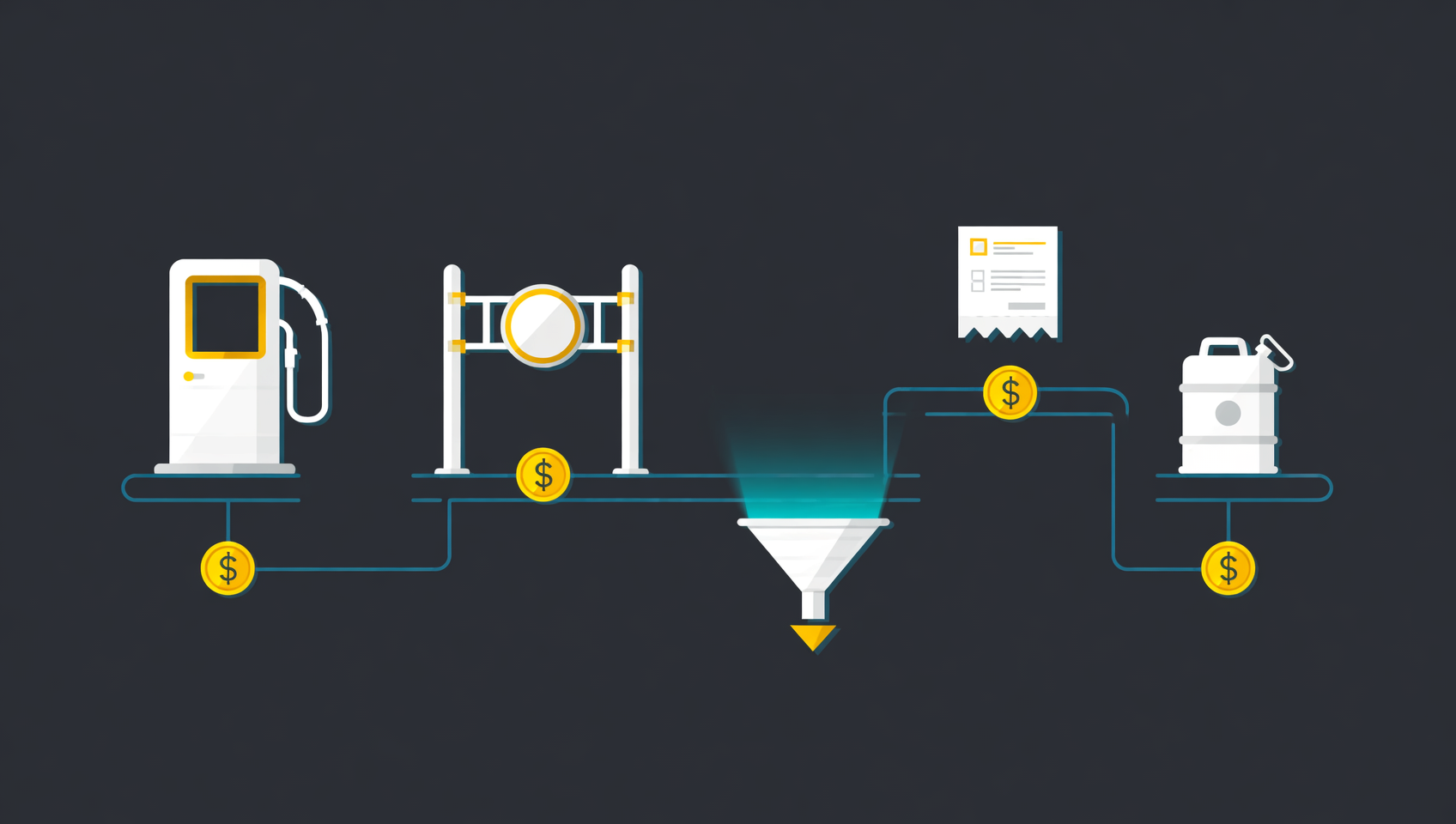
- CCTP standard waits for source-chain hard finality, usually 13–19 minutes, but it is free; fast transfers are fronted by liquidity, take 8–20 seconds, and charge 1–14 bps.
- Exchange withdrawals depend on exchange review, onchain confirmation and daily limits; large amounts may go to manual review.
- Third-party bridges get their speed from liquidity pools or intent matching; when pool depth is thin, you either hit a limit or pay more slippage.
- Destination-chain gas is a common trap: the bridge delivers the coins, but without destination-chain gas you still cannot move them.
In one line: crossing chains offers no "fast, free and safe" trifecta — you can have at most two of the three.
Risk: bridge hacks and the 2026 KelpDAO case
Cross-chain bridges are one of the largest attack surfaces in crypto. Public tallies put bridge-related losses since 2021 at roughly $4 billion, including about $625 million at Ronin, $325 million at Wormhole and $611 million at Poly Network.
The KelpDAO incident of April 18, 2026 is the one to remember:
- Attackers forged a LayerZero cross-chain message from KelpDAO's Unichain deployment.
- The configuration used a 1-of-1 verifier (DVN) with no second verifier, so compromising that single point was enough.
- The Ethereum adapter released 116,500 rsETH (about $292 million).
- The stolen assets were deposited into Aave as collateral, producing roughly $177–236 million in bad debt; Aave froze the rsETH market, and Arbitrum's Security Council froze about 30,800 ETH (roughly $71 million).
- Afterwards LayerZero stopped signing for single-verifier configurations, and the industry began migrating to multi-verifier setups.
The lesson is not "don't use LayerZero." It is: a bridge's brand size does not equal configuration safety. A single 1-of-1 verifier turns even the biggest bridge into a single point of failure.
Bridge losses kept accumulating through 2026: PeckShield counted about $340.7 million lost across 14 incidents, and KelpDAO's $292 million is among the largest single bridge attacks of the year.
Route one: exchange withdrawal (the beginner default)
Good for: most beginners, large amounts, and destinations a major exchange supports.
Steps:
- Confirm the destination chain and asset: if the recipient wants USDT on Tron (TRC20), do not pick ERC20.
- Get the destination-chain address: if you are sending to an exchange, first obtain that exchange's deposit address and Memo/Tag.
- Pick the withdrawal network: Binance's withdrawal page lists networks and their fees; choose the one that matches the destination chain.
- Test with a small amount first: withdraw the minimum on the first attempt, confirm it lands, then send the rest.
- Verify the txid: copy the txid after withdrawal and check its status in a block explorer.
Pros: simple, you receive the native coin, and there is customer support if something goes wrong. Cons: exchange custody risk, fixed withdrawal fees, and a wrong network choice is irreversible.
Note: exchange deposit addresses are usually separated by chain and asset, so a deposit sent on the wrong chain may be unrecoverable, or may require a manual appeal and a large handling fee.
Route two: CCTP (USDC only)
Good for: holders of native USDC whose destination chain is on the CCTP support list, and who want low cost and speed.
Steps:
- Confirm both the source and destination chains are on the CCTP V2 support list.
- Prepare source-chain gas; if you use a fast transfer, check the current fee.
- Start from a wallet or bridge front end that supports CCTP: choose source chain, destination chain and amount.
- Wait for the attestation: about 13–19 minutes for standard, about 8–20 seconds for fast.
- Receive native USDC on the destination chain, and keep some destination-chain gas for whatever comes next.
Limits: USDC only (plus other Circle assets such as EURC), no USDT; the destination chain must have native USDC; and Circle can freeze addresses.
Route three: how to choose a third-party bridge
Good for: small amounts, destinations no exchange supports, multi-asset needs, or transfers across non-EVM chains.
Selection criteria, in order of importance:
- Verifier configuration: multiple verifiers? 2-of-3 or higher? An independent third-party DVN? Avoid 1-of-1.
- Audits and history: several audits? Any prior exploit? How large is the bug bounty?
- Asset type: does the destination chain give you the native coin or a bridged one, and what is the redemption path for the bridged version?
- Liquidity: per-transaction limits, pool depth, slippage.
- Cost and speed: bridge fee, gas on both ends, expected arrival time.
- Pause and upgrade permissions: can an admin pause the bridge or upgrade the contract, and is there a timelock?
Do not judge by "big TVL" or "a nice interface" alone. Large TVL only means a lot of money is locked; it says nothing about whether the verifier configuration is safe.
Six checks before you transfer
- Native or bridged? Verify the destination-chain contract address on the issuer's official site; for a bridged version, confirm the redemption path.
- Does the destination chain have gas? If not, prepare a small amount of that chain's native coin first.
- Is the contract address right? Check it against official docs or a block explorer, and never click a link from a search ad.
- Limits, fees, pause status? A bridge can pause or adjust limits without warning, so look before you send.
- Small test first? The first time you use a new route, send the minimum amount.
- Does the recipient support this chain? For exchange deposits, pick the right network; for wallets, confirm the asset on that chain will display.
Sent to the wrong chain: what can and cannot be recovered
- Sent to an exchange on the wrong chain: contact support immediately with the txid, amount and destination address. Some exchanges can recover funds manually, but usually for a fee and without any guarantee.
- Sent to the wrong wallet address: onchain transactions are irreversible and recovery is essentially impossible unless the recipient chooses to return the funds.
- A bridged version mistaken for the native coin: you can swap back on a DEX that has liquidity, possibly at a discount; never grant unlimited allowances to a contract you do not know.
- CCTP stuck mid-transfer: when an attestation has not completed, you can usually claim manually on the CCTP front end; keep the source-chain txid.
- No gas on the destination chain: the coins arrived but cannot move; send a little of that chain's native coin in from an exchange or a friend.
In one line: in a cross-chain accident, what can be fixed is a process problem; what cannot is a private-key or address problem.
💰 Binance rebate: invite code BINANBT
The first cost of most cross-chain transfers is a fixed withdrawal fee; the 20% rebate you lock in at signup cuts a different cost — your trading fees. This article contains a referral link; we may earn a reward if you register through it, and it costs you nothing extra.
- Rebate: 20% of every trading fee returned. The invitee cap is 20% across the board.
- How to claim: enter BINANBT in the invite-code field at signup. If you miss it, you can still bind it within 30 days of registration as long as the account has no trades.
- Stack it: turn on "pay fees with BNB" to save roughly another 25%; with both applied, spot fees come to about 0.06% per side.
- Important: registering directly inside the app earns you no new-user rewards at all. In-app signups are not tied to any referral relationship, so the $19,800 welcome package and the 20% rebate will not apply — you must use the registration link or enter invite code BINANBT.
👉 Register on Binance and claim the 20% fee rebate
FAQ
What is the safest way to move stablecoins across chains?
For most people, an exchange withdrawal is the steadiest: you receive the destination chain's native coin, there is support to call, and the process is mature. Still, pick the right network and test with a small amount. For USDC, prefer CCTP where possible, because it burns and mints native USDC with no bridged-version redemption risk.
How does cross-chain work differ between USDT and USDC?
USDC has Circle's CCTP, which burns and mints officially, so the destination chain receives native USDC. USDT has no official unified bridge; the usual options are exchange withdrawals, third-party bridges or USDT0. Bridged USDT is a bridge's IOU, not something Tether issued natively.
Is CCTP free?
A standard transfer carries a protocol fee of 0, but you still pay source-chain gas. Fast transfers charge about 1–14 bps depending on the source chain. With Ethereum gas very low in October 2026, a standard transfer often costs only a few cents in total.
Why are cross-chain bridges hacked so often?
A bridge holds a large pool of locked assets, making it a single high-value target; a flaw in the verifier configuration, message validation or contract upgrade permissions can all be exploited. The root cause of the $292 million KelpDAO loss in 2026 was a 1-of-1 verifier configuration.
Can funds sent to the wrong chain be recovered?
It depends. For an exchange deposit on the wrong chain, support may be able to recover it manually, for a fee and with no guarantee; a transfer to the wrong wallet address is essentially irreversible; a bridged version can be swapped back on a DEX with liquidity, possibly at a discount. Prevention beats recovery.
How do I save fees on small cross-chain transfers?
Compare the share taken by fixed fees first. Withdrawing 20 USDT to Tron makes a $1.50 withdrawal fee 7.5%; you can accumulate a larger amount before transferring, or choose a route that charges proportionally with a lower minimum. For small USDC transfers, prefer CCTP fast transfers.
Further reading
- What Is a Stablecoin? 2026 Guide to Types, Risks and How to Choose
- What Is USDT? How to Buy It and Its Real Risks
- USDT vs USDC in 2026: A Deep Comparison
- Binance Withdrawal Guide 2026: Networks, Addresses and Memos
- Binance Deposit Guide 2026: Buying USDT via C2C
- What Is DeFi? A 2026 Beginner's Guide
- More stablecoin guides
Disclaimer: This article is for educational purposes only and is not investment advice. The stablecoin sizes, onchain distribution, CCTP parameters, withdrawal fees and bridge-hack figures cited here are reference values as of October 31, 2026 and will change with markets, protocols and exchange rules; cross-chain transfers carry the risk of losing assets, so test with a small amount first and verify contract addresses yourself. Crypto asset services are restricted in some countries and regions; confirm the rules that apply where you live1.
Footnotes
-
Sources: DefiLlama Stablecoins (stablecoin size and onchain distribution as of 2026-10-31); Circle CCTP documentation (V2 supported chains, transfer types and fees); public LayerZero/USDT0 materials; PeckShield 2026 bridge-loss statistics; public reporting on the Sui/KelpDAO incidents; Binance withdrawal fee page. Live pages are the source of truth for exact figures. ↩