

⚠️ Read this first: planning to buy SUI? Don't tap "sign up" inside the app — only registrations through the registration link (e.g. "Sign Up") or with invite code BINANBT unlock Binance's new-user rewards (20% fee rebate plus a welcome package worth up to $19,800). You'll need to complete KYC before buying SUI, and first swap RMB for USDT through C2C.
Key takeaways (TL;DR):
- SUI is a Layer 1 written in Move, and its technical strengths are an object model, parallel execution and low latency. But "good technology" and "the token goes up" are two different things, and technical edges in the Layer 1 race are easy to copy.
- A $0.90 unit price does not mean cheap. On 2026-10-31 it trades near $0.904, with a market cap of about $3.7 billion and a fully diluted valuation of about $9.0 billion; only about 41% of the 10 billion supply circulates, so FDV is 2.4x market cap.
- It is about 83% below its January 2025 high of $5.35, but a drawdown is not a reason to buy. Over the past year it fell from about $2.36 to a low of $0.65, then rebounded to $0.90; the same token can drop 70% and then drop another 30%.
- There is a gap between network usage and token value. TVL is about $460 million, daily active addresses about 60,000, and 30-day fees about $3.5 million; the foundation bought back roughly 780,000 SUI during the year, only about 0.02% of circulating supply.
- 71% of supply is staked, but native staking yields only about 1.4% — not the 7%–8% in some marketing. Much of that stake comes from community reserves and locked allocations, not retail holders locking up their coins.
- Monthly unlocks of 20–30 million SUI are structural selling pressure. Before buying, decide whether you are buying "network growth" or "a bounce ahead of an unlock."
Contents
- The short answer: what SUI is, and three questions that decide whether to buy
- What SUI's technology actually does well
- Tokenomics: 10 billion supply, 41% circulating, and the unlock schedule
- The truth about a 71% staking ratio: default settings, not demand
- Price and fundamentals in 2026: after an 83% decline
- Ecosystem: DeFi, payments, BTCfi and gaming
- SUI vs Solana vs Aptos
- How to buy SUI: six steps on Binance
- How to withdraw and store SUI: choose the Sui network
- How to stake SUI: native staking steps and yields
- Six risks
- Who it suits and who it doesn't
- 💰 Binance rebate: invite code BINANBT
- FAQ
- Further reading
The short answer: what SUI is, and three questions that decide whether to buy
Sui is a Layer 1 blockchain developed by Mysten Labs whose mainnet launched in 2023; the SUI token pays gas, secures staking and carries governance rights. Its pitch is treating assets as independent objects rather than balances inside an account, which lets transactions that do not conflict execute in parallel.
But before you buy, answer three questions:
- Are you buying network growth, or a price rebound? If it is the latter, you need trading discipline, not faith in a chain.
- Can you live with 59% of the token supply still unreleased? Future unlocks will keep happening while you hold.
- Do you know how much revenue SUI's ecosystem actually generates? If not, read the numbers in section five first.
In one sentence: SUI is a chain with real technology whose token still captures relatively little value. It can be a small position, but it is not a "down a lot, therefore safe" bottom-fishing target.
What SUI's technology actually does well
The object model: assets are objects, not balances
Most blockchains use an account model: your address holds a balance, and a transfer changes the number in two accounts. Sui uses an object model: every coin, NFT and contract package is an independent object with its own ID, type, owner and version.
The benefit is that a transaction can declare up front which objects it will touch. If two transactions touch different objects, they can truly run in parallel, without the account-model routine of assuming a conflict, failing, and retrying.
Two execution paths: simple transfers skip the queue
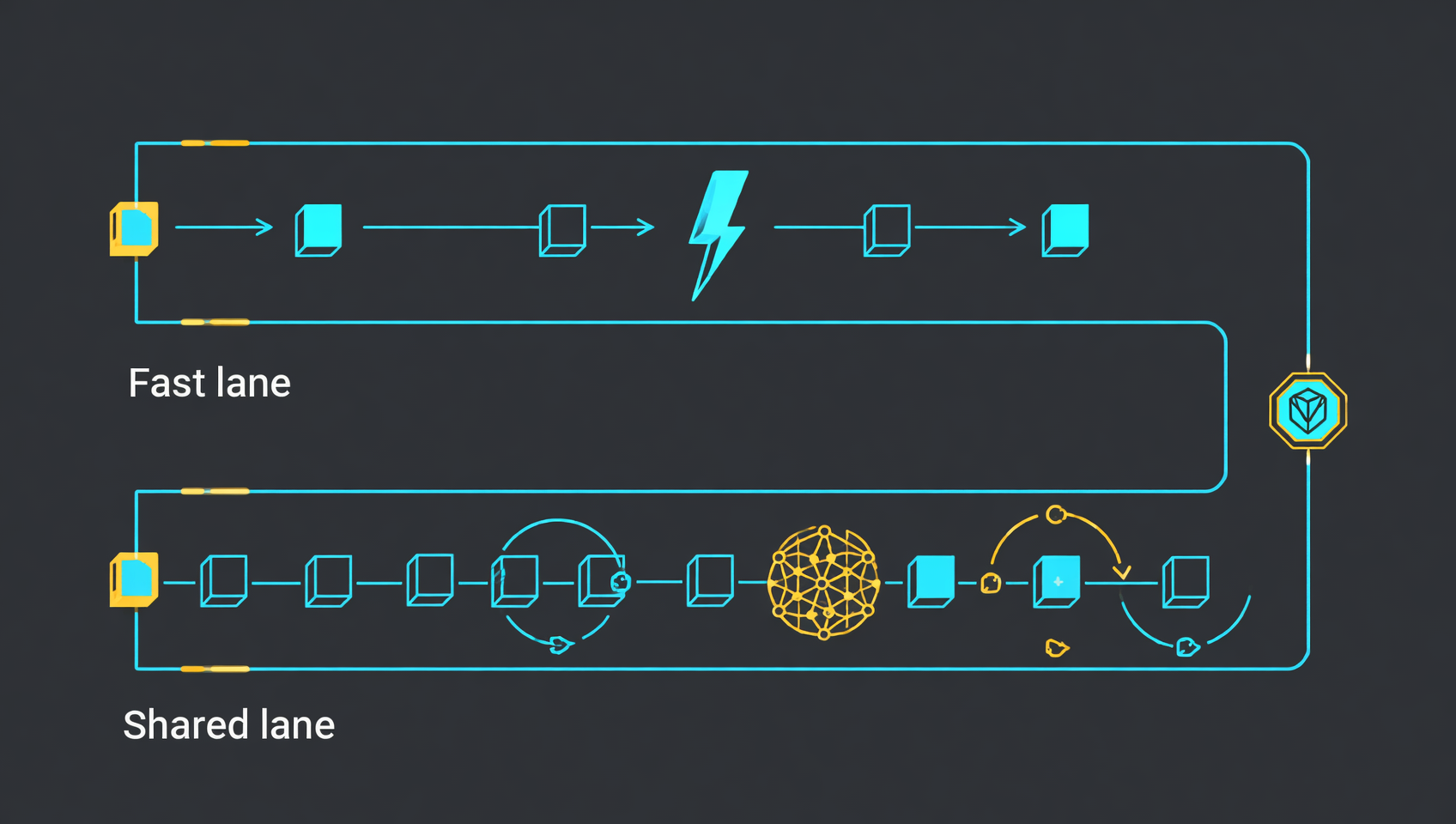
Sui splits transactions into two kinds:
- Those that only touch objects you own: wallet-to-wallet transfers, sending to a friend. They skip global consensus, take the fast path, and confirm in about 400 milliseconds.
- Those that touch shared objects: DEX pools, lending protocols. They need a global ordering, go through Mysticeti consensus, and confirm in about 0.5–0.6 seconds.
The design makes minting, transfers and payments fast, but shared objects (DeFi) remain the bottleneck: when a popular pool is contested by many transactions, speed drops.
The Move language and programmable transactions
Sui uses Move, whose resource types cannot be copied or accidentally destroyed, reducing bugs such as minting coins from nothing and double-spending. Programmable transaction blocks (PTBs) let one transaction call several contracts in sequence, which suits complex one-click actions.
Technology summary: SUI is fast mainly where transactions do not need consensus; DeFi, which needs shared state, is still limited by consensus and object contention. That is not a flaw, it is a design trade-off.
Tokenomics: 10 billion supply, 41% circulating, and the unlock schedule
| Metric | Data as of 2026-10-31 |
|---|---|
| Price | About $0.904 |
| Market cap | About $3.72 billion |
| Fully diluted valuation (FDV) | About $9.03 billion |
| Circulating supply | About 4.118 billion tokens |
| Total supply / cap | 10 billion |
| Circulating share | About 41.2% |
| All-time high | $5.35 (2025-01-04) |
| From the high | About -83.1% |
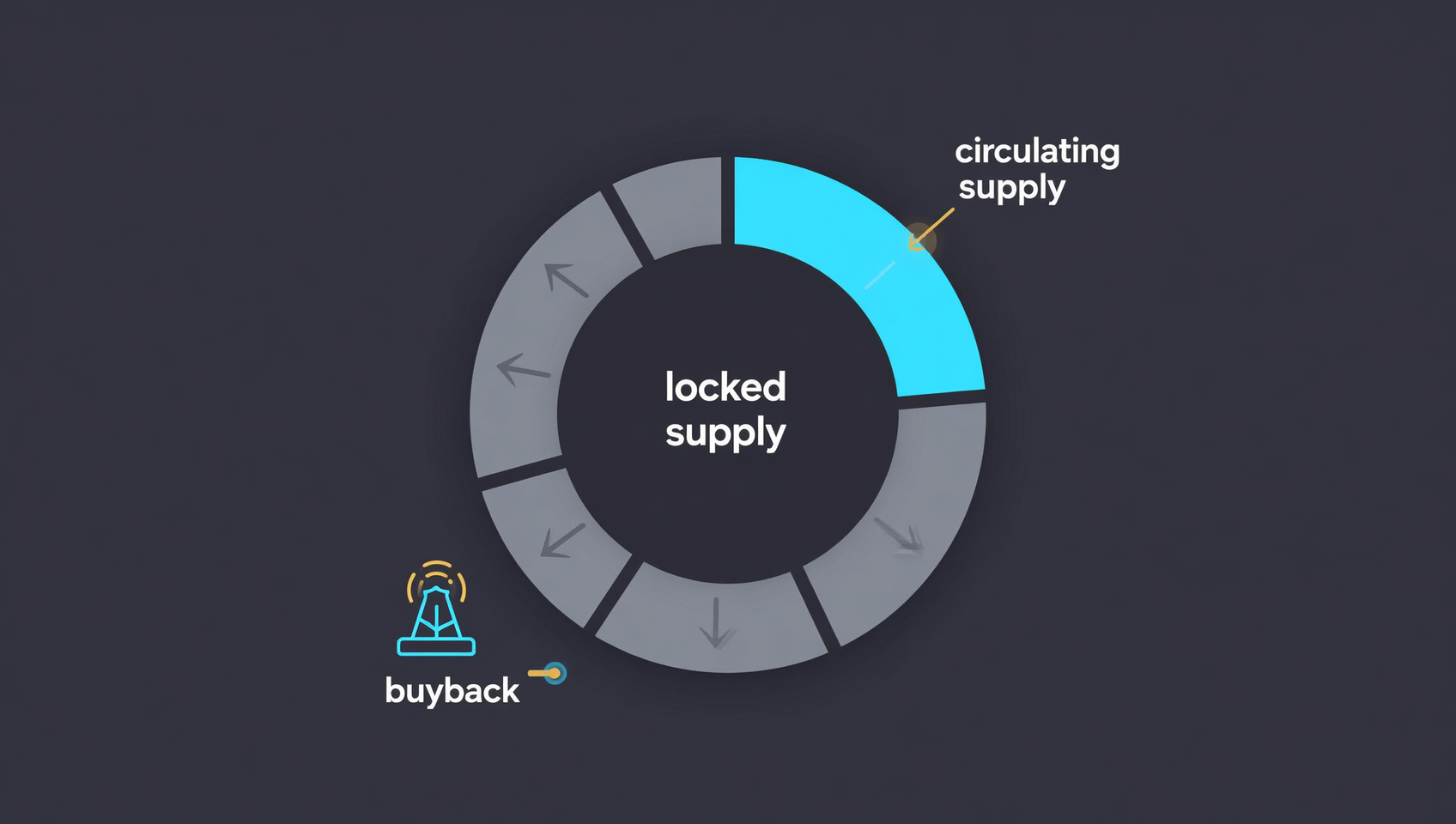
The key point is not "it fell 83%" but that 58.8% of supply has not entered circulation. At the current price, those unreleased tokens represent about $5.3 billion of potential supply.
The unlock cadence
- Monthly unlocks in mid-2026 were broadly 20–30 million SUI, with some months concentrated by cliffs (for example, about 33 million unlocked within 48 hours in early July 2026).
- As community reserves and early allocations keep releasing, later monthly unlocks may rise to about 60 million (estimates differ by data source).
- An unlock is not an immediate sale, but it is persistent supply pressure; whether the market absorbs it depends on staking, DeFi and new buyers.
Can buybacks support the price?
The Sui Foundation buys back SUI with yield from its USDsui reserve and onchain fees. Public data shows roughly 780,000 SUI (about $800,000) over the year, possibly above 1 million by early November. It sounds bullish, but it equals only about 0.02% of circulating supply — not the same order of magnitude as tens of millions of tokens unlocking each month.
In one sentence: a buyback is a statement, not demand. To judge supply pressure, compare unlocks with real buying, not buyback announcements.
The truth about a 71% staking ratio: default settings, not demand
About 7.08 billion SUI (roughly 71% of supply) is staked onchain. That figure is often read as "everyone is bullish and locking up," but two things matter:
- Staked supply exceeds circulating supply. Only about 4.118 billion tokens circulate, yet about 7.08 billion are staked, which means much of the stake comes from community reserves, locked allocations or foundation-related addresses — not retail holders locking the float.
- Native staking yields only about 1.4%. Validator net yields in October 2026 were roughly 1.18%–1.53%, with a median near 1.37%. That is far below the 7%–8% some articles cite — high yields are usually limited-time exchange campaigns or lock-up products, not native onchain staking.
Why so low? Because staking subsidies are cut by 10% every 90 epochs, and the staked base is large, so the yield is diluted. SUI does not inflate; staking rewards come from subsidies and gas, so the higher the staking ratio, the lower the yield.
The rules of native staking
- Minimum 1 SUI to stake.
- Epochs last about 24 hours: stake in one epoch and rewards start in the next.
- No 21/28-day unbonding period: principal and accrued rewards return in the same transaction, but rewards for the current epoch are forfeited.
- No slashing of principal: if a validator underperforms, it loses that epoch's rewards, not your staked principal.
- Validator commission 0%–20%: when choosing a validator, look at commission, reliability and block-production history, not just APR.
In one sentence: a 71% staking ratio looks more like the result of "coins go into staking by default" than a signal that "the market is strongly bullish."
Price and fundamentals in 2026: after an 83% decline
| Date | Price | Note |
|---|---|---|
| 2025-01-04 | $5.35 | All-time high |
| Early Nov 2025 | About $2.36 | A year earlier |
| 2026-06-22 | About $0.71 | Near a multi-year low |
| 2026 low | About $0.65 | 12-month low |
| Late Oct 2026 | About $1.00–1.12 | After a ~50% four-week rally, then a pullback |
| 2026-10-31 | About $0.904 | -83% from the high |
On the fundamentals side:
- TVL: about $463 million (DefiLlama, 2026-10-31), clearly below the 2025 high of about $1 billion, and in a $460–490 million range over the past week.
- Daily active addresses: about 60,000 in mid-2026 — not "millions of users."
- Fee revenue: about $3.5 million over 30 days, still low against a $3.7 billion market cap.
- Stablecoins: USDC on Sui is far smaller than on Ethereum or Solana, but Samsung Wallet integration has added new use cases.
These numbers say: Sui has real usage, but not enough to support a "leading L1" valuation story. Price is driven more by unlock cadence, market sentiment and ecosystem events than by fee revenue.
Ecosystem: DeFi, payments, BTCfi and gaming
- DeFi: DeepBook (an onchain order book), Cetus, NAVI, Scallop and others are the main protocols; TVL is concentrated in a few of them, and so is the risk.
- Payments: in May 2026 Sui launched gasless stablecoin transfers, so users can send USDC without holding SUI for gas. Starting in late October 2026, Samsung Wallet supports USDC transfers on Sui on some Galaxy devices in the US.
- BTCfi: projects such as Hashi are trying to bring Bitcoin liquidity to Sui; the narrative is flexible but real adoption is still small.
- Gaming and consumer: Sui has consistently positioned gaming and social as differentiators, but retention and real spending remain industry-wide problems.
A counterintuitive point that gets missed
Coverage of Samsung Wallet often says "82 million users are coming to Sui," but break it down:
- 82 million is the number of compatible devices, not users.
- Samsung Wallet supports only USDC at launch, not the SUI token.
- Gasless means users do not need to hold SUI to pay gas.
In other words, the news makes USDC and the Sui network easier to use, but does not directly create buying demand for the SUI token. A more successful network does not automatically benefit the token — a shared problem for every "payments L1."
In one sentence: more people using Sui and more people buying SUI are two different curves.
SUI vs Solana vs Aptos
| Dimension | Sui | Solana | Aptos |
|---|---|---|---|
| Smart-contract language | Move | Rust / C | Move |
| Execution model | Object model, parallel execution | Account model, Sealevel parallelism | Account model, Block-STM parallelism |
| Consensus | Mysticeti + fast path | Tower BFT / Alpenglow | AptosBFT |
| Confirmation time | About 0.4–0.6 s | About 0.4–2 s | About 1 s |
| Main narrative | Object model, gaming, payments | High performance, broadest ecosystem | Move, institutions and payments |
| TVL (Oct 2026) | About $460 million | About $5.5 billion | About $500 million range |
| Circulating supply | About 41% | Most already circulating | About 50% range |
| Main risks | Unlocks, weak token capture | Network stability, competition | Ecosystem size, unlocks |
The common thread is "high-performance L1"; the differences are ecosystem depth and token economics. Solana's ecosystem and liquidity are clearly stronger; Sui and Aptos are both still proving that technical advantages can turn into durable usage and revenue.
How to buy SUI: six steps on Binance
- Register and complete KYC: use the registration link or enter invite code BINANBT, then verify your identity.
- Buy USDT through C2C: buy USDT from a merchant with RMB, and wait for it to arrive before doing anything else.
- Transfer USDT to your spot account: funding and spot accounts are separate.
- Search for SUI/USDT: type SUI on the spot trading page and confirm the pair is SUI/USDT.
- Place an order: beginners should use a limit order with a price and amount; use a market order only when you want an immediate fill.
- Check the fill and balance: after the trade, SUI sits in your spot account; keep it there or withdraw it for self-custody.
Note: Binance's product range differs by region; if SUI does not appear on the spot page, first confirm the pair is available where you are.
How to withdraw and store SUI: choose the Sui network
Withdrawal is where beginners most often go wrong. SUI has several network options on Binance, and you must choose the Sui mainnet:
- Address format: Sui addresses start with
0xand are usually 64 hexadecimal characters. - Memo/Tag: transfers on the Sui mainnet do not need a memo; if the recipient asks for one, follow their instructions.
- Do not choose ERC-20 / BEP-20: those are wrapped versions of SUI with different contracts, and sending to an unsupported address can mean permanent loss.
- Test with a small amount first: for your first withdrawal, send the minimum, confirm arrival, then move larger amounts.
- Wallet choice: Sui Wallet (Slush), OKX Web3, Ledger and other Sui-compatible wallets all work; keep the seed phrase offline.
The withdrawal fee is fixed per transaction and does not depend on the amount; on small withdrawals the fixed fee is a large share, so it is better to accumulate before withdrawing.
How to stake SUI: native staking steps and yields
- Open a wallet that supports native Sui staking (such as Slush) or the official Sui staking page.
- Choose a validator and compare commission (0%–20%), uptime and historical returns.
- Enter the amount to stake, minimum 1 SUI, and keep a little SUI for gas.
- Confirm the transaction; staking takes effect in the next epoch.
- To exit, unstake; principal and rewards return in the same transaction, and the current epoch's rewards are forfeited.
Keep yield expectations low: native staking yields about 1.4%, not 7%–8%. Exchange SUI earn products may advertise higher numbers, but those are platform products with lock-ups, caps and counterparty risk, not the native onchain yield.
In one sentence: if you are staking for a 1.4% yield, first work out why you want to hold SUI long term at all.
Six risks
- Unlock risk: 58.8% of supply has not circulated, and monthly unlocks are persistent supply pressure.
- Token-capture risk: growth in usage, TVL and fee revenue does not necessarily translate into a higher token price; gasless and USDC payments may even bypass SUI.
- Network stability risk: in May 2026, Sui suffered three mainnet outages in 48 hours due to a v1.72 upgrade bug; the team said no user funds were lost and published a postmortem, but events like this affect trust.
- Competition risk: Solana, Aptos and other high-performance L1s are competing for the same developers and users.
- Bridge and wrapped-token risk: SUI on ERC-20/BEP-20 is a wrapped version with a different contract and liquidity; choosing the wrong network can lose your coins.
- Concentration risk: the validator set is limited, the foundation and early allocations hold a large share, and both governance and supply are relatively concentrated.
Who it suits and who it doesn't
Who it suits:
- People who already understand the Layer 1 sector and are willing to allocate a small position (say 1%–5% of total crypto assets) to a high-risk L1.
- People who want to try the Sui ecosystem and need SUI for gas or staking.
- People who can tolerate a drawdown of more than 50% and do not invest money they need for living expenses.
Who it does not suit:
- Anyone who sees "down 83%" and wants to catch the bottom.
- Anyone who equates "good technology" with "the token will rise."
- Anyone who cannot handle unlock-driven selling pressure and long sideways markets.
- Beginners who cannot yet tell the Sui network from an ERC-20 wrapped token — learn withdrawals before you buy.
💰 Binance rebate: invite code BINANBT
Before buying SUI, cut your trading costs: register on Binance with invite code BINANBT for a 20% fee rebate. The saving on a single SUI order is modest; the rebate you lock in at signup lasts. This article contains a referral link; we may earn a reward if you register through it, and it costs you nothing extra.
- Rebate: 20% of every trading fee returned. The invitee cap is 20% across the board.
- How to claim: enter BINANBT in the invite-code field at signup. If you miss it, you can still bind it within 30 days.
- Stack it: turn on "pay fees with BNB" to save roughly another 25%, and hold BNB in Simple Earn to qualify for HODLer Airdrops snapshots.
- Important: registering directly inside the app earns you no new-user rewards at all. In-app signups are not tied to any referral relationship, so the $19,800 welcome package and the 20% rebate will not apply — you must use the registration link or enter invite code BINANBT.
👉 Register on Binance and claim the 20% fee rebate
FAQ
What is SUI, and how does it relate to the Sui network?
SUI is the native token of the Sui blockchain, used to pay gas, stake and govern. The Sui network was developed by Mysten Labs and launched in 2023, centered on an object model, the Move language and parallel execution. Buying SUI is not buying equity in Mysten Labs and does not give you a share of network revenue.
Why has SUI fallen so much?
From its January 2025 high of $5.35 to about $0.90 in October 2026, it is down roughly 83%. The reasons include a weaker overall market, continuous token unlocks, ecosystem growth below expectations, and intensifying competition among L1s. A decline is not, by itself, a reason to buy.
Is SUI cheap now?
The unit price tells you nothing. On 2026-10-31 the market cap is about $3.7 billion and FDV about $9 billion, so FDV/market cap is about 2.4x; only 41% of tokens circulate. Compared with similar L1s it is not obviously cheap — it just has a "low unit price."
What is the SUI staking yield?
Native staking yields about 1.4% (validator net yields in October 2026 were roughly 1.18%–1.53%), not 7%–8%. Limited-time high-yield exchange products usually come with lock-ups, caps or campaign conditions, and carry different risks.
After buying SUI on Binance, which network should I use to withdraw?
Choose the Sui mainnet; addresses start with 0x and no memo is needed. Do not choose ERC-20 or BEP-20 — those are wrapped SUI, and sending to an unsupported address can lose your coins. Test with a small amount first.
SUI or Solana — which is better?
There is no universal answer. Solana has a larger ecosystem and better liquidity; Sui takes a different technical path, with an object model and Move as differentiators, but its ecosystem and token capture remain weak. The choice depends on whether you value ecosystem depth or technical optionality, and whether you can stomach each one's risks.
Further reading
- What Is Bitcoin? A 2026 Beginner's Guide
- Ethereum 2026: From Smart Contracts to L2s
- What Is Cardano (ADA)? A 2026 Beginner's Guide to Buying and Staking
- What Is Dogecoin (DOGE)? How to Buy It in 2026
- How Little Can You Start With? 2026 Beginner Budgets
- What Is a Stablecoin? A 2026 Guide
- More beginner guides
Disclaimer: This article is for educational purposes only and does not constitute investment advice. The price, market cap, FDV, TVL, staking yields and unlock figures cited were checked on October 31, 2026 and are reference values that change with the market; token prices can swing sharply, so do not invest money you need for living expenses or money you borrowed. Crypto trading is restricted in some countries and regions; confirm the laws and regulations where you live first1.
Footnotes
-
Sources: CoinGecko (SUI price, market cap and circulating supply, 2026-10-31), DefiLlama (Sui TVL, 2026-10-31), Sui official documentation and the May 31, 2026 mainnet outage postmortem, Tokenomist and public unlock data, and Sui Foundation public buyback data; for specific figures, rely on the live pages. ↩