


Table of Contents
- What is RWA?
- Binance Research Data Interpretation: What Does 589% Growth Mean
- Three Major Drivers of RWA Explosion
- 2026 RWA Sector Panorama
- In-Depth Analysis of Key Sub-Sectors
- H2 2026 Positioning Strategies
- Risk Warnings and Pitfall Avoidance Guide
- FAQ
Ordinary People Can Also Invest in Wall Street: RWA is Rewriting the Rules of Wealth
In early 2025, you might still be wondering what RWA is.
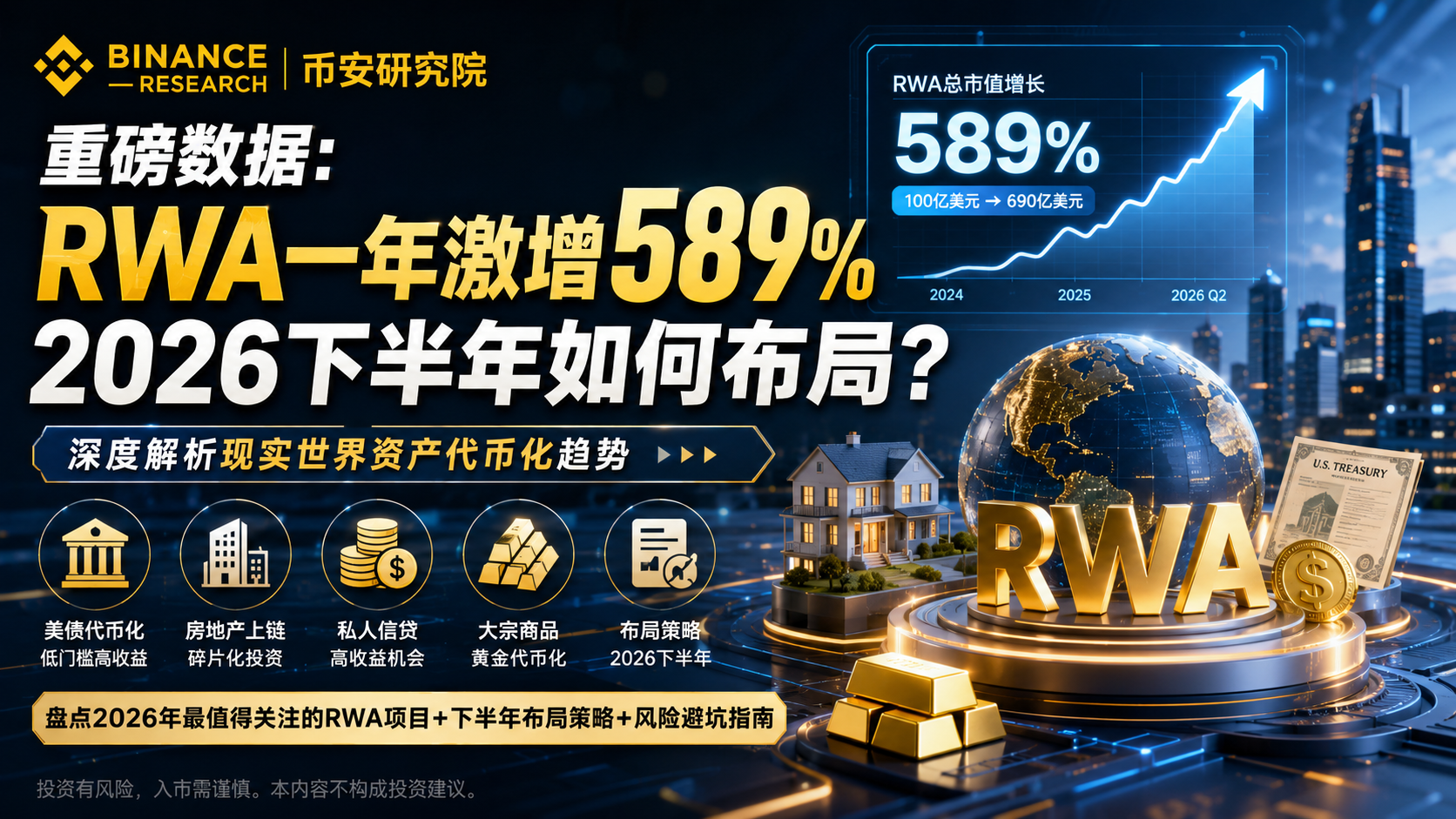
By mid-2026, this sector has become the hottest narrative in crypto with a 589% growth rate.
Imagine: You only have 1000 USDT in hand, but you can invest in US Treasuries, commercial real estate, or even gold. In the past, this required hundreds of thousands of dollars to get started. Now, through RWA (Real World Assets), ordinary people can also get a piece of the pie.
I first heard about RWA in early 2024. A friend mysteriously said, "This thing might be the engine of the next bull run." My reaction at the time was: Another new concept hype? But a year later, Binance Research's data slapped me in the face—RWA's total market cap soared from less than $10 billion to nearly $70 billion, a growth rate of 589%, leaving DeFi and NFTs in the dust.
In this article, I'll break down the core data from Binance Research for you, tell you why RWA exploded, which sub-sectors have the most opportunities, and how to position for H2 2026. No hype, just data, logic, and actionable advice.
What is RWA?
📖 Haven't understood on-chain asset basics yet? First check out What Are On-Chain Assets and RWA?
Plain Language Explanation
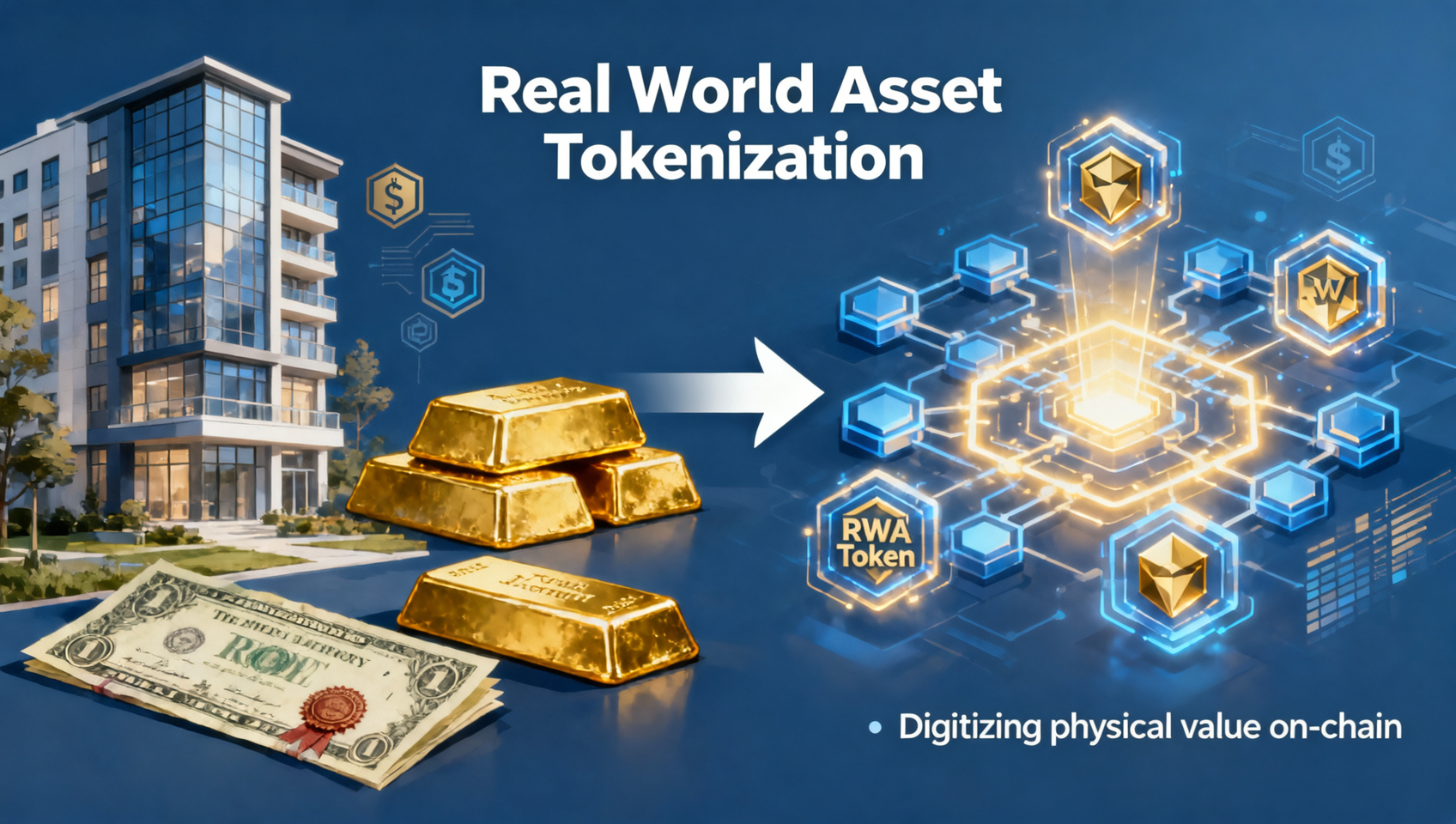
RWA stands for Real World Assets, which in Chinese is called "现实世界资产代币化." Simply put, it means moving real-world assets (like houses, gold, stocks, bonds) onto the blockchain, turning them into tradable tokens.
Traditional Process: You want to buy US Treasuries → Open a US stock account → Transfer funds → Minimum investment of $100,000 → Cumbersome procedures
RWA Process: You have USDT → Buy tokenized US Treasuries directly on-chain → Participate with as little as $100 → Trade 24/7
Core Advantages of RWA
1. Lowering Barriers Traditional real estate investment might require hundreds of thousands of dollars as a down payment. With RWA, you can buy just a "small share." For example, after tokenizing a commercial property, $100 can make you a "landlord."
2. Improving Liquidity Assets like houses and gold are traditionally hard to liquidate quickly. After tokenization, they can be traded 24/7 on exchanges, turning into cash instantly.
3. Global Allocation A retail investor in Southeast Asia, without opening a US stock account, can allocate to US Treasuries using USDT. This was impossible before.
4. Transparency and Traceability All transaction records on the blockchain are publicly verifiable, eliminating concerns about black-box operations.
RWA is Not a New Concept
In fact, RWA has been around for a while. Projects attempted real estate tokenization as early as 2018, and MakerDAO began introducing real assets as collateral in 2020. But why did it suddenly explode in 2025-2026? I'll explain in detail later.
Binance Research Data Interpretation: What Does 589% Growth Mean
Core Data Snapshot
According to Binance Research's latest 2026 report:
| Metric | End of 2024 | Q2 2026 | Growth Rate |
|---|---|---|---|
| RWA Total Market Cap | ~$10B | ~$69B | 589% |
| Tokenized US Treasuries Scale | ~$0.8B | ~$18B | 2150% |
| Active RWA Protocols | ~50 | ~200+ | 300% |
| On-Chain RWA Holders | ~100K | ~850K | 750% |
Implications Behind 589% Growth
1. This is Not a Bubble, It's Driven by Real Demand
Compared to the 2021 DeFi Summer (many projects were pure vaporware), this round of RWA growth has real institutional participation. Traditional asset management giants like BlackRock and Franklin Templeton are all positioning.
BlackRock's BUIDL fund (tokenized US Treasuries) has already exceeded $2 billion in scale. This is real institutional money.
2. US Treasuries are the Biggest Driver
The 2150% growth rate says it all. Why are tokenized US Treasuries so hot?
- The Fed maintained high interest rates in 2024-2025, making 5%+ yields on US Treasuries attractive
- Surging demand for USD-denominated yields on-chain
- A bridge between traditional finance and DeFi
3. Retail Participation Has Significantly Increased
The 750% growth in holders shows this isn't just institutions patting themselves on the back; ordinary users are also entering. Lower barriers + increased awareness + product maturity = a triple wave.
Comparison with Other Sectors
| Sector | 2025-2026 Growth | Driving Factors |
|---|---|---|
| RWA | 589% | Real asset on-chain, institutional entry |
| L2 | ~150% | Tech iteration, UX improvement |
| DeFi | ~80% | Zero-sum game, slowing innovation |
| NFT | -30% | Bubble burst, narrative fizzled |
| Meme Coins | ~200% | Speculative sentiment, traffic effects |
It's clear that RWA is in a league of its own, and it has an anchor in the "real world," unlike Meme coins that rely purely on sentiment.
Three Major Drivers of RWA Explosion
Driver 1: Macro Environment—On-Chain Wealth Management Demand in a High-Interest Rate Era
In 2024-2025, the Fed maintained high interest rates, with the 10-year US Treasury yield once breaking above 5%. What does this mean on-chain?
- Aave deposit yield: 3-4%
- Tokenized US Treasury yield: 5-6%
- Some DeFi farming: 8-15% (but high risk)
For institutions, putting dollars on-chain to buy tokenized US Treasuries allows them to enjoy high yields while maintaining liquidity. Why not?
For retail investors, without opening a US stock account, they can earn USD interest using USDT, with almost zero barriers.
Driver 2: Technology Maturity—Infrastructure in Place
RWA is not a new concept, but several key technological breakthroughs occurred in 2024-2025:
1. Clear Compliance Framework
- The US SEC's regulatory stance on tokenized securities gradually became clearer
- Friendly policies introduced in Singapore, Hong Kong, UAE, etc.
- Mature KYC/AML solutions (e.g., Fireblocks, Chainalysis)
2. Reliable Oracles
- Chainlink, Pyth, and other oracles can accurately transmit real asset prices
- Asset valuation, dividend distribution can be automated on-chain
3. Mature Cross-Chain Bridges
- Assets can flow between different chains
- Users can freely choose between Ethereum, Solana, BNB Chain
Driver 3: Institutional Entry—Embrace from Traditional Finance
This is the most significant factor.
BlackRock
- Launched the BUIDL fund (tokenized US Treasuries)
- Partnered with Securitize
- Scale exceeded $2 billion
Franklin Templeton
- Issued tokenized money market funds on the Stellar blockchain
- Managed assets over $400 million
Goldman Sachs, JPMorgan
- Internally testing tokenized asset trading
- Exploring blockchain settlement systems
When these asset management giants enter, RWA is no longer "crypto self-entertainment" but a part of real financial infrastructure.
2026 RWA Sector Panorama
Major Asset Class Distribution
According to Binance Research data, the current RWA market composition:
| Asset Class | Market Share | Representative Projects/Platforms | Characteristics |
|---|---|---|---|
| US Treasuries | ~45% | BlackRock BUIDL, Ondo, Matrixdock | Largest scale, most mature |
| Private Credit | ~20% | Centrifuge, Goldfinch, Maple | High yield, higher risk |
| Real Estate | ~15% | RealT, Lofty, Tangible | Lower barriers, improved liquidity |
| Commodities | ~10% | Paxos Gold, Tether Gold | Primarily gold tokenization |
| Stocks/Securities | ~5% | Swarm, Backed Finance | Regulatory sensitive, slower development |
| Other | ~5% | Carbon credits, insurance, art, etc. | Emerging areas |
Major Public Chain Distribution
| Public Chain | RWA TVL Share | Characteristics |
|---|---|---|
| Ethereum | ~55% | Most mature ecosystem, institutional preference |
| Stellar | ~20% | Franklin Templeton's choice, compliance-friendly |
| Solana | ~10% | Fast, low cost, rapid growth |
| Polygon | ~8% | Ethereum L2, many institutional partnerships |
| Other | ~7% | BNB Chain, Avalanche, etc. |
Overview of Top Projects
Tokenized US Treasuries Sector
- Ondo Finance (ONDO): Market cap leader, most institutional partnerships
- Matrixdock: Leading in Asian markets
- OpenEden: Yield optimization
Private Credit Sector
- Centrifuge (CFG): Pioneer in bringing real assets to DeFi
- Goldfinch (GFI): Uncollateralized lending model
- Maple (SYRUP): Institutional-grade credit market
Real Estate Sector
- RealT: Leader in US real estate tokenization
- Lofty: Fractional real estate investment
- Tangible (TNGBL): Physical asset NFTization
In-Depth Analysis of Key Sub-Sectors
Sub-Sector 1: Tokenized US Treasuries (Most Stable)
Why US Treasuries First?
- No Credit Risk: US Treasuries are globally recognized as "risk-free assets"
- Stable Yield: 5-6% APY, much higher than bank savings accounts
- Good Liquidity: Can be sold for cash at any time
Representative Project: Ondo Finance
Ondo is currently the largest tokenized US Treasury protocol, with main products:
- OUSG: Tokenized short-term US Treasury ETF
- USDY: Yield-bearing stablecoin (US Treasuries + bank deposits)
Data Performance:
- TVL: ~$600M
- Market Cap: ~$3B (ONDO token)
- Institutional Partners: Top-tier VCs like Pantera, Founders Fund
Risk Points:
- Fed rate cut expectations (yields may decline)
- Smart contract risk (though audited)
- Regulatory uncertainty
Sub-Sector 2: Private Credit (High Yield, High Risk)
Model Analysis
Traditional banks lend to SMEs; RWA protocols move this process on-chain:
- SMEs apply for loans
- Protocol conducts due diligence
- Loans are tokenized, investors can purchase
- Businesses repay, investors earn interest
Representative Project: Centrifuge
Centrifuge is one of the earliest RWA protocols, with a mature model:
- Packs real assets (invoices, mortgages, auto loans) into NFTs
- These NFTs can be used as collateral in DeFi
- Investors earn stable returns
Yield:
- Typically 8-15% APY
- Much higher than US Treasuries, but also riskier
Risk Points:
- Borrower default risk
- Variable due diligence quality
- Poor liquidity (not always sellable)
Sub-Sector 3: Real Estate Tokenization (Most Accessible)
Model Analysis
Cut a house into 1,000 shares, each $100. You can:
- Buy a few shares as a "micro-landlord"
- Collect rental dividends (usually monthly or quarterly)
- Sell shares on the secondary market
Representative Project: RealT
RealT is the largest real estate tokenization platform in the US:
- Tokenized 1000+ properties
- Mainly in secondary US cities like Detroit, Cleveland
- Rental yields typically 8-12%
Real Experience
A friend of mine bought RealT's Detroit property tokens last year, investing $5,000. Over the year:
- Rental dividends: ~8% (paid monthly)
- Property appreciation: ~5%
- Total return: ~13%
But he also complained: Liquidity is indeed poor; when you want to sell, there may not be a buyer.
Risk Points:
- Property management risk (vacancy, maintenance)
- Geographic concentration risk
- Poor exit liquidity
Sub-Sector 4: Commodity Tokenization (Most Traditional)
Gold Tokenization
Paxos Gold (PAXG) and Tether Gold (XAUT) are the two leaders:
- 1 PAXG = 1 ounce of gold
- Backed by physical gold reserves
- Tradable on exchanges like Binance
Who is it for?
- Those who want to allocate to gold but don't want to buy physical gold
- Those needing gold as a safe-haven asset
Yield: None (gold doesn't generate interest), mainly relies on gold price appreciation
H2 2026 Positioning Strategies
Strategy 1: Core Position—Tokenized US Treasuries (Conservative)
Allocation Ratio: 40-50%
Selection Targets:
- Ondo (ONDO): Sector leader, strongest institutional backing
- Matrixdock: Leading in Asian markets, potential regional dividends
Entry Timing:
- In the Fed rate cut cycle, US Treasury yields may decline
- Recommend buying in batches, not all at once
- Pay attention to FOMC meeting (interest rate decision) timelines
Expected Return: 5-8% (mainly from token appreciation + protocol yield)
Strategy 2: Offensive Position—High-Quality RWA Protocols (Growth)
Allocation Ratio: 30-40%
Selection Targets:
- Centrifuge (CFG): Leader in private credit sector, deep tech accumulation
- Goldfinch (GFI): Innovative uncollateralized lending model
- RealT-related tokens: Representative of real estate RWA
Screening Criteria:
- Backed by real assets (not vaporware)
- Strong team background (experience in traditional finance)
- Already at a certain scale (TVL > $50M)
- Good compliance progress
Entry Timing:
- Position during market pullbacks
- Focus on major partnership announcements
- Avoid short-term hype peaks
Expected Return: 20-50% (volatile, requires risk tolerance)
Strategy 3: Satellite Position—Emerging RWA Concepts (Speculative)
Allocation Ratio: 10-20%
Focus Areas:
- Carbon credit tokenization (e.g., Toucan Protocol)
- Art/collectibles tokenization
- Emerging market bond tokenization
Operating Principles:
- Test with small capital
- Quick in and out, no long-term holding
- Strict stop-loss
Expected Return: -50% to +200% (high risk, high reward)
Key Timelines for H2 2026
| Time | Event | Impact on RWA |
|---|---|---|
| June 2026 | FOMC Interest Rate Decision | Rate cut expectations affect US Treasury yields |
| July-August 2026 | Institutional Semi-Annual Report Disclosures | Possible new RWA positioning news |
| Q3 2026 | Hong Kong Web3 Summit | Asia-Pacific RWA policy indicator |
| November 2026 | Post-US Election Policies | Key regulatory direction node |
Risk Warnings and Pitfall Avoidance Guide
Risk 1: Regulatory Uncertainty
RWA involves real-world securities, real estate, etc., naturally dealing with regulation.
Potential Risks:
- The US SEC may classify certain RWA tokens as securities
- Different countries have varying regulatory attitudes
- KYC/AML requirements may suddenly tighten
Mitigation:
- Prioritize projects with clear compliance progress
- Monitor policies in the project's jurisdiction
- Diversify, don't bet on a single project
Risk 2: Smart Contract Risk
Although RWA projects are audited, smart contract vulnerabilities always exist.
Historical Cases:
- In 2024, an RWA project lost $20 million due to a contract vulnerability
- Oracle failure led to incorrect asset pricing
Mitigation:
- Choose projects audited by multiple firms
- Check project insurance coverage (e.g., Nexus Mutual)
- Don't put all funds in one protocol
Risk 3: Underlying Asset Risk
The value of RWA tokens comes from the underlying real assets. If the underlying assets fail, the tokens will go to zero.
Typical Examples:
- Real estate project property depreciation
- Private credit borrower default
- US Treasuries are safe, but Fed policy changes can affect prices
Mitigation:
- Deeply understand the quality of underlying assets
- Review project due diligence reports
- Choose projects with transparent underlying assets
Risk 4: Liquidity Risk
Many RWA tokens have poor liquidity; you may not be able to sell when you want.
Mitigation:
- Prioritize projects listed on major exchanges
- Monitor TVL and trading volume data
- Don't invest funds you might need in the short term
Pitfall Avoidance Checklist
Ask yourself before investing:
- Does this project have real asset backing? Where are the assets?
- What is the team background? Do they have traditional finance experience?
- What is the compliance progress? Is there a legal opinion?
- Which audit firms have audited the smart contracts?
- What is the quality of the underlying assets? Is there a public report?
- How is the liquidity? Can I sell when I want to?
- What is the source of returns? Is it sustainable?
- What is the maximum loss I can tolerate?
FAQ
Q1: What is the difference between RWA and DeFi?
Simple Comparison:
- DeFi is "purely on-chain finance," e.g., borrowing USDT with ETH
- RWA is "on-chain + real world," e.g., earning yields with tokenized US Treasuries
Relationship: RWA is actually a subset/upgrade of DeFi. DeFi 1.0 is purely crypto-native; RWA brings real-world assets in, giving DeFi a more stable source of returns.
Q2: How can ordinary people participate in RWA investment?
Beginner Level ($100-$1,000):
- Buy RWA concept tokens (e.g., ONDO, CFG) on exchanges like Binance/OKX
- Buy tokenized US Treasuries directly through platforms like Ondo
Advanced Level ($1,000-$10,000):
- Participate in private credit via platforms like Centrifuge, Goldfinch
- Purchase property tokens on RealT
Institutional Level ($100K+):
- Directly participate in funds like BlackRock BUIDL
- Customized RWA investment portfolios
Q3: Will RWA tokens be classified as securities?
Current Status: Regulation is still in the exploratory phase, with varying attitudes across countries.
US: The SEC is cautious about RWA; some tokens may be classified as securities.
Singapore/Hong Kong: Relatively friendly, with clear regulatory frameworks.
Recommendation:
- Choose projects that have undergone compliance registration
- Monitor regulatory developments in the project's region
- Diversify investments to reduce single policy risk
Q4: Will the yield on tokenized US Treasuries decline?
Yes.
The yield on tokenized US Treasuries is linked to US Treasury yields. If the Fed cuts rates, US Treasury yields will decline, and so will the yield on tokenized US Treasuries.
Mitigation Strategies:
- Monitor Fed interest rate decisions
- Lock in high yields before the rate cut cycle
- Consider switching to other RWA assets (e.g., private credit)
Q5: What are the sources of returns for RWA projects?
Different types have different sources:
| RWA Type | Source of Returns | Sustainability |
|---|---|---|
| Tokenized US Treasuries | US Treasury interest | High (as long as the US doesn't default) |
| Private Credit | Borrower interest | Medium (depends on borrower quality) |
| Real Estate | Rent + property appreciation | Medium (depends on real estate market) |
| Gold | None (relies on gold price appreciation) | Low (no yield) |
Q6: How to judge if an RWA project is reliable?
Five-Dimensional Evaluation:
- Team Background: Do they have traditional finance experience? Have they done due diligence?
- Asset Quality: What are the underlying assets? Where are they? Who holds them?
- Compliance Level: Is there a legal opinion? Is it registered?
- Technical Security: Are the contracts audited? Is there insurance?
- Market Recognition: What is the TVL? Which institutions are partners?
Q7: What is the relationship between RWA and stablecoins?
Stablecoins (e.g., USDT, USDC) are actually the earliest RWA applications—they are backed by USD assets.
Current yield-bearing stablecoins (e.g., USDe, USDY) go a step further, deploying the underlying assets into US Treasuries, allowing users to hold stablecoins while earning yields.
Q8: Will RWA crash in H2 2026?
Short-term volatility is certain, but a crash is unlikely.
Reasons:
- Backed by real assets, not pure vaporware
- Institutional capital is deeply involved
- Regulatory frameworks are gradually becoming clear
But beware of:
- Individual project blow-ups (especially in private credit)
- Regulatory black swans
- Drastic macro environment changes
Q9: How can RMB investors participate in RWA?
Path:
- Buy USDT with fiat (via Binance C2C)
- Buy RWA tokens with USDT
- Or directly use USDT to participate in tokenized US Treasuries on platforms like Ondo
Note: Involves foreign exchange controls; please comply with local regulations.
Q10: What is the valuation logic for RWA projects?
Unlike traditional crypto that relies purely on narrative, RWA has fundamentals:
- TVL (Total Value Locked): How much real assets are managed
- Yield: How much return it can bring to investors
- Institutional Partnerships: How many traditional financial institutions endorse it
- Compliance Progress: Regulatory friendliness
Valuation Method: Can refer to the P/AUM (market cap/assets under management) ratio of traditional asset management companies (e.g., BlackRock), combined with crypto's growth premium.
Conclusion
Binance Research's 589% growth data tells us: RWA is not a flash-in-the-pan hype, but a real demand explosion.
Core Logic:
- In a high-interest rate era, demand for on-chain USD yields has surged
- Traditional financial institutions entering brings capital and credibility
- Infrastructure maturity, significantly improved user experience
H2 2026 Positioning Recommendations:
- Conservative: Allocate 40-50% to tokenized US Treasuries (Ondo, etc.)
- Growth: Allocate 30-40% to high-quality RWA protocols (Centrifuge, etc.)
- Aggressive: Allocate 10-20% to emerging RWA concepts
Final Reminder: Although RWA has real asset backing, it doesn't mean there is no risk. Regulation, smart contracts, and underlying asset quality are all points to watch. Only invest in projects you understand, and only invest money you can afford to lose.
RWA may be the bridge connecting traditional finance and the crypto world, and this narrative is far from its peak. H2 2026 might be the last comfortable zone for positioning.
Suggested Images:
- RWA market size growth trend chart (589% visualization)
- RWA sector asset class distribution pie chart
- Tokenized US Treasuries vs. Traditional US Treasuries comparison chart
- Major RWA project market cap/TVL comparison table
- H2 2026 key timeline timeline
- RWA investment pyramid (Conservative-Growth-Speculative)
- BlackRock BUIDL fund scale growth chart
Further Reading:
- 2026 Beginner's Guide: What Are On-Chain Assets and RWA?
- On-Chain Guide—In-depth Analysis of Blockchain and RWA
Data Sources: Binance Research DefiLlama CoinGecko (Data updated: June 2026)
Disclaimer: This content is for educational reference only and does not constitute investment advice. Cryptocurrency investment carries risk; please make cautious decisions based on your own situation.