



Table of Contents
- RWA Sector Overview 2026
- Ondo Finance: Leader in Treasury Tokenization
- Chainlink: RWA Oracle Infrastructure
- MakerDAO (Sky): RWA Strategy for Decentralized Stablecoins
- Centrifuge: Pioneer in On-Chain Asset Financing
- Pendle Finance: Derivatives Market for RWA Yields
- Comprehensive Evaluation and Allocation Recommendations
- Further Reading
RWA Sector Overview 2026
If you haven't paid attention to RWA (Real World Asset Tokenization) yet, now is the time to take a serious look.
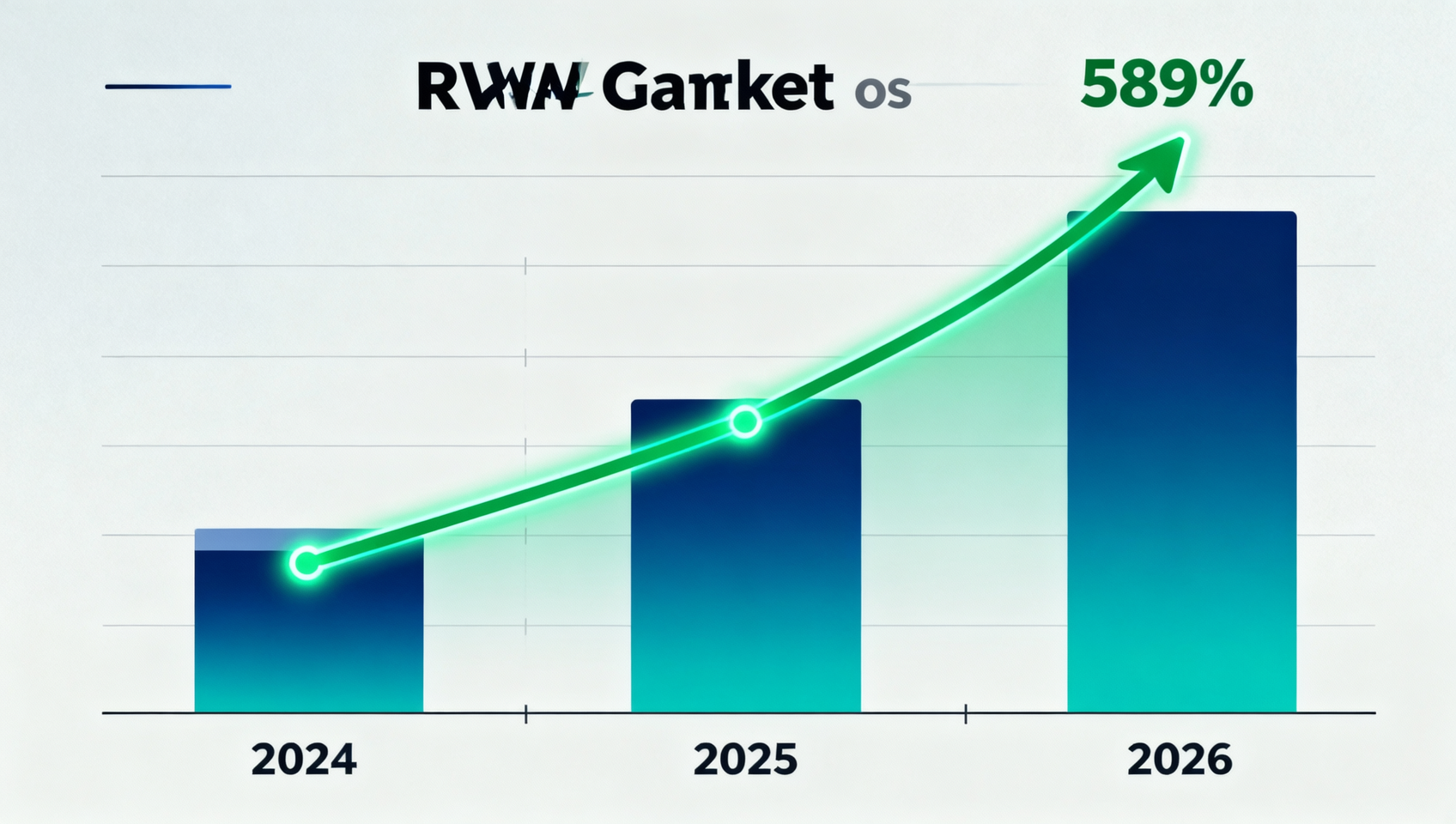
According to the latest 2026 report from Binance Research, the RWA sector has experienced an explosive growth of 589% within a year, with total market cap surging from under $10 billion to approximately $69 billion, and tokenized U.S. Treasury bonds skyrocketing by 2150%. This growth is not merely a crypto narrative hype but is driven by real capital inflows from traditional asset management giants like BlackRock and Franklin Templeton.
Haven't grasped the basic concepts of RWA yet? It's recommended to first read What Are On-Chain Assets? From Wallet to RWA and Binance Research RWA Deep Dive Report Interpretation to build a foundation before diving into project analysis.
In 2026, the RWA sector is no longer in the proof-of-concept stage but has entered a critical period of large-scale application. The following 5 projects represent core infrastructure and leading applications in different directions of RWA.
Ondo Finance: Leader in Treasury Tokenization
Core Positioning: Compliant institutional-grade RWA issuance platform Token: ONDO TVL: Over $6 billion (Q2 2026)
Ondo Finance is currently the project with the highest market cap and deepest institutional partnerships in the RWA sector. Its core products include:
USDY (Yield-Bearing Stablecoin): Backed by U.S. short-term Treasury bonds and bank deposits, offering an annualized yield of approximately 4.5-5.5%. Users can hold and earn USD returns on-chain without KYC. The underlying assets are audited monthly, leading the industry in transparency.
OUSG (Short-Term Treasury Token): A tokenized Treasury product designed for institutions, with underlying assets being BlackRock's BUIDL fund and iShares short-term Treasury ETFs. The entry threshold is reduced from $100,000 for traditional Treasury investments to $1,000.
Ondo's biggest moat lies in its compliance advantage. It is one of the few projects that has received recognition under the U.S. SEC compliance framework and has established deep partnerships with traditional asset management giants (BlackRock, Morgan Stanley). In 2026, Ondo also launched Ondo Chain—a Layer 1 public chain specifically designed for RWA, further solidifying its ecosystem moat.
Chainlink: RWA Oracle Infrastructure
Core Positioning: Decentralized data oracle and cross-chain interoperability Token: LINK Market Cap: Approximately $15 billion (Q2 2026)
Many view Chainlink as the "API gateway for blockchain," but in the RWA sector, its role goes far beyond that.
CCIP (Cross-Chain Interoperability Protocol): RWA assets need to circulate across multiple public chains, and CCIP acts as a crucial data bridge. It currently supports major networks like Ethereum, Base, Avalanche, and Polygon. Fortune 500 companies (including the Swift SWIFT banking network and ANZ Bank) are testing it for cross-chain settlement of tokenized assets.
DTI (Data Tokenization Initiative): Chainlink collaborates with multiple asset management companies to explore directly tokenizing financial data such as bonds, derivatives, and funds on-chain. This is critical for pricing, settlement, and automated management of RWA assets.
LINK's Value Capture: As the "payment fuel" for the Chainlink network, all RWA projects using CCIP and oracle services need to consume LINK tokens. The more prosperous the RWA sector, the greater the demand for Chainlink infrastructure, and the stronger LINK's value capture.
MakerDAO (Sky): RWA Strategy for Decentralized Stablecoins
Core Positioning: Overcollateralized stablecoin protocol Token: MKR (soon to be renamed SKY) RWA Holdings: Approximately $3.5 billion (Q2 2026)
MakerDAO (brand upgraded to Sky) is one of the earliest projects in the DeFi space to introduce RWA. As early as 2021, MakerDAO began expanding DAI's collateral from purely crypto assets to real-world assets.
DAI Savings Rate (DSR): MakerDAO uses on-chain Treasury yields to support DAI's savings rate, which is often stable at 4-6% annualized. This is significantly higher than the deposit rates of many DeFi protocols, attracting substantial capital inflows.
Treasury Tokenization Strategy: MakerDAO currently holds approximately $2.3 billion in tokenized U.S. Treasury bonds, primarily through trust structures (in partnership with institutions like Monetalis and BlockTower) to hold underlying assets and distribute yields to DAI holders.
Spark Protocol: A lending protocol incubated by MakerDAO, which has become a "router" for RWA yields. Users can deposit DAI into Spark to earn yields or use RWA assets like Ondo USDY as collateral for borrowing.
MakerDAO's advantage lies in DAI's large user base and brand trust. However, the challenge is complex governance, and the DAO's internal decision-making efficiency for RWA reserve allocations can sometimes be less agile.
Centrifuge: Pioneer in On-Chain Asset Financing
Core Positioning: Real-world asset-backed lending protocol Token: CFG TVL: Approximately $800 million (Q2 2026)
Centrifuge is one of the earliest explorers in the RWA sector and a pioneer in bringing real assets into DeFi.
Tinlake Product: Centrifuge's core product allows real businesses (such as new energy vehicle leasing companies, supply chain finance firms) to package real-world assets like invoices, accounts receivable, and installment payment contracts on-chain, pledge them via NFTs, and obtain financing from protocols like MakerDAO.
Asset Tokenization Process: Businesses package assets → Centrifuge's NFTs (NFG, Non-Fungible Goods) represent asset ownership on-chain → Asset pools attract liquidity from investors → Smart contracts automatically distribute repayments and yields.
Why Centrifuge Matters: It represents the "DeFi-native" path of the RWA sector—not just moving traditional assets on-chain, but creating a new "real asset loan" market on-chain. For SMEs unable to obtain financing from banks, Centrifuge offers an alternative.
The current risk lies in managing asset credit quality. Centrifuge controls risk through selected asset originators and overcollateralization mechanisms, but the overall scale is still small, and liquidity is not as high as larger projects like Ondo.
Pendle Finance: Derivatives Market for RWA Yields
Core Positioning: Yield tokenization and interest rate derivatives Token: PENDLE TVL: Approximately $5 billion (Q2 2026, with RWA accounting for about 40%)
Pendle Finance's performance in 2026 has been remarkable. Its core innovation is splitting the principal and yield of yield-bearing assets—by separating PT (Principal Token) and YT (Yield Token), users can trade and hedge the future yields of RWA products.
How Pendle is Used for RWA:
| Tool | Features | Suitable For |
|---|---|---|
| PT (Principal Token) | Locks in current yield, redeemable at face value at maturity | Conservative investors, locking in yields |
| YT (Yield Token) | Leveraged capture of all future yields | Aggressive investors, bullish on yield increase |
| Liquidity Pools | Provide PT/YT trading pairs to earn fees | Market makers, earning PENDLE incentives |
RWA Products on Pendle: It currently supports yield tokenization trading for RWA/yield-bearing tokens like Ondo USDY, MakerDAO DSR, and Ethena sUSDe. Users can on Pendle: 1) Buy PT of USDY, locking in a one-year 6% yield; 2) Buy YT, betting on excess returns from yield increases.
Pendle's moat lies in its "yield Lego" positioning—it does not directly issue RWA but provides a trading venue for yields of all RWA products. As the asset scale of the RWA sector grows, the value captured by Pendle also grows exponentially.
Comprehensive Evaluation and Allocation Recommendations
Five Project Comparison Table
| Dimension | Ondo Finance | Chainlink | MakerDAO (Sky) | Centrifuge | Pendle Finance |
|---|---|---|---|---|---|
| Core Sector | Treasury Tokenization | Data/Cross-Chain Infrastructure | Stablecoin + RWA Collateral | On-Chain Asset Credit | Yield Derivatives |
| Compliance Maturity | ⭐⭐⭐⭐⭐ | ⭐⭐⭐ | ⭐⭐⭐ | ⭐⭐⭐ | ⭐⭐⭐ |
| Technical Moat | ⭐⭐⭐⭐ | ⭐⭐⭐⭐⭐ | ⭐⭐⭐⭐ | ⭐⭐⭐⭐ | ⭐⭐⭐⭐ |
| Ecosystem Scale | ⭐⭐⭐⭐⭐ | ⭐⭐⭐⭐⭐ | ⭐⭐⭐⭐⭐ | ⭐⭐⭐ | ⭐⭐⭐⭐ |
| Yield Potential | ⭐⭐⭐ | ⭐⭐⭐⭐ | ⭐⭐⭐⭐ | ⭐⭐⭐⭐⭐ | ⭐⭐⭐⭐⭐ |
| Risk Level | Low | Low-Medium | Medium | Medium-High | Medium |
Asset Allocation Recommendations
- Conservative (60% Treasuries + 20% Infrastructure + 20% Yield): Ondo USDY 60%, Chainlink 20%, Pendle PT 20%
- Balanced (40% Treasuries + 30% Infrastructure + 30% Yield): Ondo OUSG 40%, Chainlink + MakerDAO 30%, Pendle YT 30%
- Aggressive (20% Treasuries + 30% Infrastructure + 50% High Yield): Centrifuge 20%, Chainlink + MakerDAO 30%, Pendle YT + Centrifuge Asset Pools 50%
Summary
In 2026, the RWA sector is no longer about "whether to invest" but "which to choose." Ondo represents the direction of compliance + institutionalization, Chainlink is the "water seller" of underlying infrastructure, MakerDAO represents the integration of decentralized finance with RWA, Centrifuge pioneers the on-chain real credit market, and Pendle captures the yield value of the entire sector.
Each project has a different role and risk-return profile. It is recommended to allocate based on your own risk appetite and investment horizon. Never go all-in on a single project; diversification remains the best strategy to navigate the uncertainties of the RWA sector.
Further Reading
- On-Chain Guide — A beginner's beacon for the crypto space
- What Are On-Chain Assets? From Wallet to RWA — RWA basics introduction
- Binance Research Key Data: RWA Surges 589% in One Year, How to Position in H2 2026? — Sector panorama analysis
Disclaimer: This content is for educational reference only and does not constitute investment advice. Cryptocurrency investment carries risks; please make prudent decisions based on your own circumstances.