


Table of Contents
- What is a Stablecoin?
- Three Major Stablecoins Side-by-Side Comparison
- Comparison Table of Three Stablecoins
- How to Choose for Different Scenarios
- Precautions When Using Stablecoins
- Further Reading
- FAQ (Frequently Asked Questions)
What is a Stablecoin?
For beginners new to cryptocurrency, "stablecoin" might be the term you hear most often besides BTC and ETH.
Simply put, a stablecoin is a cryptocurrency pegged to a fiat currency (mainly the US dollar). The ideal price of 1 USDT, USDC, or DAI is $1.
Why use stablecoins? There are three main reasons:
- Hedging: The crypto market is highly volatile. Converting assets to stablecoins during a market downturn is like "cash is king," without needing to withdraw funds back to a bank.
- Trading: The vast majority of crypto trading pairs are denominated in stablecoins. USDT is currently the primary unit of account on exchanges.
- On-chain Operations: Scenarios like depositing in DeFi protocols, providing liquidity, and paying gas fees all require stablecoins.
Currently, there are over $210 billion worth of stablecoins in circulation, with USDT holding about two-thirds of the market share. But size doesn't always mean better—these three stablecoins have fundamental differences in issuance mechanisms, regulatory compliance, and risk characteristics.
Three Major Stablecoins Side-by-Side Comparison
USDT (Tether): Largest Scale, King of Liquidity
USDT is issued by Tether and is the oldest (2014) and most widely used stablecoin. As of the first half of 2026, USDT's circulation exceeds $140 billion, making it the "dollar" of the crypto world.
Issuance Mechanism:
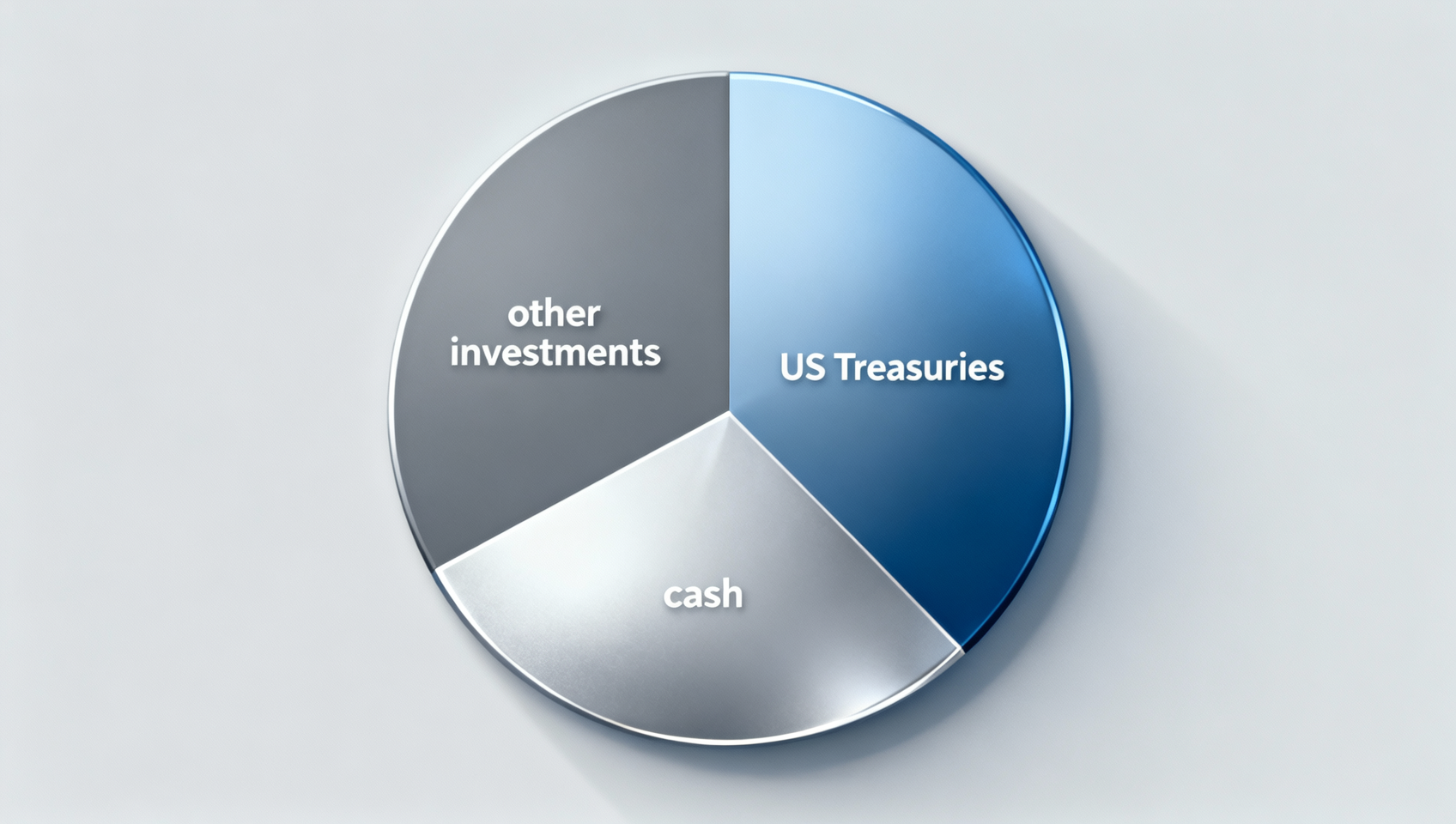
Tether claims that every USDT is backed by equivalent reserve assets, including cash, US Treasury bonds, commercial paper, and other investments. Each time USDT is issued, Tether deposits an equivalent amount of USD or equivalent assets into its bank account.
Controversies and Risks:
The biggest controversy around USDT is reserve transparency. Tether has been investigated multiple times by the New York Attorney General's office, settling for $18.5 million in 2021. Although it now publishes periodic reserve reports, the audits are not conducted by the Big Four accounting firms.
Use Cases:
- Transfers and trading between exchanges (TRC-20 network offers fast speed and low fees)
- Buying most cryptocurrencies (almost all trading pairs support USDT)
- Moving large funds between exchanges
Pros: Best liquidity, most supported chains, most comprehensive trading pairs Cons: Less transparent than USDC, relatively higher compliance risk
USDC (USD Coin): Compliance Benchmark, King of Transparency
USDC is issued by Circle, with Coinbase as a co-founder. Although smaller in scale than USDT, it is the best stablecoin in terms of compliance and transparency.
Issuance Mechanism:
USDC's reserve assets are custodied by multiple top-tier financial institutions, and Circle publishes monthly reserve reports audited by Deloitte. Every USDC is backed by at least an equivalent amount of USD or US Treasury bonds.
Why It's More Popular with Institutions:
USDC's compliance level makes it the preferred choice for Wall Street and traditional financial institutions. Since 2023, Circle has successfully gone public in the US. While USDC's compliance costs are higher, it has earned greater trust.
Use Cases:
- Primary circulating asset in on-chain DeFi protocols
- Institutional-grade crypto asset allocation
- Users with high demands for transparency and compliance
Pros: Most transparent, highest compliance level, widely supported by DeFi ecosystem Cons: Fewer supported public chains than USDT, some exchange trading pairs have less depth than USDT
DAI (Multi-Collateral DAI): Decentralized, Crypto-Native
DAI is fundamentally different from the first two stablecoins—it is not issued by a centralized entity but generated on-chain through smart contracts and an over-collateralization mechanism.
Issuance Mechanism:
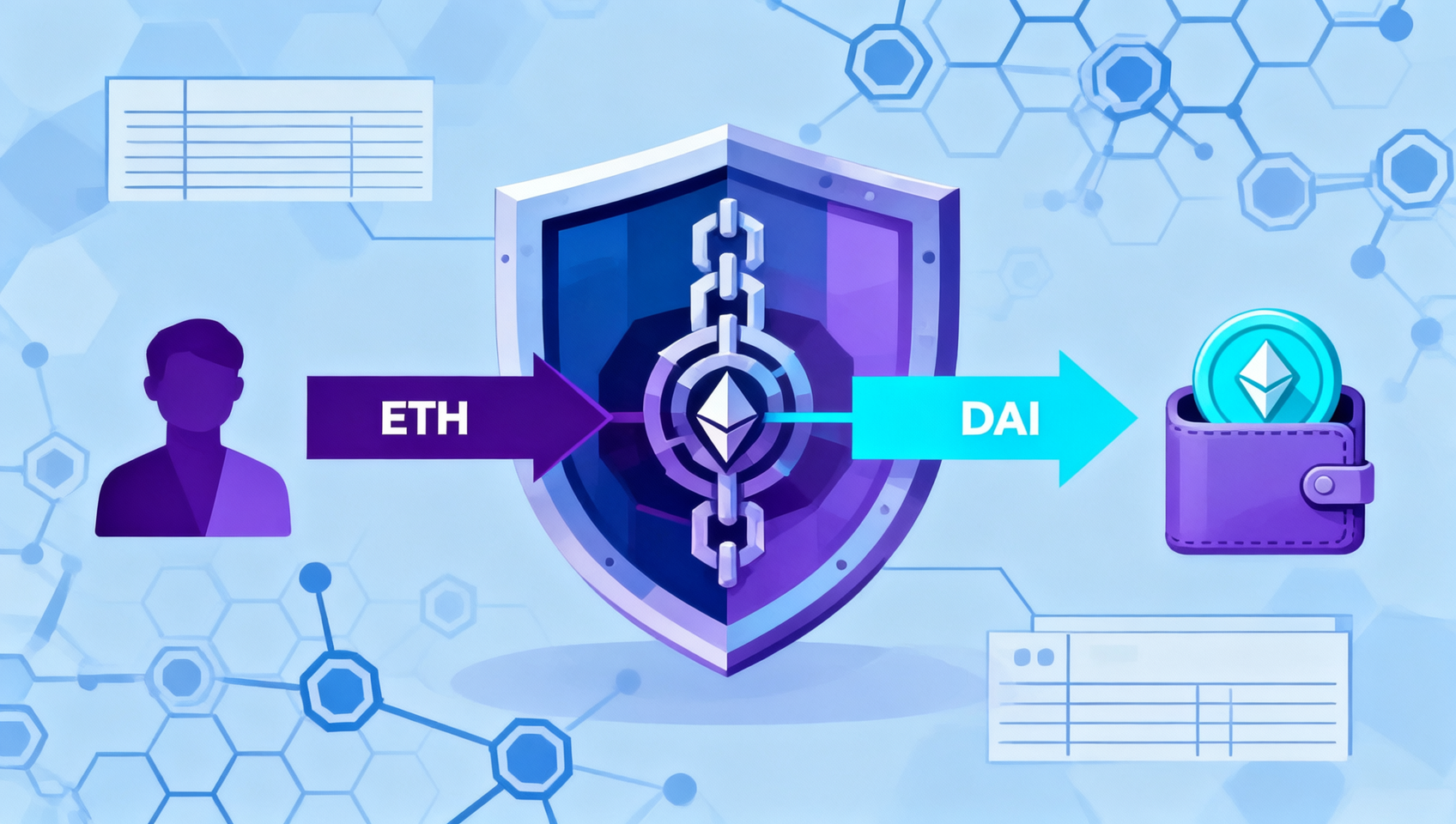
DAI is managed by the MakerDAO protocol. Users collateralize crypto assets like ETH, stETH, and WBTC into Maker Vaults and can then borrow DAI. The collateralization ratio is typically above 150%-170%, meaning to mint 100 DAI, you need to collateralize at least $150-$170 worth of crypto assets.
The Cost of Decentralization:
DAI's decentralized nature also brings unique risks. During extreme market conditions (e.g., a crypto market crash), collateral values can drop rapidly, potentially causing DAI to briefly de-peg. Additionally, early DAI relied mainly on ETH as collateral, but later introduced centralized assets like USDC, which improved stability but reduced some decentralization.
Use Cases:
- Deep DeFi users involved in on-chain lending and liquidity provision
- Crypto-native users pursuing decentralization
- Leveraged longs (collateralizing ETH to generate DAI and buy more ETH)
Pros: Fully decentralized, no need to trust third-party institutions, highest composability Cons: Risk of de-pegging during extreme market conditions, less widespread support than USDT/USDC, higher usage barrier
Comparison Table of Three Stablecoins
| Dimension | USDT | USDC | DAI |
|---|---|---|---|
| Issuer | Tether (Centralized) | Circle (Centralized) | MakerDAO Protocol (Decentralized) |
| Current Market Cap | ~$140B | ~$40B | ~$5B |
| Reserve Transparency | Monthly reports, non-Big Four audit | Monthly reports, Deloitte audit | Fully on-chain verifiable |
| Supported Chains | 20+ | 15+ | Mainly Ethereum + L2s |
| Main Advantage | Best liquidity | Strictest compliance | No need to trust third parties |
| Main Risk | Reserve transparency concerns | Relies on Circle's compliant operations | Collateral volatility leading to de-peg |
| Transfer Speed | TRC-20 very fast | Mainly ERC-20 | Mainly ERC-20 |
| Trading Pair Coverage | Widest, almost all exchanges | Broad | Limited |
| DeFi Ecosystem | Widely supported | Very widely supported | Native DeFi protocols |
| Suitable Users | Regular traders | Compliance-preferring users | Deep on-chain users |
How to Choose for Different Scenarios
Don't stress over "which is better"—all three are good. The key is your use case.
Daily Trading → Choose USDT
If you mainly buy and sell crypto on exchanges, USDT is the most practical choice. Almost all trading pairs are denominated in USDT, offering the best liquidity and fastest order placement and execution. Use USDT on the TRC-20 network for fast transfers with low fees.
On-chain Yield → Choose USDC
If you plan to deposit assets in DeFi protocols for interest (Aave, Compound, Curve, etc.), USDC is the safest choice. It has the highest compliance, good lending pool depth in protocols, and many DeFi protocols even use USDC as the default unit of account.
Decentralized Practice → Choose DAI
If you understand and endorse the concept of decentralization and want to experience true on-chain finance, DAI is the only decentralized stablecoin option. Collateralizing assets in MakerDAO to generate DAI is itself a great DeFi beginner practice.
Most Conservative Approach: Diversify Holdings
Don't put all your stablecoin positions in one type. A common practice is: keep trading funds in USDT, on-chain yield in USDC, and try a small amount of DAI to experience decentralized finance. This way, even if one type faces extreme issues, your overall risk is manageable.
Tip: Buying these three stablecoins on Binance or OKX is very convenient. Binance has the most comprehensive stablecoin trading pairs and the best liquidity, making it the top choice for beginners.
Precautions When Using Stablecoins
Choose the Right Network for Transfers: USDT supports multiple networks like TRC-20, ERC-20, and BEP-20. Sending on the wrong chain can result in lost funds. Always confirm the receiving chain before sending.
Gas Fees Vary by Chain: ERC-20 USDT/USDC transfer fees are higher (can reach $5-$10 during congestion), TRC-20 is stable at $0.8-$1, and L2 networks like Arbitrum/Optimism are cheaper.
Don't Frequently Arbitrage Between Exchanges: Beginners often see price differences between exchanges and try to arbitrage. But after deducting transfer fees and slippage, there's usually little profit, and you might get stuck due to network congestion.
Idle Stablecoins Can Earn Interest: Depositing in exchange savings products (like Binance's "Simple Earn") can yield 2%-5% APY, much better than leaving them idle in a wallet.
Further Reading
- 2026 Beginner's Guide to Buying Cryptocurrency: Exchange Registration and Trading Complete Guide
- 2026 Binance Registration Complete Guide: Binance Account Opening, KYC, and Deposit Tutorial
- Cryptocurrency Beginner's Guide: First Lesson from Scratch
- On-chain Knowledge Base — Learn More About Blockchain and Crypto Basics
FAQ (Frequently Asked Questions)
Q1: Which is the safest among USDT, USDC, and DAI?
A: Each has pros and cons from different perspectives. USDC has the strictest regulation, monthly audit reports, and the highest compliance. USDT has the largest scale and best liquidity, but its reserve transparency has been questioned multiple times. DAI is fully decentralized with open-source code, but its risk lies in the collateral being crypto assets, which could de-peg during extreme market conditions. Conservative users should choose USDC, traders choose USDT, and for decentralized scenarios, choose DAI.
Q2: Should I buy USDT or USDC?
A: It depends on your use case. If you mainly trade on centralized exchanges, USDT has the best liquidity and almost all trading pairs support USDT. If you care more about compliance and transparency, or use DeFi protocols, USDC is well-supported on many on-chain ecosystems. It's recommended to use USDT for daily trading and USDC for on-chain yield.
Q3: Can DAI really always maintain $1?
A: DAI maintains its peg through over-collateralization and interest rate adjustment mechanisms. Historically, it has stayed near $1 most of the time. However, during extreme market conditions (like Black Thursday in March 2020), DAI briefly de-pegged above $1.03. MakerDAO later added centralized assets like USDC as collateral, improving stability but sacrificing some decentralization.
Q4: Where does stablecoin yield come from?
A: On centralized exchanges (like Binance), you can deposit stablecoins into savings products or Launchpool for yield. In DeFi protocols (like Aave, Compound), depositing USDC or DAI as liquidity providers earns deposit interest. Due to USDT's high liquidity demand, its yield in some scenarios is slightly lower than USDC and DAI.
Q5: Could USDT collapse?
A: USDT's scale exceeds $140 billion, making it one of the most important infrastructures in the crypto market. If USDT collapses, the impact on the entire market would be catastrophic. Currently, Tether holds a large amount of US Treasury bonds as reserves. However, from a risk perspective, it's advisable to diversify holdings across different stablecoin types rather than going all-in on one.
Q6: Which stablecoin has the lowest transfer fee?
A: Fees depend on the blockchain network used, not the stablecoin itself. USDT supports the most chains (TRC-20, ERC-20, BEP-20, etc.), with TRC-20 USDT having the lowest transfer fee (around $0.8-$1). USDC and DAI are mainly transferred on Ethereum, Arbitrum, Optimism, Polygon, etc., with L2 network fees much lower than the mainnet.
Q7: Can the three stablecoins be exchanged for each other?
A: Yes. On centralized exchanges (like Binance, OKX), you can directly exchange USDT for USDC or DAI with very low fees. On decentralized exchanges (like Uniswap, Curve), it's also easy to swap. Curve is specifically optimized for stablecoin swaps with minimal slippage and fees, making it the most efficient protocol for stablecoin exchanges.
Disclaimer: This content is for educational reference only and does not constitute investment advice. Cryptocurrency investment carries risks; please make decisions cautiously based on your own circumstances.