


Table of Contents
- What is a Crypto Exchange?
- What is a CEX (Centralized Exchange)?
- What is a DEX (Decentralized Exchange)?
- CEX vs DEX Full Comparison
- How to Choose? Beginner's Decision Guide
- FAQ
- Summary
What is a Crypto Exchange?
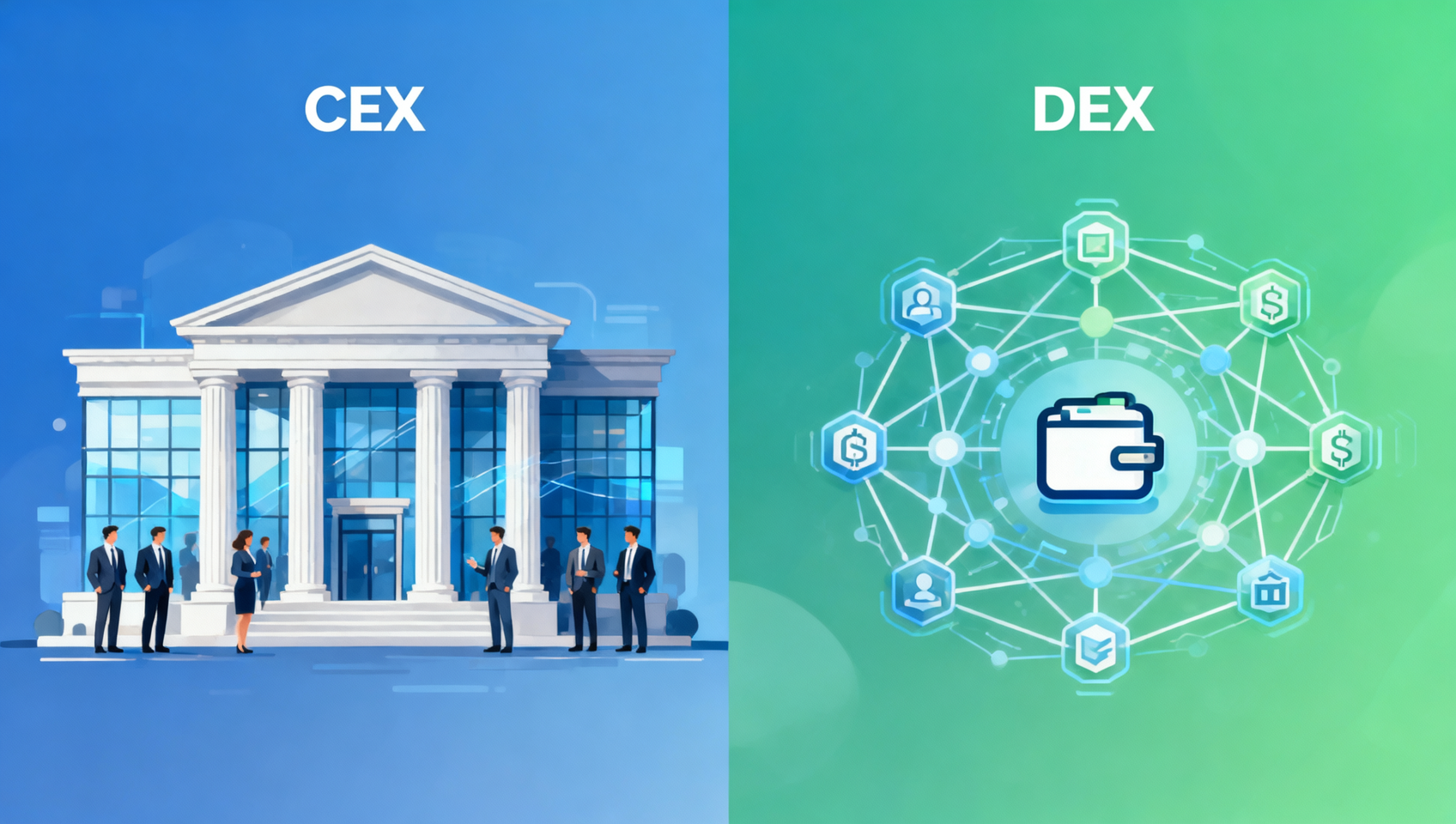
A crypto exchange is a platform where you can buy, sell, and trade cryptocurrencies. Like a stock exchange for stocks, a crypto exchange lets you convert fiat currency (USD, EUR, etc.) or one cryptocurrency into another.
There are over 500 crypto exchanges globally, but they fall into two main categories:
- Centralized Exchanges (CEX) — Binance, OKX, Coinbase
- Decentralized Exchanges (DEX) — Uniswap, PancakeSwap, Raydium
These two types differ fundamentally in how they operate, their security models, and user experience.
What is a CEX (Centralized Exchange)?
CEX is the most common type of crypto exchange. You register an account, deposit funds, and trade on the platform.
Leading CEXs
| Platform | Daily Volume | Coins Supported |
|---|---|---|
| Binance | ~$65B | 350+ |
| OKX | ~$10B | 300+ |
| Coinbase | ~$5B | 200+ |
| Bybit | ~$8B | 250+ |
| Kraken | ~$3B | 200+ |
How CEX Works
A CEX is a centralized ledger system. Your assets are custodied by the platform, and trades are recorded internally — not directly on the blockchain.
Deposit → Platform custody → Place order → Internal matching → Balance update
Only when you withdraw do assets actually move on-chain.
CEX Pros
- ✅ Simple to use — no blockchain knowledge needed
- ✅ Excellent liquidity and order book depth
- ✅ Fiat on-ramp (bank cards, Alipay, WeChat Pay)
- ✅ Customer support
- ✅ Additional features (staking, earn, launchpad)
CEX Cons
- ❌ Custodial risk — if the platform is hacked or collapses (e.g. FTX), your assets may be lost
- ❌ KYC required — must submit ID and undergo verification
- ❌ Censorship risk — platform can freeze your account
- ❌ Poor privacy
What is a DEX (Decentralized Exchange)?
DEX runs on smart contracts. No registration, no KYC — trade directly from your crypto wallet.
Leading DEXs
| Platform | Chain | Daily Volume |
|---|---|---|
| Uniswap | Ethereum/L2 | ~$2B |
| PancakeSwap | BNB Chain | ~$800M |
| Raydium | Solana | ~$300M |
| Curve | Ethereum/L2 | ~$500M |
| Jupiter | Solana | ~$400M |
How DEX Works
DEXs use Automated Market Maker (AMM) models. Users (liquidity providers) deposit funds into pools; traders swap against these pools. Prices are algorithmically determined by the ratio of assets in each pool.
Connect wallet → Select pair → Smart contract executes → Assets arrive in your wallet
No middleman. Your assets stay in your wallet until the moment of trade.
DEX Pros
- ✅ Full self-custody — only you control your assets
- ✅ No KYC — completely anonymous
- ✅ Censorship resistant
- ✅ Globally accessible
- ✅ Transparent — all trades on-chain
DEX Cons
- ❌ Higher learning curve — wallets, Gas, private keys
- ❌ No fiat on-ramp — need crypto first
- ❌ Slippage on large trades
- ❌ High Gas fees on Ethereum mainnet
- ❌ Smart contract risks
- ❌ No customer support
CEX vs DEX Full Comparison
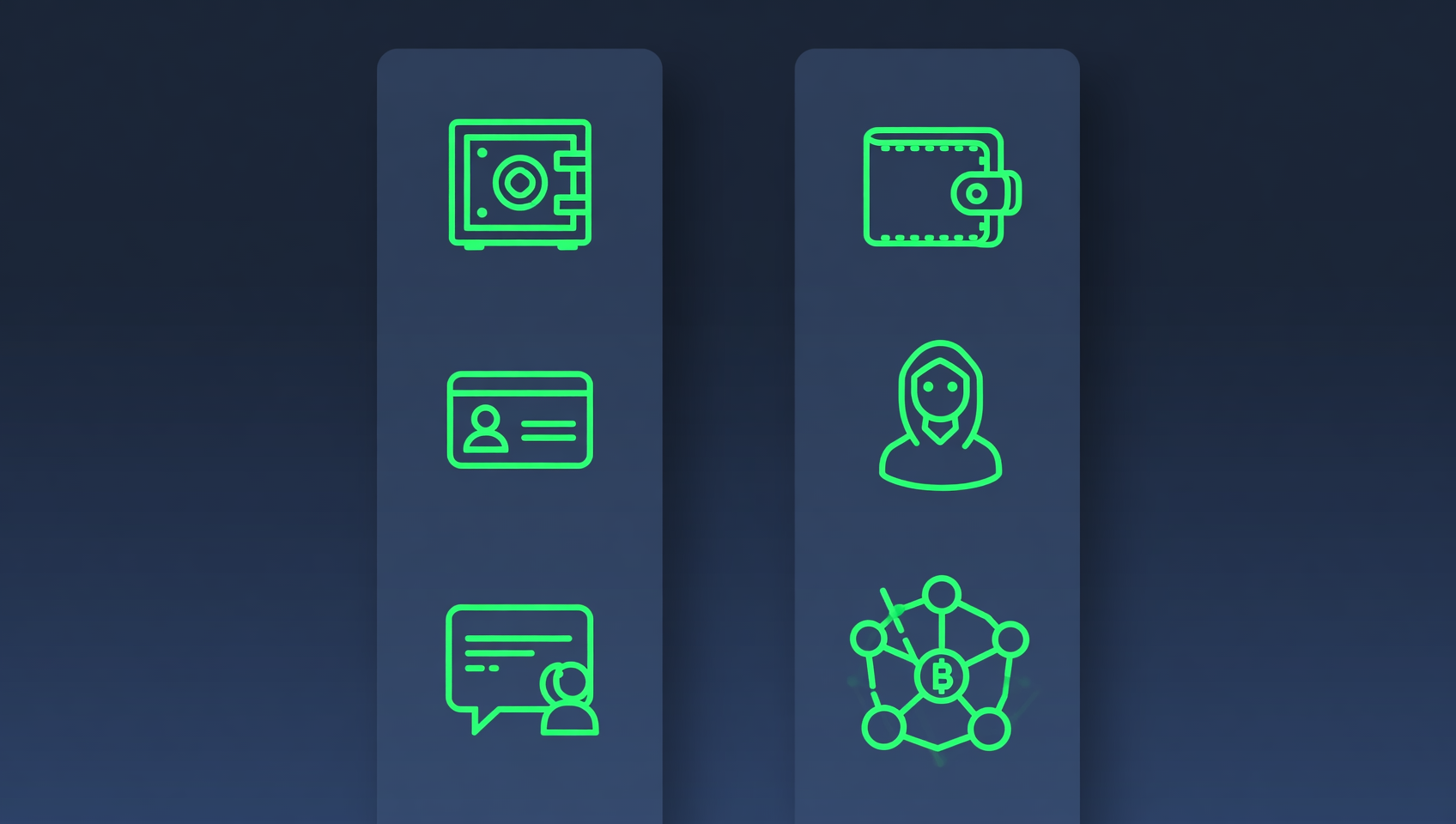
| Dimension | CEX | DEX |
|---|---|---|
| Ease of Use | ⭐⭐⭐⭐⭐ Very easy | ⭐⭐ Higher barrier |
| Asset Control | ⭐⭐ Platform custodied | ⭐⭐⭐⭐⭐ Self-custody |
| Liquidity | ⭐⭐⭐⭐⭐ Excellent | ⭐⭐⭐ Moderate |
| Fees (Small) | ⭐⭐⭐⭐⭐ Low (0.1%) | ⭐⭐⭐ Depends on Gas |
| Fees (Large) | ⭐⭐⭐⭐⭐ Low | ⭐⭐ High slippage+Gas |
| Coin Selection | ⭐⭐⭐⭐ Hundreds | ⭐⭐⭐⭐⭐ Unlimited |
| Fiat On-ramp | ✅ Yes | ❌ No |
| KYC/Privacy | Required, low privacy | None, anonymous |
| Security Risk | Platform failure | Contract vulnerability |
| Support | ✅ Available | ❌ None |
| Censorship Resistant | ❌ Regulated | ✅ Unstoppable |
| Best For | Beginners, daily traders | Advanced users, DeFi |

Security Deep Dive
CEX Risks: Single point of failure. FTX's collapse in 2022 showed the worst case. Top CEXs also face hacking attempts (Binance, Bybit each lost hundreds of millions at different points). Mitigations include SAFU insurance funds, multi-sig cold wallets, and Merkle tree proof-of-reserves.
DEX Risks: Smart contract vulnerabilities and user error. Between 2023-2025, DEX/DeFi hacks caused over $3B in losses. Phishing approvals, permit phishing, and fake airdrops are common. User mistakes (wrong address, wrong network) are irreversible.
How to Choose? Beginner's Decision Guide
🟢 Use CEX When
- You're new to crypto
- You need to buy crypto with fiat
- You trade small to medium amounts
- You want simple, fast operations with support
- You mainly trade major coins (BTC, ETH, SOL)
Recommended: Binance
🔵 Try DEX When
- You have experience and a hardware wallet
- You want to trade long-tail tokens or memes
- You value privacy
- You want to participate in DeFi (liquidity provision, staking)
- You hold significant assets and want full control
🔄 Best Practice: Use Both
CEX ←→ DEX Buy via CEX → Transfer to DEX for DeFi → Keep some on CEX for quick trades
Beginner Tips
- Start on CEX to learn the basics
- Don't jump into DEX immediately — mistakes are costly
- Stay safe everywhere: strong passwords, 2FA, verify contracts
- Diversify: split assets across CEX, DEX, and hardware wallets
FAQ
CEX vs DEX — which is safer?
No absolute answer. Top CEXs have robust systems but carry platform risk. DEXs remove custodial risk but have smart contract risk. Use hardware wallets for large holdings, CEX/DEX for trading.
Should beginners use CEX or DEX?
CEX, strongly. Simple, supportive, fiat-friendly. Try DEX after you're comfortable with the basics.
Which has lower fees?
CEX for trading fees (0.1% vs variable Gas). DEX on L2 can be cheap too.
Does DEX need KYC?
No — but no support either.
What's slippage?
Price difference between expected and executed price on DEX. Set a slippage tolerance (0.5-3%).
Can I use both?
Yes — it's the optimal strategy.
Summary
| Stage | Recommendation | Reason |
|---|---|---|
| 🟢 Beginner | CEX (Binance/OKX) | Simple, supportive, fiat on-ramp |
| 🟡 Intermediate | CEX + small DEX | Learn on-chain, small experiments |
| 🔵 Advanced | CEX + DEX combo | Best of both worlds |
CEX and DEX are not mutually exclusive. The smartest approach is to use both strategically based on your needs.
⚠️ Disclaimer: Crypto markets are highly volatile. This article is for educational purposes only.
📚 Learning Resource: What is Blockchain? Complete Beginner Guide — Blockchain fundamentals and on-chain data analysis tutorials