

⚠️ Before anything else: KYC is step two of onboarding, while step one is signing up through the registration link (e.g. "Sign up now") or entering invite code BINANBT — registering directly inside the app gets you none of the new-user rewards, and both the $19,800 welcome package and the 20% fee rebate will not apply. Registration and identity verification must both use your own real identity.
Key takeaways (TL;DR):
- Without KYC there is no regulated exchange available to you. Binance and every mainstream platform require completed verification (ID document plus liveness face check) before deposits, trading and withdrawals; the only "no-KYC" alternatives are unregulated platforms — and that is where the real risk lives.
- "Will I get investigated?" needs to be split into three layers. Platform risk control watches fund behaviour, not identity; law-enforcement requests require legal process tied to a specific case; data breaches are the only layer ordinary users have actually experienced — and breaches expose your identity documents, not your coins.
- KYC data breaches have real precedents, and their damage is "precision scams", not direct theft. Ledger leaked detailed records of about 272,000 customers in 2020; Coinbase disclosed insider-bribery data theft including government ID photos in May 2025, with estimated costs up to $400 million1. In neither case were on-chain assets moved because of the leak.
- KYC does not touch your credit report. Credit records come from lending activity; KYC is a platform-side identity check under AML rules. The two systems never talk to each other.
- Buying a pre-verified account stacks four risks at once. Legal exposure for using someone else's identity, no recovery path, risk-control closure at any moment, and the original owner can reclaim the account with their own ID — you gamble the entire balance to save half a day.
- The right posture is "expose less", not "don't verify". Major platforms, official submission channels, anti-phishing codes and distrust of "customer support" that can recite your data — these four do more for you than agonising over whether to verify.
Table of contents
- The short answer: KYC is mandatory and the risk is manageable
- What KYC actually collects: two tiers and the data list
- Why it is mandatory: AML is the only reason KYC exists
- Breaches that really happened: two cases and their actual damage
- "Will I get investigated?": three meanings, three answers
- Four myths that refuse to die
- Six things that actually reduce your exposure
- The right order after signing up
- 💰 Binance rebate: invite code BINANBT
- FAQ
- Further reading
The short answer: KYC is mandatory and the risk is manageable
Identity verification is not a choice — on any regulated exchange it is the precondition for using everything; the real choice is where and how to verify so the privacy exposure stays minimal. Binance and other mainstream platforms gate deposits, trading and withdrawals behind completed verification.
The answer comes in three parts:
- You must verify. A compliant no-KYC channel does not exist. A platform that skips KYC also skips AML oversight, proof-of-reserves, audits and reliable off-ramps — counterparty, exit-scam and freeze risks all scale up. Dodging KYC by choosing weaker platforms trades a big risk for a small discomfort.
- Most of the "investigation" fear is misdirected. Risk control watches behaviour patterns; law-enforcement requests need legal process aimed at a specific case. Neither happens "because you verified". The one KYC risk ordinary users have actually met is a platform data breach followed by precision scams.
- Breach damage is preventable. Across historical leaks, direct losses happened at the "scammer uses leaked info" step, not at "assets moved because of the leak". Recognising fake support agents and never sharing verification codes cuts that path.
So the right posture is: verify with your real identity on a top-tier platform, then put your energy into account security and scam awareness. The rest of this guide unpacks each layer.
What KYC actually collects: two tiers and the data list
Taking Binance as the example, personal verification has two tiers — Verified (basic) and Verified Plus (advanced): the first is the floor for using the platform, the second raises limits. Basic verification needs an ID document plus a liveness face check; advanced tiers add proof of address in some regions2.
| Data item | Submitted at | Purpose |
|---|---|---|
| Name, ID number, document expiry | Basic verification | Identity matching, account ownership |
| ID document images (front/back) | Basic verification | Comparison against official databases, forgery defence |
| Liveness face video / selfie | Basic verification | Confirms you are present and real; prevents impersonation |
| Proof of address (bill/utility statement) | Advanced verification in some regions | Regional compliance, higher limits |
| Device info, IP, login records | Throughout registration and use | Risk control, account theft defence, legal cooperation |
Two boundaries worth knowing:
- Face recognition happens once, at verification. It is a one-off liveness check, not a standing camera — one of the most widespread beginner misconceptions.
- Retention follows the privacy policy. AML rules generally require identity material to be kept for years after account closure — a global financial-industry standard, not a crypto peculiarity.
In one line: what you hand over is a one-time verification snapshot plus ongoing risk-control logs — not "your life under watch".
Why it is mandatory: AML is the only reason KYC exists
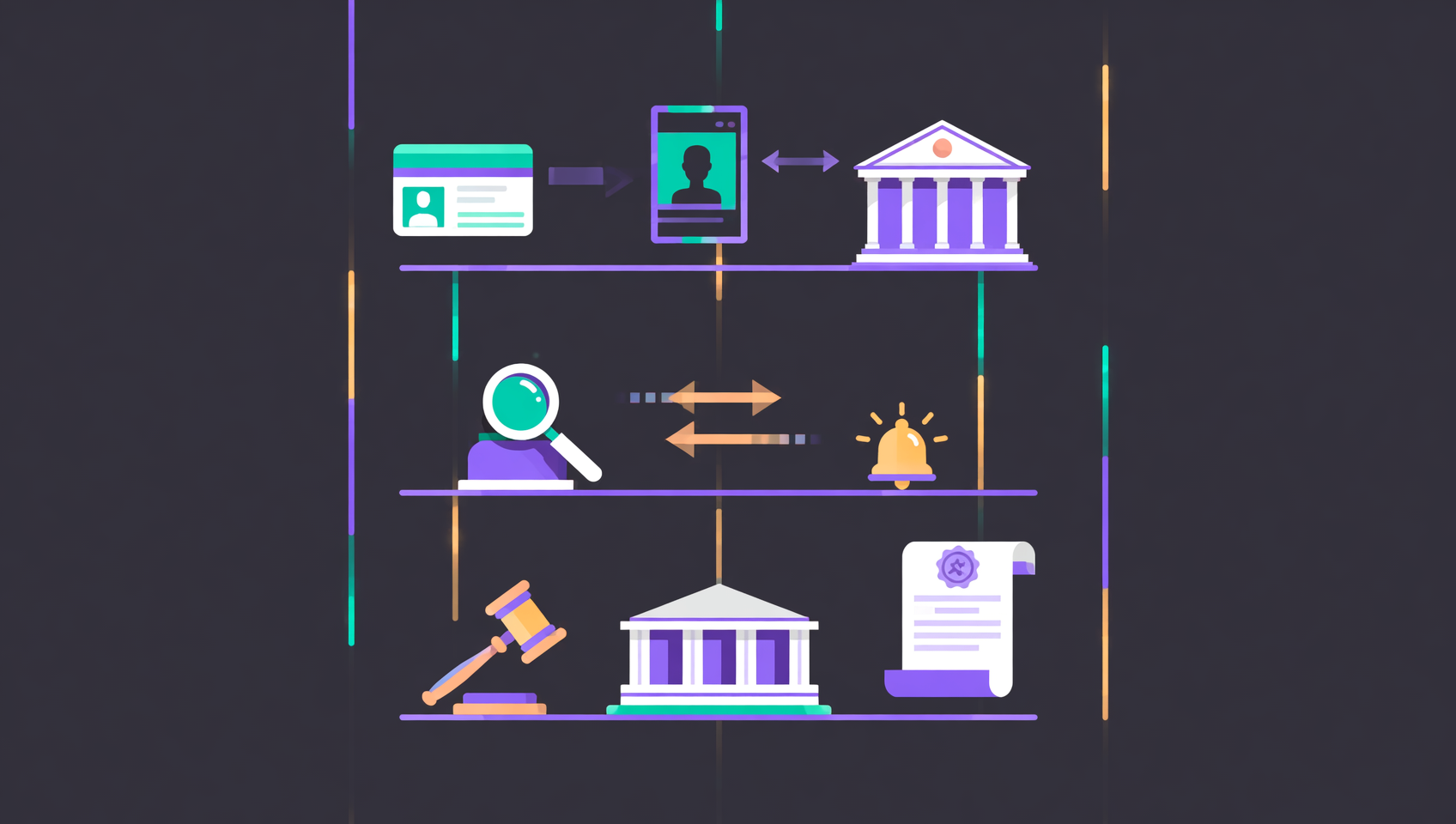
Exchanges do not collect your identity because they are curious; regulators require them to know who you are. Operating with a licence means carrying the same anti-money-laundering (AML) and counter-terrorist-financing duties as traditional financial institutions, and KYC is the first ring of that chain.
The regulatory logic runs in four rings:
- Named accounts (KYC): every account maps to a real person, so anonymous money pools cannot exist.
- Transaction monitoring (AML): platforms continuously screen for suspicious patterns with rules and on-chain analytics tools; large anomalies get reported.
- Named transfers (Travel Rule): in regulated regions, transfers above a threshold must carry sender and recipient information between institutions — a global FATF requirement for virtual asset service providers3.
- Law-enforcement cooperation: once the first three rings exist, authorities with legal process can request specific account information — and only that way.
Seeing the chain makes the point clear: KYC does not exist to "watch you"; it exists so that "when something happens, it can be traced" becomes possible. For ordinary users it buys platform legitimacy, working off-ramps and a basis for appeals when things go wrong; for criminal funds it is the biggest obstacle — which is exactly why the black market keeps buying other people's accounts.
In one line: KYC is the platform's cost of having a licence, and partly the source of your funds' safety; disliking it is understandable, routing around it costs more.
Breaches that really happened: two cases and their actual damage
KYC risk is not a theory — large identity leaks have really happened. Reading the two canonical cases tells you what to defend against.
Case one: Ledger (2020). Hardware wallet maker Ledger had its e-commerce database breached in June 2020; detailed records of about 272,000 customers — names, addresses, phone numbers, order history — were published on a hacking forum in December 2020, with over a million email addresses affected overall1. The damage was not stolen wallets — hardware wallet keys never leave the device — but years of precision phishing: emails, texts, even in-person intimidation, where scammers could recite names, addresses and purchase history while posing as official "product recall" support to extract seed phrases.
Case two: Coinbase (May 2025). Criminals bribed offshore customer-support contractors and obtained customer names, contact details, government ID images, masked bank details and transaction records; the $20 million ransom demand was refused, and Coinbase estimated related remediation and reimbursement costs at up to $400 million4. Again, what was stolen was identity data and transaction history — credentials, private keys and customer funds were not taken.
The two cases point to the same conclusions:
| Fact | Meaning |
|---|---|
| What leaks is identity material, not private keys or assets | A KYC breach ≠ your coins are gone |
| The real losses happen in follow-up precision scams | Blocking "fake support / fake officials" blocks most of the damage |
| Even top platforms leak | Choose big platforms to cut the probability — not to reach zero |
In one line: the realistic consequence of a KYC leak is "scammers know who you are", not "hackers took your coins"; scam awareness protects you more than refusing to verify.
"Will I get investigated?": three meanings, three answers
"Does exchange KYC get you investigated?" hides three completely different questions; lumped together, they can never be answered. Take them one at a time.
Layer one: does the platform monitor me? Risk-control systems continuously analyse fund behaviour — rapid in/out flows, large round amounts, interaction with high-risk addresses — not your identity or your life. Triggers are behaviour patterns, almost never "who you are". For a user who buys, holds and trades occasionally, the risk-control log simply sleeps.
Layer two: will law enforcement pull my information? Yes — but with legal process tied to a specific case. Platforms cooperating with lawful requests is industry standard; the request targets accounts involved in a case, not "ordinary people who completed KYC". If you trade normally with clean funds, this never touches you. And if your counterparty is involved in a case, the money trail already links you whether or not you verified — KYC is actually what makes proving your innocence possible.
Layer three: will my data leak? This is the only layer ordinary users have really experienced, and the two cases above are the answer. Managing it is not refusing to verify (impossible) but limiting exposure: verify only on major platforms through official channels, never re-submit your documents to unknown websites, and raise your scam guard after any breach announcement.
The mainland China legal reality, stated honestly: virtual-currency-related business constitutes illegal financial activity and individuals bear their own legal risks when trading5; offshore exchanges operate under the law of their own jurisdictions. This guide covers verification process and privacy risk management only — it is not legal advice and offers no method to evade regulation.
In one line: risk control watches behaviour, law enforcement needs process, leaks are fought with scam awareness — three layers, three different jobs; "verified, therefore investigated" is a category error.
Four myths that refuse to die
Half the fear around KYC comes from not knowing the mechanism, and half from deliberately amplified rumours. Take them down one by one:
- "KYC affects your credit report." False. KYC never touches the central credit system; credit records come from lending activity (loans, cards, missed payments). KYC is a platform-side identity check, and the two databases never interconnect. What does disrupt life is a case-related judicial freeze or an anti-fraud disciplinary list — consequences of illegal conduct, not of verifying.
- "Buying a pre-verified account is more convenient." Dangerous and violating. Four stacked risks: using another person's identity information is itself a violation; risk control flags device/IP mismatches with the verified person and closes the account, stranding funds; the original owner can reclaim the account with their own documents at any time, with zero protection for you; and if that account was ever used in crime, the new user is investigated first. You staked the entire balance to save half a day.
- "No-KYC platforms protect your privacy better." Backwards. Skipping KYC means skipping AML oversight, proof of reserves, compliance audits and dependable off-ramps. What you traded for privacy is not safety but a maximised counterparty risk. Genuine privacy needs live in self-custody and on-chain practice — a different body of knowledge, not a darker platform.
- "After KYC the platform sees all my assets and trades." The platform sees what is on the platform: your account and trades there. Assets in your self-custody wallet, positions on other platforms — invisible to it. On-chain data is public, but linking an address to your identity requires extra information; the exchange only knows the deposit/withdrawal legs you ran through it.
In one line: all four myths share one root — imagining "submitting identity" as "handing over your life"; what you actually submit is a verification snapshot and behaviour logs.
Six things that actually reduce your exposure
KYC privacy risk cannot reach zero, but every component has a mature countermeasure. Ranked by return on effort:
- Verify only on top-tier platforms. A platform's database security spend, breach disclosure and reimbursement machinery directly set your exposure probability. On an unregulated platform, even the "privacy policy" is decoration.
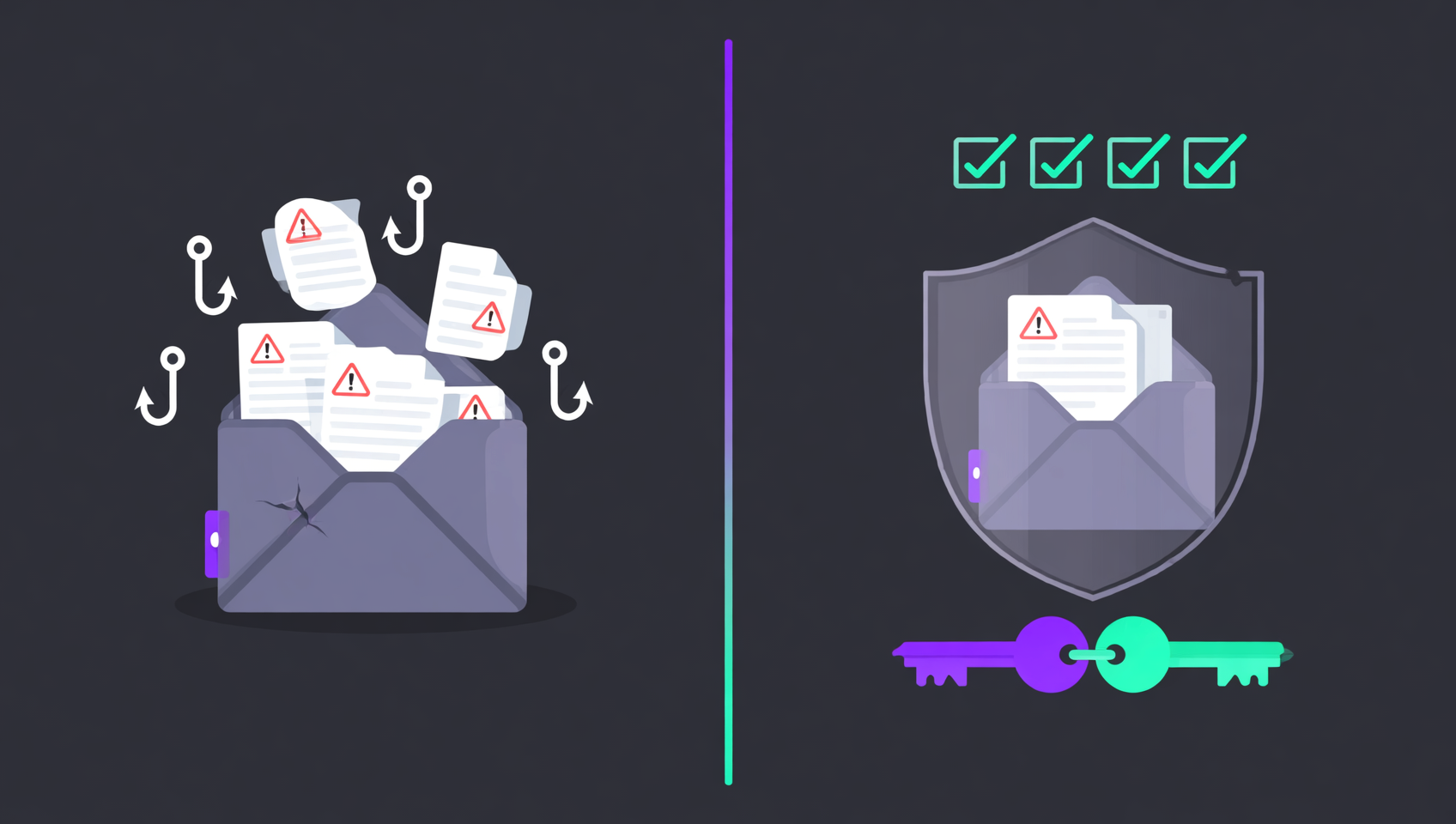
- Submit only through official channels. Get the app from the official site or official stores (the fake-app problem is covered in our Binance download and registration guide); submit documents only inside the app's verification page. Any "support agent" asking for document photos via groups, DMs or phone calls is a scammer.
- Turn on the anti-phishing code and 2FA. The anti-phishing code lets you tell real platform emails from fakes; authenticator 2FA protects the account itself. Together they block the "after the leak" loss path.
- Never reuse your document set. Do not re-submit the same ID photos to unknown sites, fake "limit assessments" or "airdrop claims". Every submission is one more exposure.
- Know what "they can recite my info" actually means. A scammer reciting your name, phone number, even ID number and exchange records is no longer proof of officialdom — it only proves your data leaked from somewhere. Real support never asks for codes, never requests transfers, never walks you through installing software.
- Set account security once, completely. See our Binance account security settings guide: 2FA, anti-phishing code, withdrawal whitelist, anti-scam alerts — the full four-piece set.
In one line: verify with your real identity, limit exposure while using, and never trust anyone who can recite your data.
The right order after signing up
KYC is step two of onboarding; the step before it decides your rebate, and the steps after it decide your account's safety. The full order:
- Enter invite code BINANBT at registration (or use the registration link). The referral binds at the moment of signup; there is no official way to add it afterwards, so missing it means missing the new-user rewards.
- Complete KYC the same day. Photograph documents without glare or occlusion; do liveness detection in good light; keep the name consistent with your bank account. Review commonly takes minutes to hours; if rejected, work through our Binance KYC failure fix guide.
- Turn on 2FA and the anti-phishing code. Before your first deposit, not after your first purchase.
- Close the loop with a small deposit. Keep the first deposit around 100–500 CNY equivalent and walk the full path once: C2C, internal transfer, first order.
In one line: registration locks the rebate, verification opens the functions, security settings protect the principal, a small first deposit builds confidence — one step out of order and everything after needs rework.
💰 Binance rebate: invite code BINANBT
KYC decides whether you can trade; the 20% rebate locked at registration decides where your trading costs floor out. This article contains referral links — signing up through them may earn us a reward and will not cost you anything extra.
- Rebate: 20% of trading fees back, long-term.
- Welcome package: up to $19,800, unlocked by tasks — not a cash giveaway on signup.
- How to claim: enter BINANBT in the invite-code field at registration; that is the surest way.
- Important: signing up directly inside the app gets you no signup reward at all. An in-app registration binds to no referral, so the $19,800 welcome package and the 20% fee rebate simply do not apply — use the registration link or enter invite code BINANBT.
👉 Sign up on Binance and claim a 20% trading fee rebate
FAQ
Does exchange KYC get you investigated?
Verification itself never triggers an investigation. Platform risk control watches fund behaviour patterns, and law-enforcement requests require legal process tied to a specific case — both target abnormal behaviour, not "ordinary verified users". The KYC risk ordinary users have actually met is precision scamming after a platform data breach; the countermeasures are official submission channels, anti-phishing codes, and distrusting "support agents" who can recite your personal information.
Does KYC identity verification affect your credit score?
No. KYC is an AML-driven identity check performed by the exchange and never connects to the central credit system; credit records come from loans, cards and repayment history. What can disrupt life is different: a case-related judicial freeze or an anti-fraud disciplinary list for renting out accounts — consequences of illegal conduct, not of verifying normally.
What documents does Binance KYC require?
Personal basic verification (Verified) needs an ID document plus a liveness face check; Verified Plus in some regions adds proof of address. Face recognition is a one-time liveness check during verification, not continuous monitoring. Retention follows AML requirements — typically years, per Binance's current privacy policy.
Can you use someone else's identity for KYC?
No — four stacked risks: using another person's identity information is itself a violation; risk control flags device/IP mismatches and closes the account, stranding funds; the original owner can reclaim the account with their own documents at any time; and if the account was ever involved in crime, the current user is investigated first. A purchased account carries no protection whatsoever — the whole balance can be stuck inside.
Do no-KYC exchanges protect privacy better?
Skipping KYC usually means skipping AML regulation, proof of reserves, compliance audits and dependable off-ramps. What you traded for privacy is not safety but higher counterparty and exit-scam risk. Genuine privacy needs belong to self-custody wallets and on-chain practice, not to choosing an unregulated platform.
What happens if KYC information leaks?
In the historical cases (Ledger 2020, Coinbase 2025), what leaked was identity material and transaction records — user assets were not moved directly; the real losses came from scammers weaponising the data in precision scams: fake support, fake recalls, fake recovery services. The right response to a breach is raised scam awareness, never sharing verification codes, and never transferring on instruction — not panic-withdrawing.
How long does verification take, and what if it is rejected?
Commonly minutes to hours, longer in complex cases. Rejections usually trace to glare or occlusion on document photos, poor liveness-detection conditions, names not matching documents, or unsupported document types; fix item by item and file a manual appeal if needed. The full fix list is in our Binance KYC failure guide.
Further reading
- Binance KYC rejected? Verification failure, face-scan fixes and retries
- Binance registration guide: account, KYC and first deposit
- Binance account security settings guide
- Binance download and registration complete guide
- Buying USDT and frozen cards: C2C payment safety guide
- Are your funds safe on an exchange? Custody risk and exit playbook
- Cold wallet / hardware wallet guide
- More beginner guides
- More on-chain guides
Disclaimer: This article is for educational reference only and is not investment or legal advice. Verification flows, review times and platform rules mentioned here were compiled from public information on 9 November 2026 and are subject to the latest versions of Binance's official pages and privacy policy. Mainland China strictly restricts virtual-currency-related business; individuals bear their own legal risks when participating in investment trading, and this article offers no method to evade regulation or identity checks. For any concrete legal question, consult a licensed lawyer.
Footnotes
-
Source: Ledger's July 2020 data breach disclosure and subsequent statements — the June 2020 e-commerce database intrusion exposed detailed records of about 272,000 customers (names, addresses, phone numbers, orders), published publicly in December 2020, with over one million email addresses affected. ↩ ↩2
-
Source: Binance Support, "How to Complete Identity Verification for a Personal Account?" — personal verification requires an identity document and face verification (Verified), with proof of address for Verified Plus in some scenarios; accessed November 2026. ↩
-
Source: FATF, Updated Guidance for a Virtual Asset Service Provider Approach (October 2021) — VASPs must implement the Travel Rule (Recommendation 16), transmitting sender and beneficiary information for regulated transfers. ↩
-
Source: Coinbase blog, "Protecting Our Customers – Standing Up to Extortionists", and SEC Form 8-K (14 May 2025) — bribed insiders led to customer data (including government ID images) being stolen; the ransom was refused and estimated costs range from $180 million to $400 million. ↩
-
Source: Joint notice by ten PRC authorities including the People's Bank of China on Further Preventing and Handling Risks of Virtual Currency Trading Speculation (September 2021) — virtual-currency-related business activities constitute illegal financial activity, and participation in investment trading carries legal risk. ↩