

⚠️ Before anything else: if you do not have an account yet, sign up through the registration link (e.g. "Sign up now") or enter invite code BINANBT — registering directly inside the app gets you none of the new-user rewards, and both the $19,800 welcome package and the 20% fee rebate will not apply. C2C payments require completed KYC and a payment account held in your own real name.
Key takeaways (TL;DR):
- Freezes target the money chain, not "buying crypto". On C2C, the platform escrows only the coins — the fiat moves directly between you and the seller. Your card can only be restricted by your bank or by law enforcement; the exchange can neither freeze nor unfreeze it.
- Buying and selling are not symmetric. Judicial freezes mostly hit the card that receives the money — sellers get frozen far more often. Buyers mostly face bank risk controls, which are lighter and clear faster. Do not lump the two fears together.
- A quote far below market is the biggest red flag. Normal merchants price in a 0.5%–2% spread; anyone persistently selling well below market is usually racing to convert suspect funds, and every trade puts you on that money trail.
- Expiry of a hold does not mean automatic release. Police emergency holds commonly run 48–72 hours; if not released, they can convert into a judicial freeze of six months, renewable1. If nothing happens on the expiry day, that is your cue to call the bank — not to relax.
- The most expensive move after a freeze is panic. Sweeping funds out of your other accounts overnight, cancelling cards, or paying a "paid unfreezing" agent each makes things worse: the first looks like evasion, the last is a second scam.
- Three red lines never to cross: renting out your bank card or payment QR code, moving money through your account for strangers for a fee, and trading off-platform. The first can get you blacklisted — five years of non-counter banking restrictions2.
Table of contents
- The short answer: whether your card freezes depends on who you paid
- First, tell the three kinds of freezes apart
- Why buying USDT can still get frozen: the two directions of the money trail
- Before paying: screen merchants — four metrics beat price
- Choosing a payment method: bank transfer, Alipay, WeChat Pay
- Seven hard rules while paying
- If your card is actually frozen: handle it in this order
- Situations where the risk is too high to trade at all
- C2C payment safety checklist
- 💰 Binance rebate: invite code BINANBT
- FAQ
- Further reading
The short answer: whether your card freezes depends on who you paid
Buying USDT does not, by itself, get your card frozen; the counterparty does. In the C2C design the exchange escrows only the digital currency — the fiat goes directly from you to the seller. So your card's fate is decided by two things: whether the counterparty's account is clean, and whether your own transfer habits look like anomaly patterns.
Broken into operational terms:
- Clean counterparty + normal habits: the freeze probability is low, and even a bank risk control trigger is usually a restriction that clears within days.
- Involved counterparty: your transfer enters a money trail; your account may be placed under a temporary hold or freeze pending investigation. This is the messiest buyer-side scenario, and your merchant screening is the main gate against it.
- Abnormal habits of your own: rapid in-and-out flows, large round amounts, frequent late-night transfers to strangers — bank anti-fraud models flag these regardless of crypto; any transfer scenario can trigger them.
So the honest answer is neither "yes" nor "no": freezing is a probability you can push very low but never to zero. You control screening and habits; you do not control where the counterparty's money came from. The rest of this guide walks through the mechanism, the screening, and the response, layer by layer.
First, tell the three kinds of freezes apart
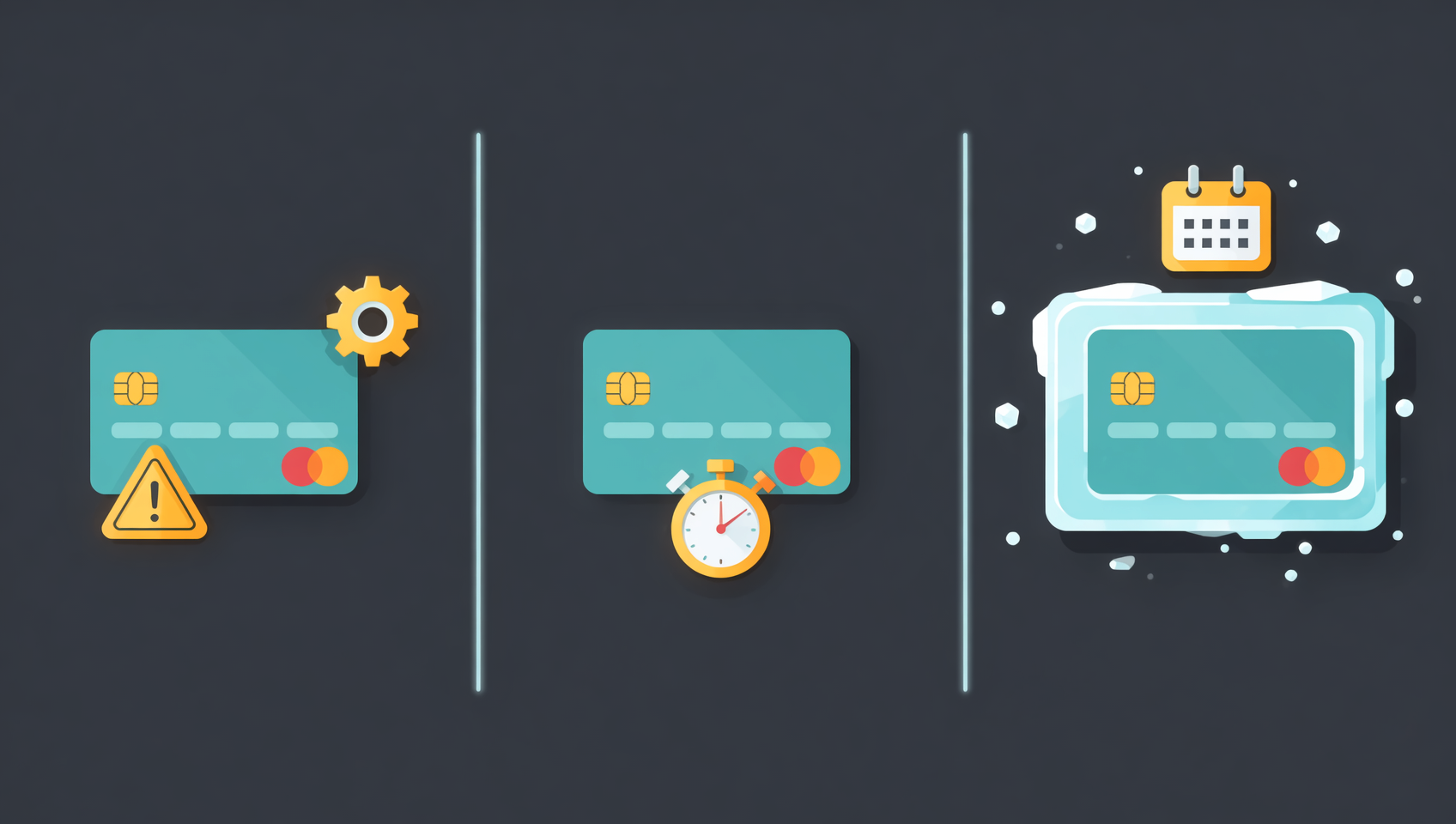
"My card is frozen" covers wildly different situations; step one is always identifying who froze it. The three cases compared:
| Type | Who froze it | Typical trigger | Typical duration | How it clears |
|---|---|---|---|---|
| Bank risk-control restriction | Your bank | Rapid in/out flows, large round amounts, frequent late-night transfers | Within days | Explain the purpose at the counter with your ID; released after verification |
| Police emergency hold | Public security | Suspect funds flowing into or past an associated account | Commonly 48–72 hours | If not released, proactively contact the handling unit |
| Judicial freeze | Police / court | Investigative needs of a case | Six months at a time, renewable1 | Contact the handling unit and document the funds' origin |
Only the first is "the bank finds you suspicious"; the other two are case-driven and the bank's attitude is irrelevant. One common misconception to fix: a hold expiring does not mean automatic release. The card still working after 48 hours may indeed mean no renewal — but it may also mean the case converted to a formal freeze while the bank's system lags. The only reliable check is calling the bank for the current status and the freezing authority — not waiting.
In one line: after a freeze, ask the bank first — who froze it, for how long, and whom to contact; only then decide the response.
Why buying USDT can still get frozen: the two directions of the money trail
Buying and selling freeze under completely different logic: judicial freezes target the receiving card, while a buyer's risk comes from "association" and "risk control". Understanding the asymmetry tells you what to defend against.
The selling direction (the card that receives money). When you sell USDT, the buyer's CNY lands directly in your card — funds whose origin you do not control. If the buyer is a scammer laundering stolen money, the victim's money lands in your card and the police freeze it along the trail. In Chinese-language crypto circles this is the largest class of freeze cases. For sellers, the card that directly received tainted funds gets frozen, and the consequences are heaviest.
The buying direction (the card that sends money). You pay the seller; no outside money lands in your card, so you are never hit directly by "suspect funds inflow". Buyer freezes usually arrive through three routes:
- Associated hold. The seller's collection account is under investigation; as a counterparty on the money trail your account can be placed under a temporary hold while you explain the transaction.
- Bank risk control. Frequent transfers to stranger individuals, large round amounts, quick conversion into crypto afterwards — bank anti-fraud feature libraries cover all of these; the result is typically non-counter transaction restrictions.
- Tainted-USDT trail. The USDT the seller handed you was itself converted from criminal proceeds; the token can be frozen by its issuer, and you get entangled when you later move it. Note this one does not freeze your bank card — it freezes the USDT.
Probability ordering across the three routes: risk control > associated hold > tainted USDT. The first is tied directly to your transfer habits — the one variable that sits 100% in your own hands.
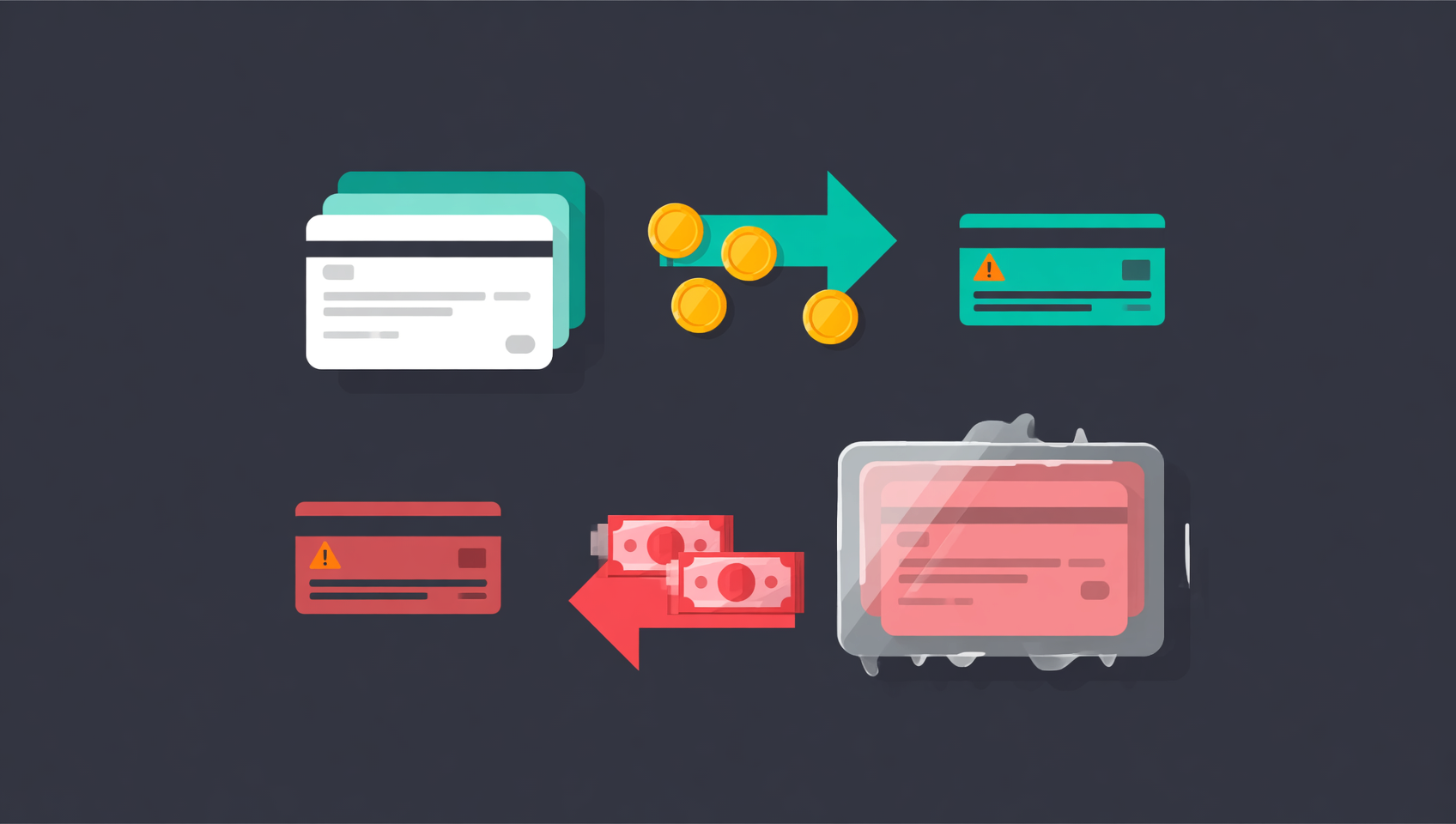
In one line: selling freezes "the card that received tainted money"; buying fears "an involved counterparty plus your own abnormal habits". As a buyer your biggest controllable variable is screening the merchant and keeping your habits orderly.
Before paying: screen merchants — four metrics beat price
Price is the most visible number on a C2C listing; merchant quality is the one that decides your risk. Four metrics, in order of importance:
| Metric | What to look at | Red flags |
|---|---|---|
| Completion rate | Share of accepted orders completed | Below 90% warrants caution; merchants with many cancellations or disputes are out |
| Order count and account age | Historical volume and how long the account has existed | Newly registered accounts listing large cheap orders are the highest-risk profile |
| Average release time | How fast coins are released after payment | Slow releasers correlate with abnormal fund turnover |
| Price level | Deviation from market | More than 1% below market = the biggest red flag |
The below-market USDT logic deserves its own paragraph: normal merchants earn the 0.5%–2% spread, so quotes should not stray far. A persistently below-market quote has only one coherent business explanation — the counterparty needs to convert certain funds into USDT quickly, and the discount is bait for fast matches. Trading with such a counterparty puts you directly on the money trail.
Two supplementary moves:
- Pick certified merchants or high-volume merchants, paying 0.2%–0.5% more to buy counterparty fund safety.
- Check the name on the merchant's collection account before your first payment; if it does not match the platform-verified name, cancel and dispute — do not force the transfer.
In one line: USDT 1% cheaper versus 0.5% dearer is a difference of a few dollars; the fund-risk difference is an order of magnitude.
Choosing a payment method: bank transfer, Alipay, WeChat Pay
The payment method itself does not decide whether your card freezes — the counterparty's account and your habits do. Methods differ in evidentiary convenience and risk-control sensitivity. Merchants list the collection methods they support; the three common ones compare as follows:
| Method | Profile | Strength | Watch-outs |
|---|---|---|---|
| Bank transfer | The mainstream option | Clean statements; counters can issue certificates — the most direct evidence if questioned | Banks are most sensitive to rapid in/out; do not move funds out right after |
| Alipay | Offered by some merchants, per their listing | Instant arrival; complete in-app order records | Prefer the bank-card-linked channel; screenshot the billing details |
| WeChat Pay | Offered by some merchants, per their listing | Same as above | Personal collection QR codes have limits; remember to screenshot the bill details |
When all three are available, for a beginner the safest is your own everyday bank card: not because it is inherently "safer", but because if you ever need to cooperate with an investigation or a dispute, bank statements are the easiest complete evidence to obtain. Alipay and WeChat bills are equally valid, but with more exits and habits that delete records casually.
Whichever you use, never write words like "USDT" or "buy crypto" in the transfer memo — fill in what the order page requires or leave it blank. A sensitive memo does not change the nature of the transfer, but it raises the probability of being flagged by models.
In one line: the method matters less than "your own real name + complete records"; prefer bank transfer because its statements are the easiest to obtain.
Seven hard rules while paying
Most losses in the C2C payment stage come from one of these seven ignored rules. Walk through them:
- Pay only from an account in your own real name. Paying from a family member's or friend's card makes it impossible for the platform to confirm the payer in a dispute, and explaining "the money wasn't mine" under questioning is brutally expensive.
- Match the amount to the cent. Transfer exactly the amount the order shows; over- or under-paying stretches release times and can trigger disputes.
- Check the payee name. The name on the collection account must match the order page; if it does not, stop — that is the classic sign of a borrowed or hijacked account.
- Finish inside the countdown. Payment windows are commonly 15 minutes and orders auto-cancel on timeout. Place the order when you are ready, not before.
- Click "I have paid" immediately after paying. The most common fumble: money sent, confirmation not clicked, order times out, and your money sits in the counterparty's account pending a dispute. The full C2C walkthrough is in our Binance C2C deposit guide.
- Screenshot four things. The order page, the payment receipt (amount/time/payee), the chat log, and the release record. Store them outside your photo album and keep them at least until the funds are fully settled.
- Never leave the platform. If a seller proposes moving to WeChat, swapping collection codes, or meeting offline, refuse — leaving the platform forfeits escrow and dispute rights, and off-platform "deals" almost always end in lost funds.
In one line: all payment rules reduce to one principle: every yuan must have a matching, presentable evidence chain.
If your card is actually frozen: handle it in this order
After a freeze, panic moves often cost more than the freeze itself. Work in this order:
- Establish the facts before any strategy. Call your bank's hotline or visit the counter and ask three things: which authority froze it, for how long, and the handling unit's contact. Risk-control restrictions and judicial freezes follow completely different paths.
- Assemble the evidence pack. ID, the card's statements, the matching order screenshots, payment receipts, chat logs. A complete buying evidence chain is your core material for showing the funds' origin is legitimate and the trade was real.
- Contact the handling unit proactively. Judicial freezes and holds both require cooperation: explain the transaction background, submit materials, and follow the officer's requirements. Cooperative attitude plus complete materials is the fastest path to release after a wrongful freeze.
- For large amounts or complex cases, hire a lawyer. Not every freeze is handled the same way: whether tainted funds must be returned and how liability is assessed are professional judgments — do not rely on agents' word.
- Keep your other accounts behaving normally while you wait. The most counter-intuitive and most important rule of all.
Meanwhile, three moves you must not make:
- Do not sweep funds out of your other accounts overnight. Mass transfers during a freeze look exactly like evasion to investigators, pushing "cooperate with an inquiry" toward something much worse.
- Do not pay "paid unfreezing" or "insider connection" agents. Only the bank and the handling authority can unfreeze; everyone promising to unfreeze for a fee is a second scam layered on your anxiety.
- Do not agree to "return the funds to get unfrozen" before understanding the legal consequences. Establish what the money means inside the case first; do not sign damaging statements for speed.
In one line: during a freeze, do ask, document, and cooperate; do not transfer, pay agents, or make promises. Speed is not the goal — a clear legal assessment is.
Situations where the risk is too high to trade at all
Freeze risk is not evenly distributed; a few behaviours raise the probability by an order of magnitude or cross legal red lines outright. If any of the following applies, stop first:
- Collecting and forwarding money for others for a fee. In the anti-fraud context this has a name — money mule activity ("running points"). Knowingly helping move funds of suspicious origin can constitute the crime of assisting information network criminal activities; renting out, lending, or selling bank accounts, once confirmed by police, lands you on a disciplinary list — five years of non-counter banking restrictions and payment account suspension, plus no new accounts2. That is not "high risk"; that is a red line.
- Multiple large transfers per day, day after day. Volumes far beyond normal personal consumption raise both risk-control and inquiry probability with every increment. Split large needs across time and channels, and document every transfer.
- A long-dormant card suddenly moving large amounts. Dormant-account activation with immediate large flows is a heavily weighted risk-control feature. Fund your trading from a card with continuous everyday history.
- Any off-platform "high-price buying USDT" or "below-market selling USDT". Off-platform price advantages are the counterparty paying a premium to escape oversight — and the person left with the tainted record in their bank card will be you.
Mainland China strictly restricts virtual-currency-related business; currency exchange with virtual currencies counts as illegal financial activity, and individuals bear the legal risks of investment trading themselves3. This guide covers risk control and response procedures only; it is not legal advice and offers no method to evade regulation.
In one line: red-line behaviours have no "techniques"; probability management only exists for normal trades — screen the merchant, cap the amount, keep the records.
C2C payment safety checklist
- Invite code entered at registration (BINANBT); KYC completed
- Payment account is your own real-name, everyday bank card
- Merchant completion rate ≥ 90%; order count and account age look normal
- Quote is not visibly below market (anything 1%+ lower is a walk-away)
- Payee name matches the order page
- Amount matches to the cent; no sensitive words in the memo
- "I have paid" clicked right after transferring
- Order page, payment receipt, chat log, release record all screenshotted
- No moving to WeChat, no leaving the platform, no third-party accounts
- You know step one after a freeze: ask the bank who froze it, how long, whom to contact
- Even if this amount is frozen for a month or two, life goes on
💰 Binance rebate: invite code BINANBT
Payment safety comes from screening and habits; the rebate locked at registration is a one-time decision that keeps paying off for as long as you trade. This article contains referral links — signing up through them may earn us a reward and will not cost you anything extra.
- Rebate: 20% of trading fees back, long-term.
- Welcome package: up to $19,800, unlocked by tasks — not a cash giveaway on signup.
- How to claim: enter BINANBT in the invite-code field at registration; that is the surest way.
- Important: signing up directly inside the app gets you no signup reward at all. An in-app registration binds to no referral, so the $19,800 welcome package and the 20% fee rebate simply do not apply — use the registration link or enter invite code BINANBT.
👉 Sign up on Binance and claim a 20% trading fee rebate
FAQ
Can buying USDT get your bank card frozen? How likely is it?
Buying USDT is not itself a freeze trigger; the risk comes from the counterparty's funds and your own transfer habits. Screening out below-market merchants, using your own everyday card, capping amounts, and keeping records push the probability very low — but no method reaches zero, because the counterparty's account cleanliness is outside your control. Among judicial freezes, the selling side dominates; buyers more often face lighter bank risk controls.
How do I find out who froze my bank card?
Call your bank's hotline or visit the counter and ask three things: the freezing authority's name, the freeze duration, and the handling unit's contact. The bank system shows whether it is a bank risk-control restriction or a judicial freeze/hold. Only the handling authority can lift a judicial freeze; the bank can only tell you the information.
Does a 48-hour emergency hold release automatically when it expires?
Not necessarily. Emergency holds commonly run 48–72 hours and auto-release if not renewed; but if the case needs it, they convert into a formal freeze of six months at a time, renewable. So a working card on expiry day does not mean you are fully clear, and a still-frozen card does not mean six months — always go by the status the bank reports.
Is buying USDT with Alipay or WeChat Pay safe?
The payment method is not the deciding factor; safety comes from a clean merchant account, paying from your own real-name account, and complete records. The methods differ in evidentiary convenience: bank statements are the easiest to obtain and the most complete, so they are the safer default for beginners. Use Alipay or WeChat as offered by the merchant's page, and screenshot the billing details either way.
My card was frozen after buying USDT — can Binance unfreeze it?
No. A bank card freeze is a bank or law-enforcement measure; Binance has no power to impose or lift it. What Binance can provide is order and release records — your core evidence when explaining the transaction to the handling unit. Restrictions on the Binance account itself go through the platform's appeal process; treat the two tracks separately.
Is selling USDT more likely to cause a freeze than buying?
Yes. When you sell, your card directly receives the counterparty's money, whose origin you cannot control; if it is tainted, it gets frozen on arrival. When you buy, you send money out and nothing foreign lands in your card, so the risk is mainly associated holds and bank risk controls. If you do both, hold the selling side to stricter limits on amount and frequency.
What if the payee name does not match the order page?
Stop paying immediately, open a dispute on the order, and cancel the trade. A mismatched name usually means the collection account is borrowed, hijacked, or the merchant swapped channels — counterparty risk at its highest. Better to lose a few minutes than to send money into an account of unknown identity.
Further reading
- Binance C2C deposit guide: buying USDT, paying and settlement
- Binance account frozen? Three freeze types, appeal entries and timelines
- How to buy crypto: a beginner's step-by-step guide
- What is USDT and how to buy it: three chains and real risks
- Minimum amount to buy crypto: real thresholds at every step
- Binance withdrawal guide: networks, addresses and memos
- More beginner guides
- More on-chain guides
Disclaimer: This article is for educational reference only and is not investment or legal advice. Freeze durations, release procedures and platform rules mentioned here were compiled from public information on 9 November 2026 and are subject to the latest requirements of banks, authorities and Binance. Mainland China strictly restricts virtual-currency-related business; individuals bear their own legal risks when participating in investment trading, and this article offers no method to evade regulation. For any freeze involving an actual case, consult a licensed lawyer.
Footnotes
-
Source: Procedures for Public Security Authorities in Handling Criminal Cases (2020 revision), Article 243: freezes on deposits and remittances last six months, each renewal no longer than six months, with failure to renew treated as automatic revocation; funds confirmed unrelated to the case must be unfrozen within three days. ↩ ↩2
-
Source: People's Bank of China Notice on Strengthening Payment Settlement Management to Prevent Telecom and Online Crime (Yin Fa [2016] No. 261): units and individuals whose renting, lending, selling or buying of bank or payment accounts is confirmed by police face five years of non-counter banking restrictions and full payment-account suspension, with no new accounts. ↩ ↩2
-
Source: Joint notice by ten PRC authorities including the People's Bank of China on Further Preventing and Handling Risks of Virtual Currency Trading Speculation (September 2021): virtual-currency-related business activities constitute illegal financial activity, and participation in virtual currency investment trading carries legal risk. ↩