


Introduction
What is Bitcoin? In one sentence, Bitcoin (BTC) is a decentralized peer-to-peer electronic cash system. It was conceptualized by the pseudonymous developer Satoshi Nakamoto in a 2008 whitepaper and launched on January 3, 2009, making it the world's first successful cryptocurrency.
As of July 2026, Bitcoin's live data stands at:
- Price: ~$62,000 (7-day range $57,748-$64,598) 1
- Market cap: ~$1.24 trillion, representing approximately 58% of the total cryptocurrency market 1
- Circulating supply: ~20.04 million BTC, approximately 95.4% of the total supply cap already mined 1
- All-time high: $126,198 (March 2024) 1
- Network hashrate: ~1,000 EH/s, millions of times more powerful than the world's top 100 supercomputers combined 2
From being worth nothing in 2009 to a trillion-dollar asset ranking among the top 7 global assets by market cap, Bitcoin has come a long way in 17 years. This article will help you understand Bitcoin from five core dimensions: mining mechanics, value logic, wallet selection, Lightning Network Layer 2, and ETF investment.
Bitcoin's Origin: From Whitepaper to Global Consensus
The Problem Satoshi Set Out to Solve
The 2008 global financial crisis triggered massive central bank money printing worldwide. In the Bitcoin whitepaper, Satoshi Nakamoto posed a fundamental question: Can we build an electronic payment system that doesn't require any trusted third party? 3
On January 3, 2009, the Bitcoin genesis block was mined. Satoshi embedded a headline from The Times newspaper in the coinbase transaction: "The Times 03/Jan/2009 Chancellor on brink of second bailout for banks."
This timestamp clearly stated Bitcoin's founding mission: to create an independent monetary system outside the control of governments and banks.
Key Milestones in Bitcoin's History
| Year | Event | Impact |
|---|---|---|
| 2009 | Genesis block mined by Satoshi | Bitcoin network launched |
| 2010 | First real transaction: 10,000 BTC for 2 pizzas (~$41) 4 | Bitcoin assigned real-world value |
| 2011 | Bitcoin reached $1, gaining mainstream attention | First parity with the US dollar |
| 2013 | Cyprus banking crisis → Bitcoin surged to $1,000+ | First validation of "crisis hedge" narrative |
| 2017 | Bitcoin Cash fork + bull run to $19,000 | Scaling debate caused community split |
| 2021 | El Salvador adopted Bitcoin as legal tender; ATH $69K | First sovereign adoption, institutional entry |
| 2024 | Bitcoin spot ETFs approved by SEC; 4th halving; ATH $126K | Massive institutional capital inflow |
Bitcoin has grown from a "geek toy" to a ~$1.24 trillion global asset, backed by 17 years of uninterrupted operation with zero major security breaches 15.
How Bitcoin Works: Blockchain, Mining, and PoW
The Blockchain: A Shared Public Ledger
Bitcoin's core technology is the blockchain. Think of it as a public ledger that anyone in the world can read:
- Every transaction is permanently recorded in a "block"
- Blocks are linked chronologically into a "chain"
- Any node can verify the ledger's authenticity, but no one can alter confirmed records
Traditional banking: Bank holds the ledger → You can check your transactions → Bank can modify or freeze Bitcoin system: Network collectively holds the ledger → Anyone can verify all transactions → No one can unilaterally alter it
Mining: How New Bitcoins Are Created
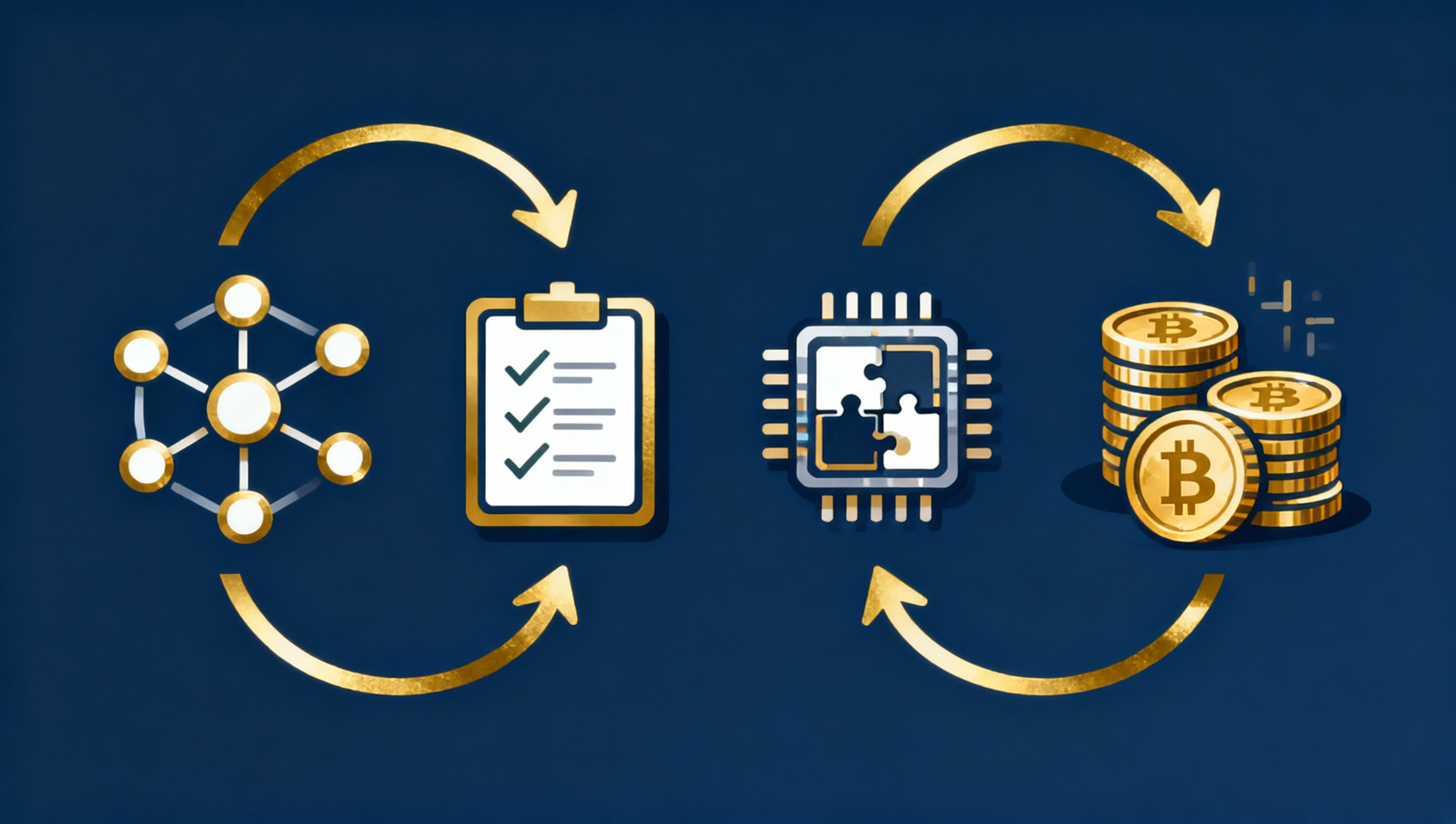
Bitcoin mining is the process where miners use specialized computers (ASIC miners) to solve complex mathematical problems and compete for the right to add new blocks.
Mining process:
- Transaction broadcast: A user initiates a transfer, and the transaction is broadcast to the network
- Validation and packaging: Miners collect pending transactions into a block and verify their validity
- Proof of work: Miners repeatedly change a nonce value until the block hash satisfies the difficulty target
- New block broadcast: The first miner to find a valid solution broadcasts the new block to the network
- Reward collection: After other nodes verify the block, the miner receives 3.125 BTC block subsidy plus transaction fees
Why Mine? (Answer: Security)
Mining is not just the way new coins are issued — it is the foundation of Bitcoin's security model.
As of 2026, the Bitcoin network operates at approximately ~1,000 EH/s (exahashes per second) 2. To attack the network, you would need to control over 50% of this hashrate — requiring billions of dollars in mining hardware plus massive ongoing electricity costs.
Conclusion: Bitcoin's PoW mechanism makes attacks economically unfeasible. The cost of attacking the network far exceeds any potential benefit, and this is the fundamental logic behind Bitcoin's security.
Bitcoin's Scarcity: Why Only 21 Million
The Halving Mechanism: Supply Halves Every Four Years
Bitcoin's supply rules are hard-coded by Satoshi: every 210,000 blocks (approximately 4 years), the block reward is cut in half. Four halvings have occurred so far 1:
| Halving | Date | Block Height | Reward Change | Inflation Rate |
|---|---|---|---|---|
| Genesis | 2009 | 0 | 50 BTC → 50 BTC | — |
| 1st | Nov 2012 | 210,000 | 50 → 25 BTC | ~11% → 5.5% |
| 2nd | Jul 2016 | 420,000 | 25 → 12.5 BTC | ~5.5% → 2.75% |
| 3rd | May 2020 | 630,000 | 12.5 → 6.25 BTC | ~2.75% → 1.37% |
| 4th | Apr 2024 | 840,000 | 6.25 → 3.125 BTC | ~1.37% → 0.68% |
| 5th | ~Apr 2028 | 1,050,000 | 3.125 → 1.5625 BTC | ~0.68% → 0.34% |
As of July 2026, approximately 450 BTC are mined daily, with an annual inflation rate of about 0.68% — already lower than gold's annual supply growth rate (approximately 1-2%). After the fifth halving in 2028, Bitcoin's inflation rate will drop to 0.34%, well below major central banks' inflation targets 1.
Scarcity vs. Gold
| Dimension | Bitcoin | Gold |
|---|---|---|
| Supply cap | 21 million (code-enforced, unchangeable) | ~200,000 tons (new mines may be discovered) |
| Current supply rate | ~0.68%/year, declining | ~1-2%/year, relatively stable |
| Divisibility | 1 BTC = 100 million satoshis, further divisible | Meltable but costly to divide |
| Transfer cost | $1-5/tx (on-chain), <$0.01 (Lightning) | High transport + insurance costs |
| Storage cost | Private key ≈ zero | Vault + security costs |
| Authenticity | Verified instantly by network nodes | Requires professional appraisal |
How to Acquire and Store Bitcoin
Purchase Channels Comparison
| Channel | Suitable For | Fee | Speed |
|---|---|---|---|
| Centralized exchanges (Binance, OKX) | All users | Spot 0.1% | Instant |
| P2P/C2C platforms | Users needing fiat on-ramp | Maker fee | 10-30 min |
| Bitcoin ATMs | Urgent cash transactions | 4-10% | Instant |
| Bitcoin ETFs (IBIT, FBTC) | Traditional/ institutional investors | 0.12-0.25% mgmt fee | T+ settlement |
| OTC trading | Large transactions (>$100K) | Negotiable | 1-24 hours |
Recommended for beginners: Register at a compliant centralized exchange (like Binance), complete KYC, and deposit fiat to buy Bitcoin. Simplest operation, low fees, and customer support available.
Wallet Selection Guide
A Bitcoin wallet stores your private key (the only credential that controls your Bitcoin). Which wallet type to choose depends on your holdings and usage frequency:
| Wallet Type | Typical Examples | Security | Convenience | Recommended Scenario |
|---|---|---|---|---|
| Hardware | Ledger, Trezor, OneKey | ⭐⭐⭐⭐⭐ | ⭐⭐ | $1,000+ long-term storage |
| Software | Electrum, BlueWallet | ⭐⭐⭐⭐ | ⭐⭐⭐⭐ | Daily small amounts |
| Mobile | Blockstream Green | ⭐⭐⭐ | ⭐⭐⭐⭐⭐ | Mobile payments |
| Exchange | Binance account BTC | ⭐⭐ | ⭐⭐⭐⭐⭐ | Active traders |
Core security principle: Not your keys, not your coins. If you store Bitcoin on an exchange, you are trusting the exchange to owe you coins — if the platform is hacked or collapses, your assets could be lost. Bitcoin held for the long term should be transferred to your own wallet.
Bitcoin Layer 2: The Lightning Network Solves Scaling
Bitcoin Mainnet's Bottleneck
The Bitcoin mainnet can process only about 7 transactions per second (compared to Visa's 24,000+ TPS). During periods of high demand, on-chain transaction fees can spike to $10-50/tx, and confirmation times may stretch to hours. This limitation is known as Bitcoin's scalability challenge.
The Lightning Network: Layer 2 Payment Protocol
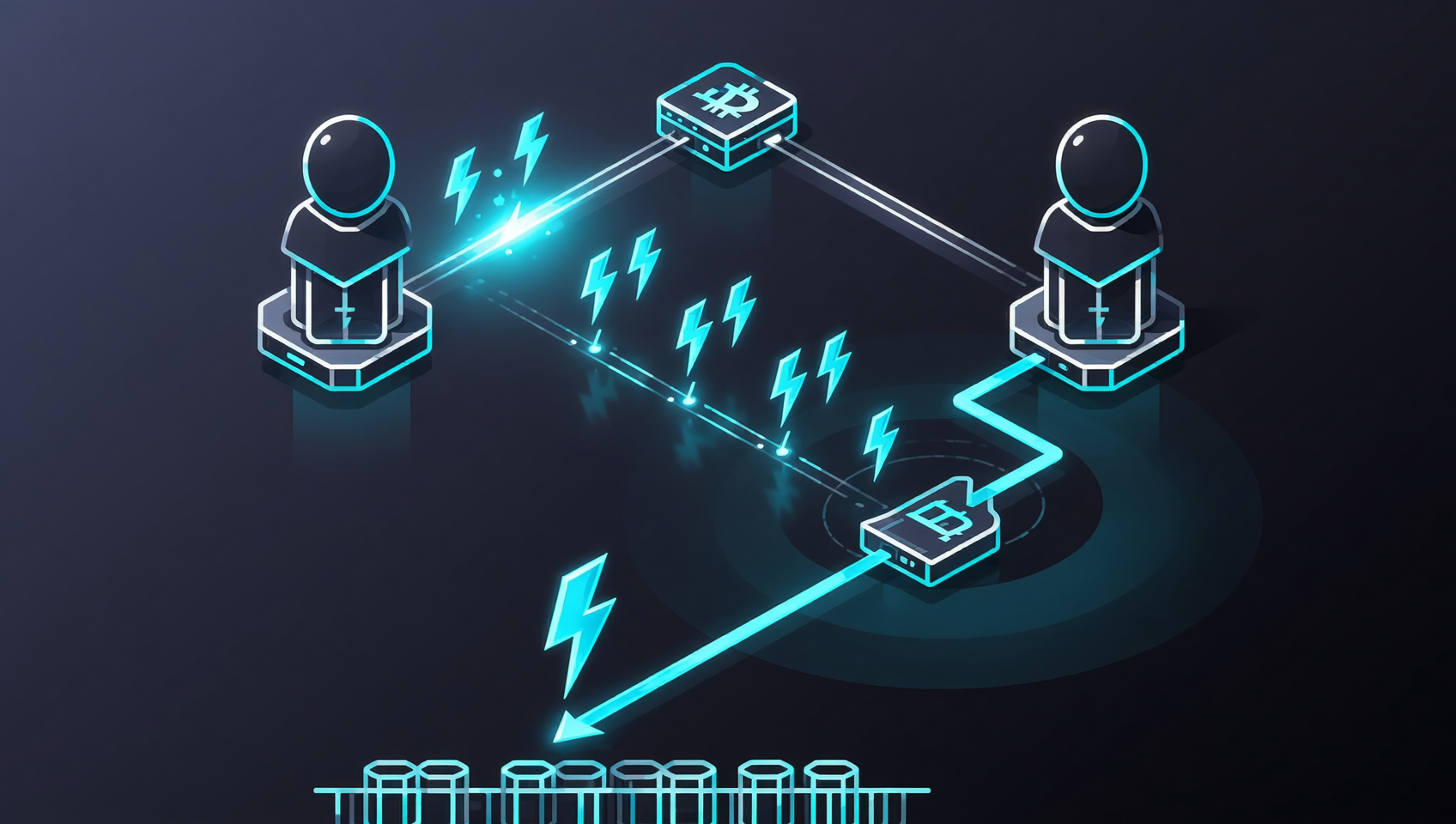
The Lightning Network is Bitcoin's most important Layer 2 scaling solution. Its core concept: establish payment channels off-chain, batch-process small transactions, and record only the final result on the main chain.
How Lightning Network works:
- Open channel: A and B each deposit BTC into a multi-signature address on-chain (1 on-chain tx)
- Off-chain transfers: A pays B 0.01 BTC; both parties update balances locally (instant, zero fees)
- Close channel: Final balances are settled on-chain (1 on-chain tx, regardless of how many transfers occurred)
Through this mechanism, the Lightning Network can handle millions of transactions per second with per-transaction fees under $0.01 and millisecond settlement 6.
Lightning Network Status 2026
| Metric | Data |
|---|---|
| Public channel capacity | ~5,400-5,800 BTC |
| Total capacity (incl. private) | 12,000+ BTC (estimated) 7 |
| Monthly transaction volume | $1.1-1.17 billion (first crossed $1B Feb 2026) 8 |
| Monthly transactions | ~12 million |
| Average transaction value | ~$223 (up from $118 in 2024) 8 |
| Average fee | <$0.01 |
| Active nodes | ~17,000-18,000 |
Major Lightning Network Integrations
- Kraken, Bitget, Coinbase — Lightning deposits and withdrawals
- Cash App — Free lightning transfers for US users
- Binance Lightning Node — Launched 2024, supports large channels 9
Lightning Network in one sentence: It has evolved from an experimental micropayment protocol into a mature payment rail processing $1B+/month in real economic transactions.
Bitcoin Investment: ETFs, Institutional Adoption, and Asset Allocation
Bitcoin Spot ETFs: The Institutional Gateway
January 2024 marked the SEC's approval of the first US Bitcoin spot ETFs — one of the most important milestones in Bitcoin's 17-year history. As of July 2026:
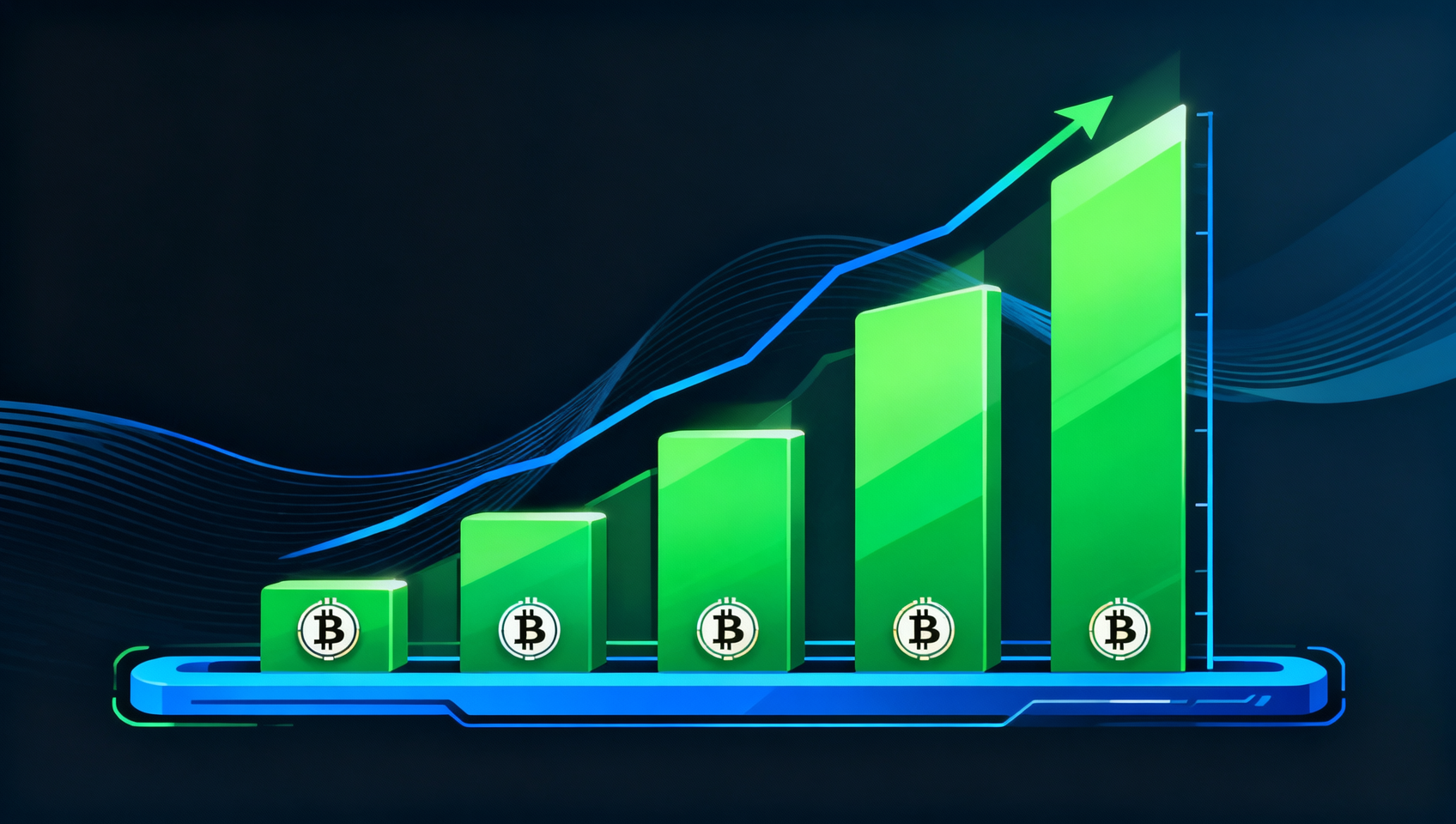
- Cumulative net inflows: ~$51.3 billion (since January 2024 launch) 10
- Total net assets: ~$77.4 billion, representing approximately 6.05% of Bitcoin's market cap 10
- Largest ETF: BlackRock iShares Bitcoin Trust (IBIT) — cumulative net inflows of $60.3 billion 10
- June 2026 saw the largest monthly net outflows on record (~ $4 billion), but July reversed the trend with $197 million in net inflows the week of July 6-10 10
Major Bitcoin ETFs Overview:
| Product | Ticker | Management Fee | Cumulative Net Inflow | Issuer |
|---|---|---|---|---|
| iShares Bitcoin Trust | IBIT | 0.25% | $60.3B | BlackRock |
| Wise Origin Bitcoin Fund | FBTC | 0.25% | ~$13B | Fidelity |
| ARK 21Shares Bitcoin ETF | ARKB | 0.21% | ~$4B | ARK Invest |
| Bitwise Bitcoin ETF | BITB | 0.20% | ~$2.5B | Bitwise |
Institutional Adoption Cases
Bitcoin's institutional adoption accelerated significantly between 2024-2026:
- MicroStrategy — Holds approximately 226,331 BTC (~$14B), the largest publicly traded corporate holder of Bitcoin 11
- BlackRock — CEO Larry Fink transformed from calling Bitcoin "an index of money laundering" to its foremost advocate
- Sovereign Wealth Funds — Abu Dhabi, Norway, and other sovereign funds began small-scale Bitcoin allocations
- Pension Funds — Multiple US state pension funds allocated 1-3% to Bitcoin ETFs 12
Bitcoin as an Asset Class: Key Characteristics
| Feature | Description |
|---|---|
| Low correlation with mainstream assets | 30-day rolling correlation with S&P 500 typically 0.1-0.3, providing portfolio diversification value |
| 24/7 trading | Trades around the clock, never halted for holidays or circuit breakers |
| Censorship resistant | No one can prevent you from sending Bitcoin to any address (if you self-custody) |
| High volatility | Bitcoin's daily volatility (~3-5%) is significantly higher than mainstream stocks (~1-2%), requiring strong risk tolerance |
Frequently Asked Questions
Is Bitcoin private? Are transactions truly anonymous?
Bitcoin is not anonymous — it is pseudonymous. All transactions are publicly recorded on the blockchain. Each address is just a string of characters, but once your address is linked to your real identity (for example, by withdrawing from a KYC exchange to that address), your entire transaction history on that address can be traced. Law enforcement agencies have solved numerous Bitcoin-related cases using chain analysis tools (like Chainalysis). For stronger privacy, look into CoinJoin and the Lightning Network.
Could quantum computing destroy Bitcoin?
Short-term risk is extremely low; long-term preparations are underway. Breaking Bitcoin's ECDSA signature algorithm would require approximately 10 million physical qubits (current most advanced quantum computers have about 1,000 qubits). The Bitcoin community is actively preparing for a "quantum-resistant upgrade" — Schnorr signatures and the Taproot upgrade have already reserved space for quantum-resistant signature schemes. If the quantum threat becomes real, Bitcoin can upgrade to quantum-resistant signature algorithms through a soft fork 13.
What is the relationship between Bitcoin and USDT?
They are completely different assets. Bitcoin (BTC) is a decentralized cryptocurrency with market-driven pricing and high volatility. USDT is a centralized stablecoin issued by Tether, pegged 1:1 to the US dollar. In trading, BTC/USDT is one of the most traded pairs — you can buy Bitcoin with USDT, or sell Bitcoin for USDT. On Binance, the BTC/USDT pair consistently has the highest daily trading volume of any trading pair 1.
Can Bitcoin's 21 million supply cap be changed?
Theoretically yes, but practically almost impossible. Changing the 21 million cap would require the majority of Bitcoin miners and nodes to upgrade consensus rules simultaneously — a "hard fork" that is extremely difficult to achieve consensus on. The 2017 Bitcoin Cash fork attempted to increase block size rather than supply, demonstrating how strongly the community adheres to the cap. The 21 million limit is one of Bitcoin's most fundamental tenets — changing it would destroy Bitcoin's value proposition.
What's the fundamental difference between Bitcoin and Ethereum?
Bitcoin aims to be decentralized digital gold and a payment system, focused on security and scarcity. Ethereum aims to be a decentralized world computer, supporting DeFi, NFTs, and other applications through smart contracts. Simply put: Bitcoin is like gold, Ethereum is like the internet.
What's the difference between a Bitcoin ETF and buying Bitcoin directly?
A Bitcoin ETF (like BlackRock IBIT, Fidelity FBTC) is a product traded on traditional stock exchanges. Key differences: 1) ETFs don't require managing private keys; 2) ETFs can be traded in traditional brokerage accounts; 3) ETFs are SEC-regulated, suitable for institutional investors; 4) ETFs cannot be used on-chain. As of July 2026, US Bitcoin spot ETFs have cumulative net inflows of approximately $51.3 billion 10.
What types of Bitcoin wallet addresses exist? Which should a beginner choose?
4 main types: 1) Legacy (P2PKH) — starts with 1; 2) SegWit (P2SH) — starts with 3, lower fees; 3) Native SegWit (bech32) — starts with bc1, lowest fees, recommended for beginners; 4) Taproot (P2TR) — starts with bc1p, better privacy. Beginners should choose bc1 addresses.
Is it too late to buy Bitcoin now?
There's no standard answer. Bitcoin hit an ATH of $126,198 in March 2024 1 and trades around $62,000 in July 2026 1. What matters is your investment thesis — short-term speculation or long-term allocation. Many institutions view Bitcoin as a long-term inflation hedge.
Further Reading
Related Articles on CoinVado
- What is Bitcoin? Beginner's Complete Guide — Bitcoin basics
- How to Buy Bitcoin? 2026 Complete Channel Comparison — BTC purchasing guide
- What is Blockchain? Learn Blockchain Basics in One Article — Blockchain fundamentals
- Cryptocurrency Wallet 2026 Complete Guide — Wallet selection and security
- Crypto Beginner First Step 2026 — Comprehensive beginner guide
External Resources
- Bitcoin Whitepaper — Original paper by Satoshi Nakamoto
- Bitcoin.org — Official Bitcoin resource
- On-Chain Guide: Learn Blockchain from Zero — More blockchain educational content
- CoinMarketCap Bitcoin — Real-time BTC market data
- Clark Moody Dashboard — Bitcoin network live dashboard
Disclaimer: This content is for educational purposes only and does not constitute investment advice. Cryptocurrency investments carry high risk and extreme price volatility. Please make decisions based on your own circumstances.
Footnotes
-
CoinMarketCap Bitcoin live data, July 2026 ↩ ↩2 ↩3 ↩4 ↩5 ↩6 ↩7 ↩8 ↩9 ↩10
-
Binance Academy, Bitcoin Hashrate and Mining Difficulty, 2026 ↩ ↩2
-
Satoshi Nakamoto, "Bitcoin: A Peer-to-Peer Electronic Cash System", 2008 ↩
-
Bitcoin Wiki, Historical Bitcoin Events Timeline ↩
-
Bitcoin.org, Bitcoin Historical Data Archive ↩
-
Bitcoin Lightning Network explorer, July 2026 ↩
-
BYDFi Research, "Lightning Network Capacity: Growth & Market Insights", May 2026 ↩
-
BlockEden.xyz, "Bitcoin Lightning Network Crosses $1B Monthly Volume", March 2026 ↩ ↩2
-
Binance official announcement, Binance Lightning Node launch, 2024 ↩
-
SoSoValue, US Bitcoin Spot ETF Flow Data, July 2026 ↩ ↩2 ↩3 ↩4 ↩5
-
BitcoinTreasuries.net, Corporate Bitcoin Holdings ↩
-
Reuters, "US pension funds increase crypto exposure", 2025-2026 ↩
-
River Financial, "Bitcoin and Quantum Computing", 2025 ↩