Binance
Complete Binance tutorials — registration, KYC, spot and margin trading, futures, staking and earn products, plus fee optimization with BNB and API guides.
Binance is the world’s largest cryptocurrency exchange with over $76 billion in daily trading volume and 600+ supported cryptocurrencies. This section covers everything you need to know about using Binance.
Registration & Rebates
- Binance Registration Guide: Account Setup & KYC — Full process from downloading the app to completing identity verification
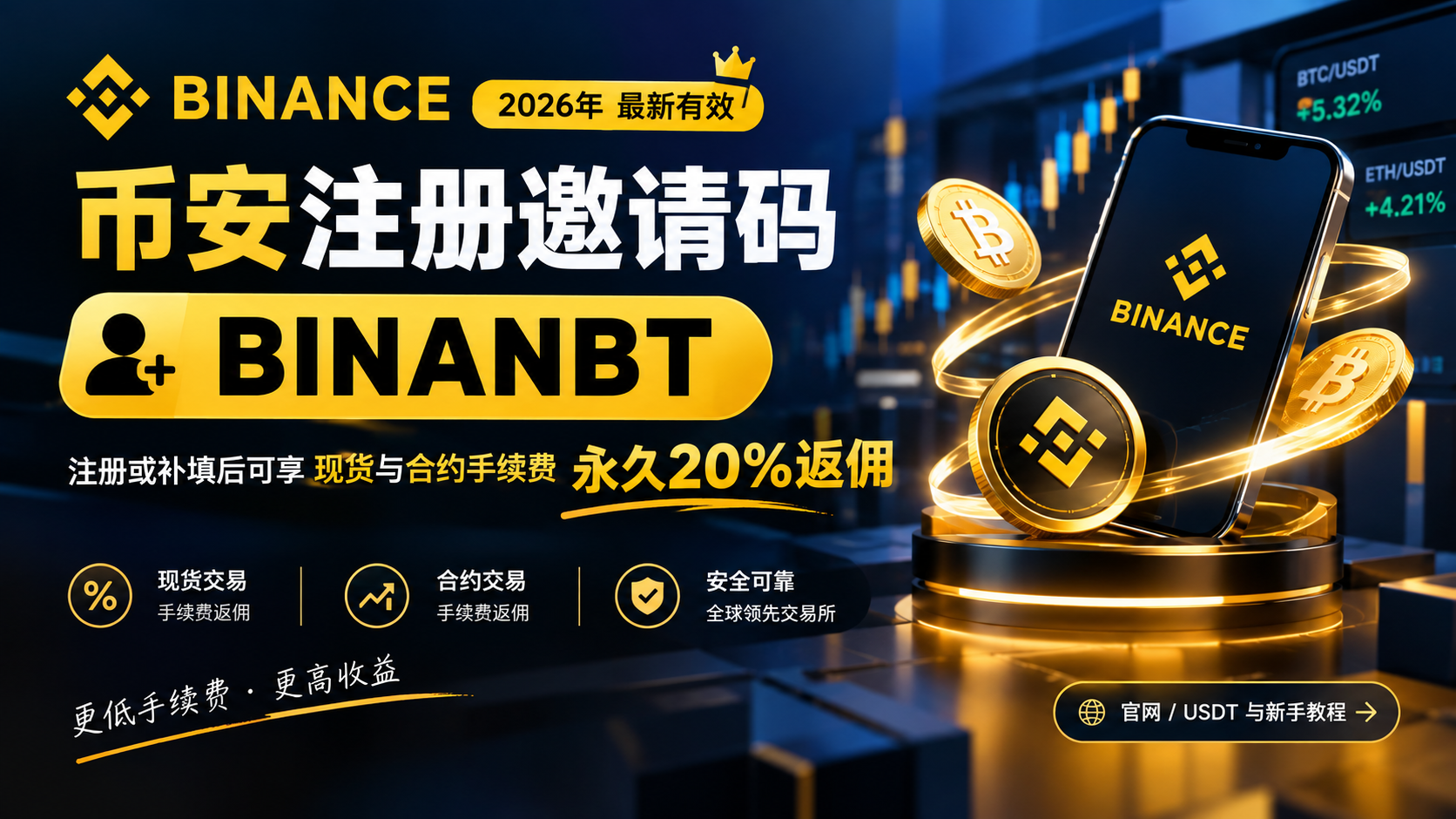
- Binance Referral Code Guide: Get 20% Fee Discount — Enter referral code during registration for permanent 20% fee rebate
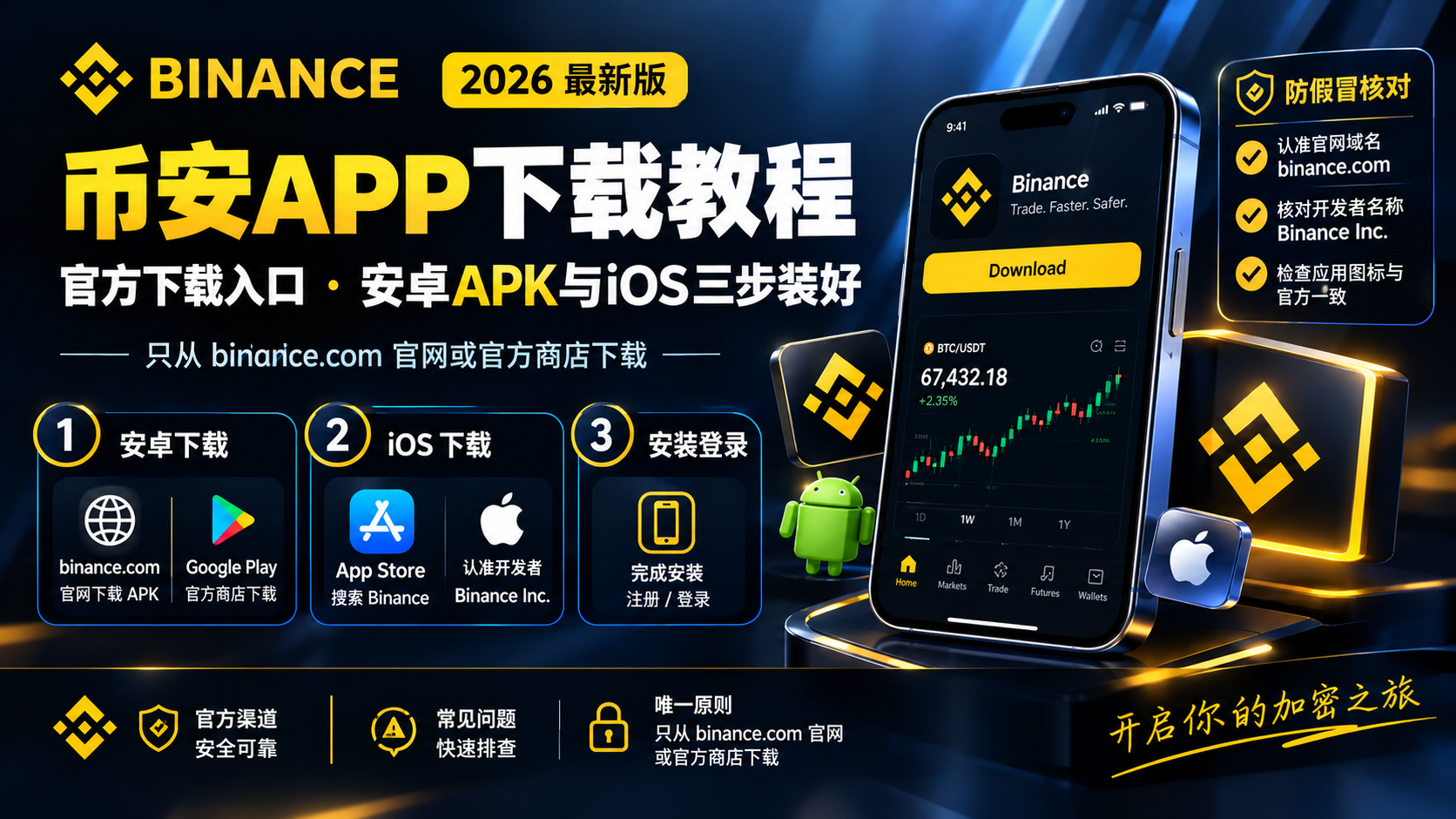
- Binance App Download & Installation Guide — Mobile app download, installation and daily use
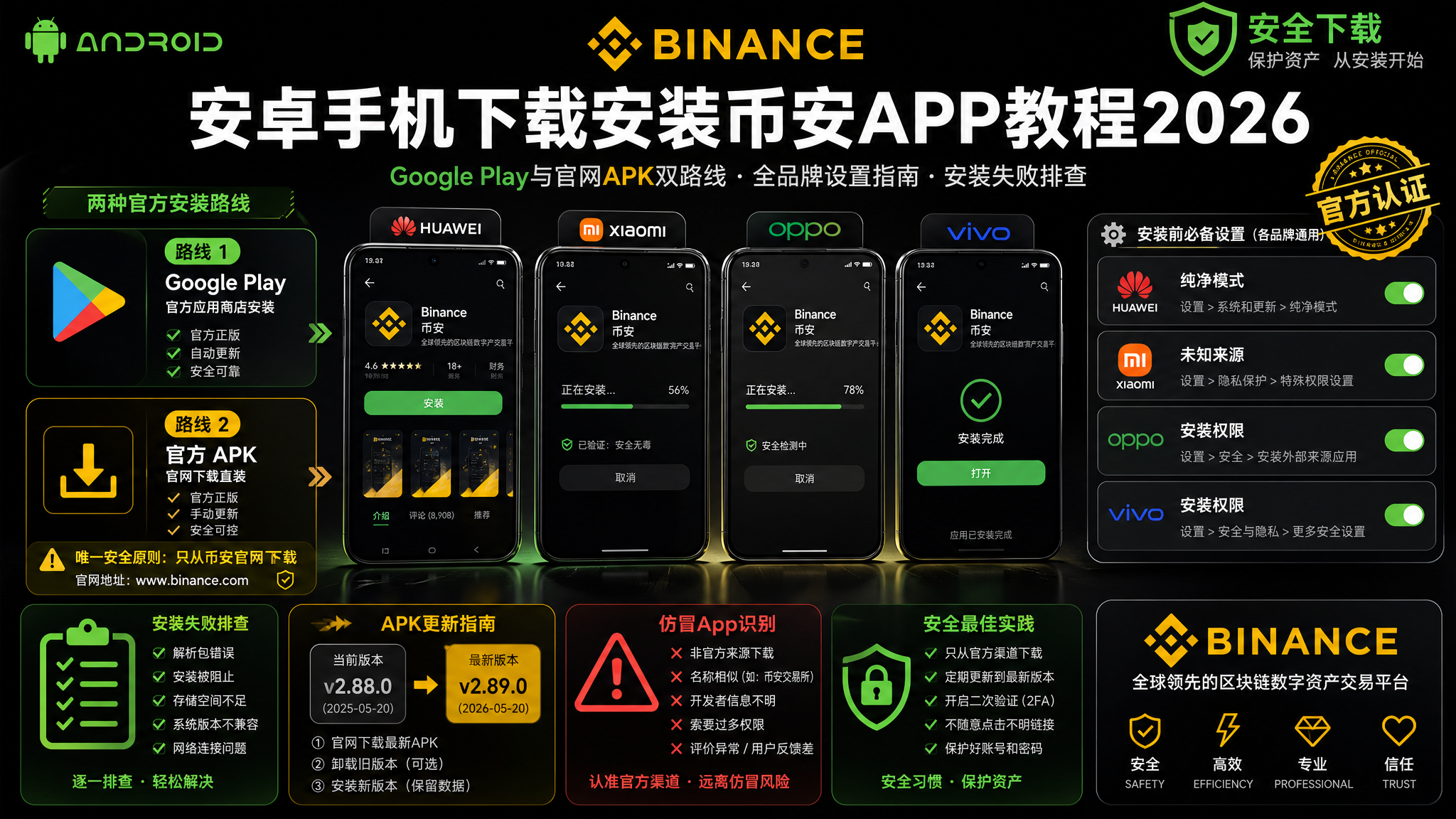
- How to Download & Install Binance on Android — Google Play vs official APK, unknown-source and Pure Mode setup for Huawei/Xiaomi/OPPO/vivo, plus an install-failure troubleshooting table
- Binance Rebind Referral Code Guide — How to bind referral code after registration
Deposits & Spot Trading
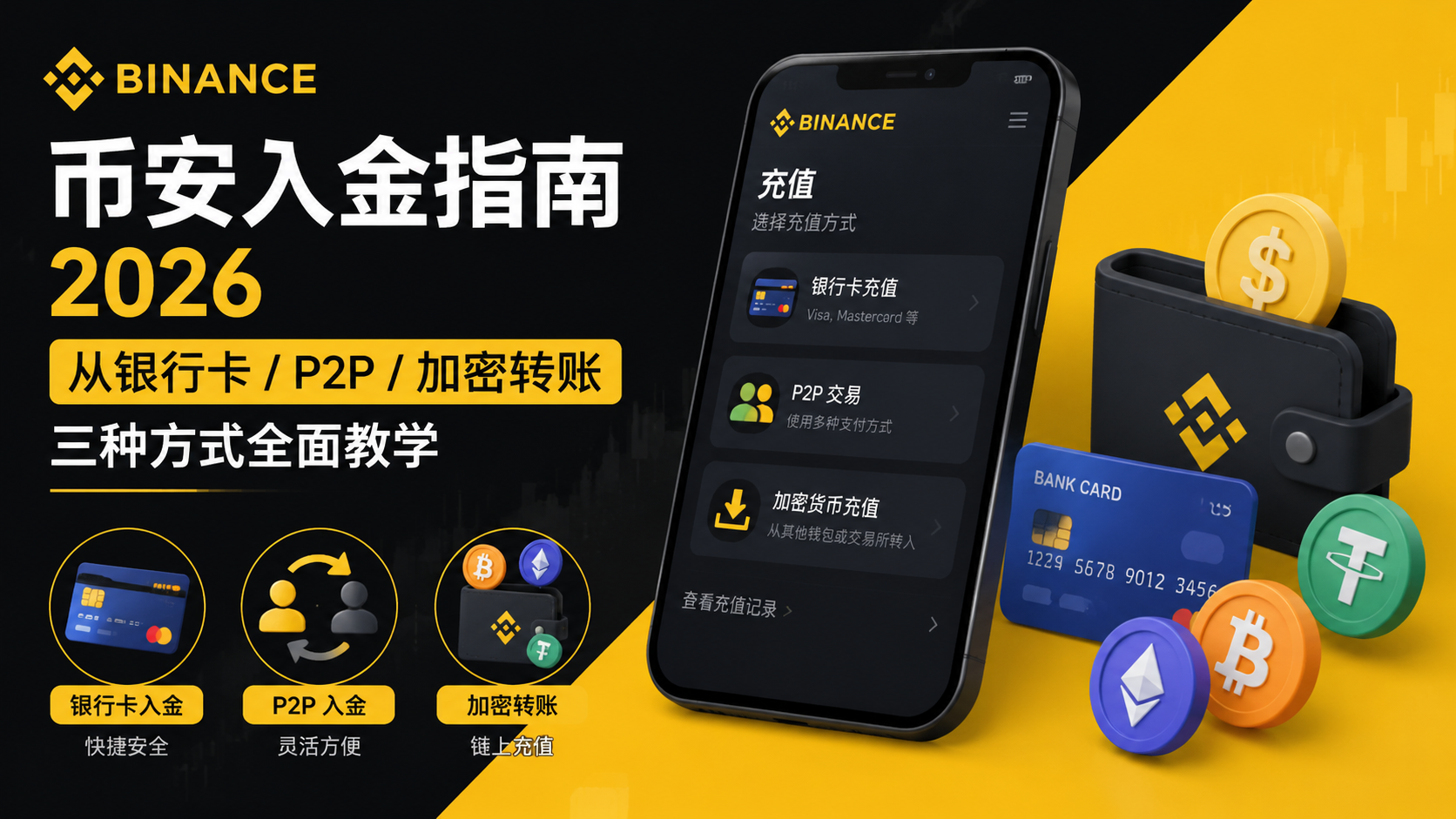
- Binance First Deposit Guide: How to Fund Your Account — Step-by-step C2C, card, and on-chain deposit methods for your first time
- Binance Deposit Guide: C2C & On-Chain Deposit — Three deposit methods: C2C, on-chain transfer, and credit card
- Binance Spot Trading Guide: Orders to Stop-Loss — Basic spot trading operations for beginners
Withdrawals & Wallets
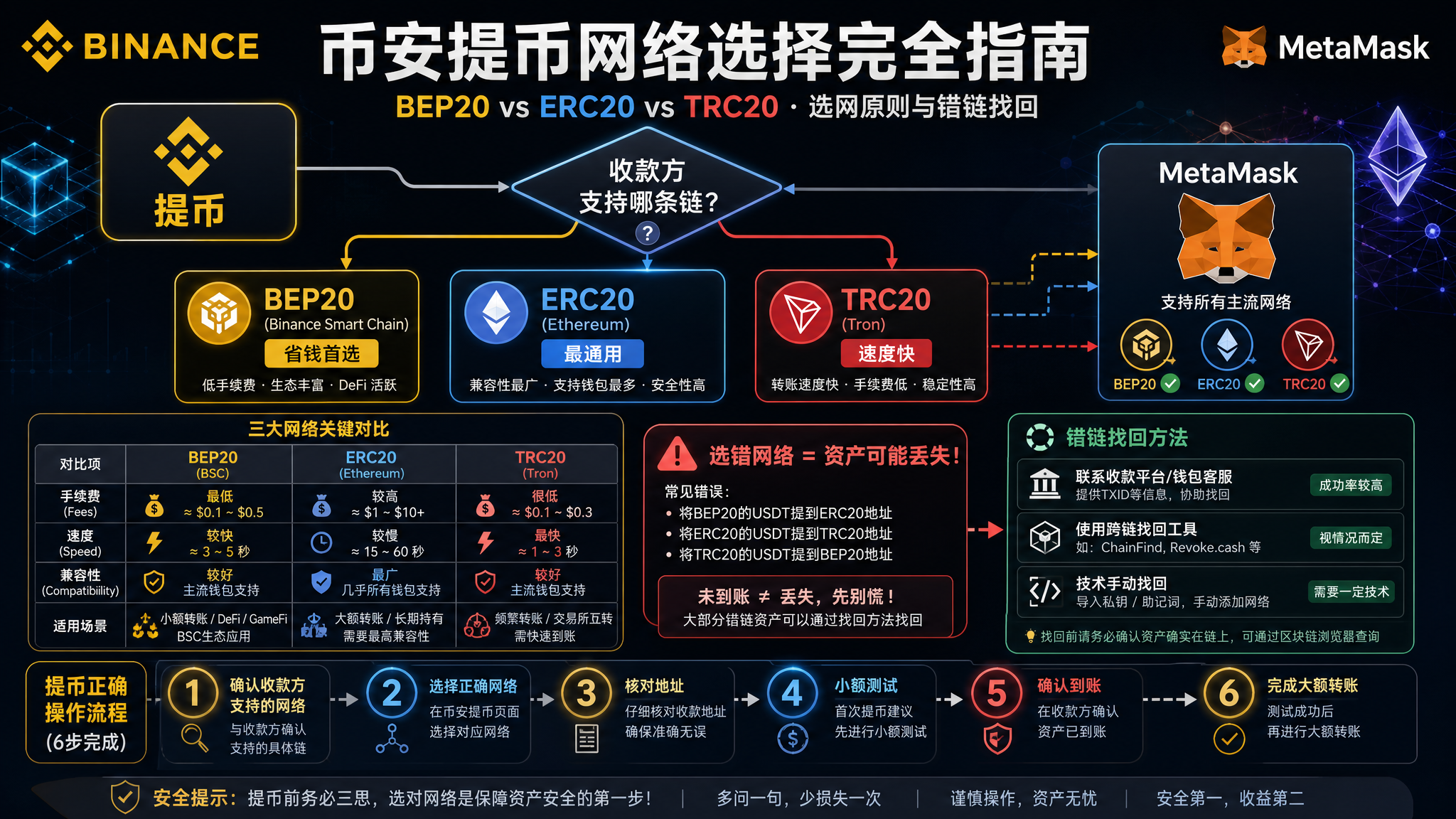
Before moving funds to self-custody, get the network right — wrong-network sends are the most common withdrawal accident:
- BEP20 vs ERC20: Which Network to Use on Binance Withdrawals — Rule one: the receiver’s supported chain decides; with an ERC20/BEP20/TRC20 comparison table, a 6-step withdrawal walkthrough, and the three wrong-network recovery scenarios (the 0x address works across EVM chains, so most mistakes are self-fixable)
Binance Card & Crypto Spending
Binance Card was discontinued in Europe at the end of 2023 and only relaunched in Brazil in 2025 — users in mainland China, the US, and Europe cannot apply now:
- Is Binance Card Still Usable? 2026 Status, Timeline & Alternatives — The old Visa card was discontinued in late 2023 and the new Mastercard only relaunched in Brazil in 2025, with a full timeline, why it happened, and a comparison of Bybit Card / OKX Card / Crypto.com Card / Binance Pay alternatives plus three red lines for using U cards
Futures Trading
Futures are leveraged and can liquidate you, so understand the mechanics before you size a position:
- Binance Futures Trading Guide — Advanced strategies using leverage and contracts
- USDⓈ-M vs COIN-M Futures: What’s the Difference? — Run through Binance’s own formulas: COIN-M is an inverse contract, so a 20% drop costs a long 50% more BTC than a 20% rally earns — full comparison table plus who COIN-M is actually for
- Binance Grid Trading Guide — Automate buy-low/sell-high orders in range-bound markets
Earning & Advanced
- Binance Earn Guide: Flexible & Fixed Staking — Earn passive yield on idle assets
- Binance Launchpad & Megadrop Guide — Participate in new token launches and airdrops
Fee Optimization
- Binance Fee Reduction: BNB & VIP Tiers — Save 25% on trading fees with BNB
- Exchange Rebate Comparison: Binance vs OKX — Compare rebate policies of major exchanges
Full Review
- Binance 2026 Complete Review — In-depth analysis of security, fees, features, and ecosystem
BSC / On-Chain Ecosystem
- Is BNB Chain Worth It? 2026 Beginner Guide to BSC — BEP20 transfers vs gas, whether PancakeSwap-based DeFi is enough, NFT/GameFi risks, plus a needs-based decision table, a 5-step safe onboarding flow, and validator-concentration risks
Tokenized US Stocks
“Buying US stocks” on Binance is actually three different products — read this overview first to pick your lane:
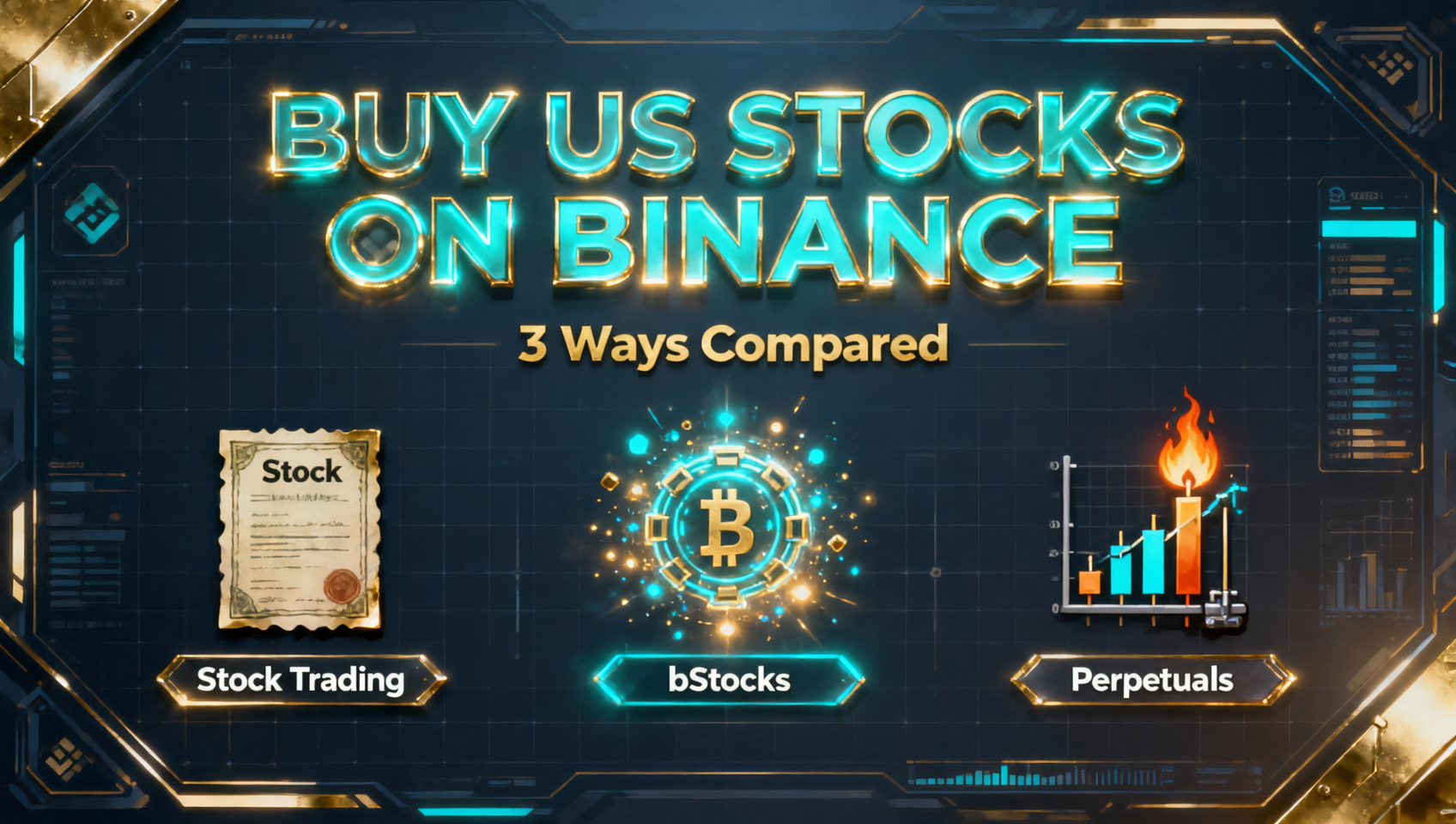
- Buy US Stocks on Binance: 3 Ways Compared — Stock Trading vs bStocks vs Perpetuals — One table breaks down the three ways (real equity / token certificate / leveraged contract), with a decision table by need, hidden-cost comparison and four compliance rules
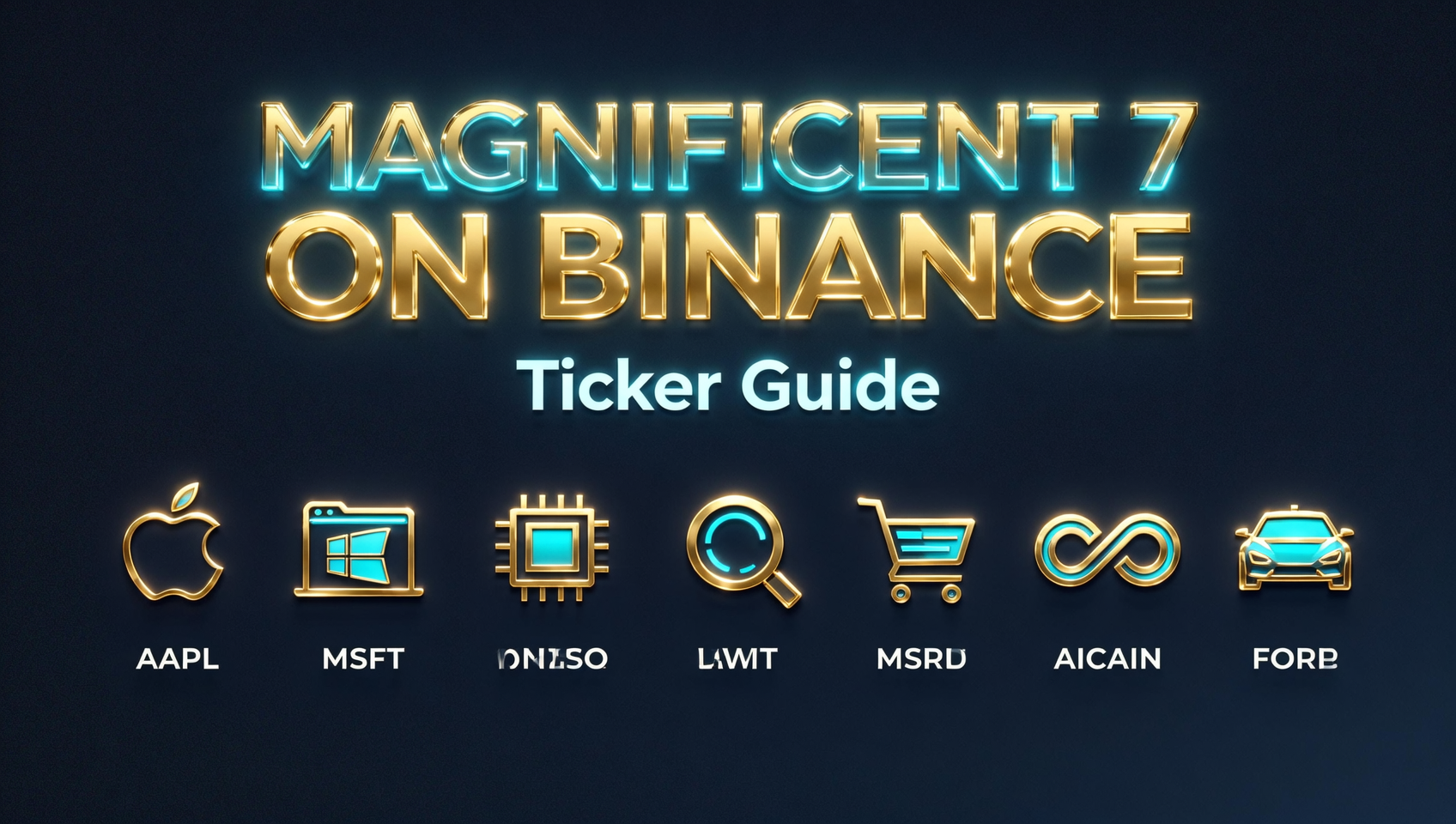
- Can You Buy the Magnificent 7 on Binance? Apple/Nvidia/Tesla/Microsoft Ticker Guide — All seven are on Binance in three ways each, with the full ticker table (AAPL/AAPLB/AAPLUSDT etc.) and a spotlight on the most-asked names
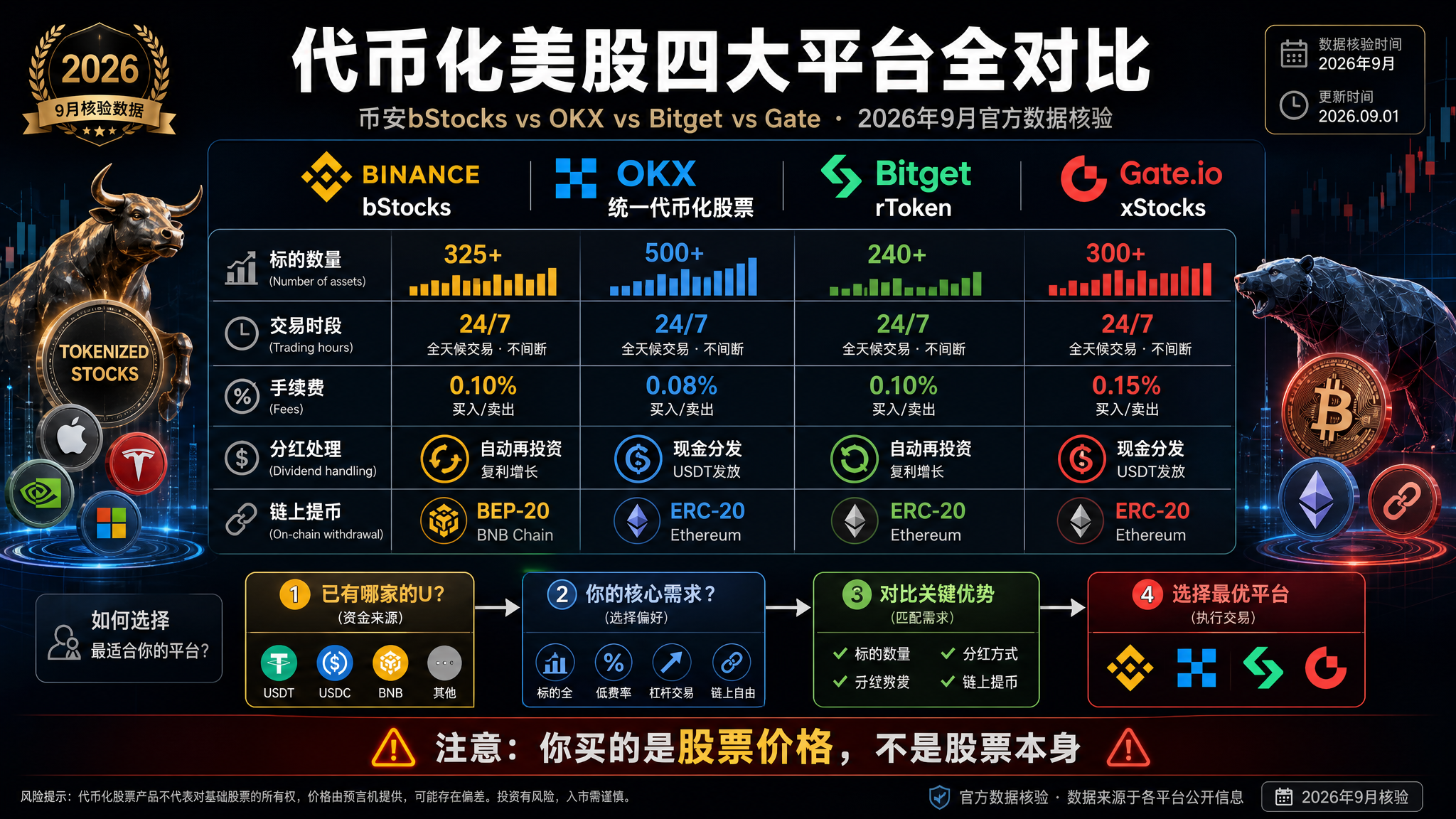
- Binance bStocks vs OKX/Bitget/Gate: How to Choose Tokenized Stocks in 2026 — Official data verified September 2026: Binance bStocks (~83 listings, ADGM regulation, $30B volume in 90 days), OKX Unified Tokenized Stocks, Bitget rToken (600+ listings), Gate xStocks (391 stock perps). Comparison tables for listings, fees, dividends and withdrawals plus a decision table by need
- How to Buy US Stocks with Binance bStocks (2026 Tutorial) — Step-by-step: fund, buy TSLAB/NVDAB on spot, 1:1 tokenize and redeem, dividend Multiplier payouts, BSC self-custody withdrawals, fees and pitfalls
- Buy US Stocks on Binance with BINANBT: USDC Trading Guide — Commission-free trading of 7,000+ US stocks and ETFs with USDC, from $5, with full step-by-step instructions
- How to Buy NVIDIA NVDA on Binance: Perpetuals and Stock Tokens — Perpetual futures vs equity tokens for NVDA, with funding cost calculations
- Binance Stock Trading 2026: Buy US & HK Stocks with USDC — Account requirements, deposits, stock picking, order types, fees and settlement
Account Security & Unlocking
- Binance Account Frozen or Banned? 2026 Full Unlock Guide — First distinguish security lock, risk-control restriction, fund freeze, and permanent ban, then a realistic odds table of “can it be unlocked and how long,” plus the official appeal process, proof of funds, and why paid unlockers are a scam
Frequently Asked Questions (FAQ)
Is Binance safe?
Binance is the world’s largest exchange by trading volume, using industry-leading security (cold wallet storage, SAFU insurance fund, two-factor authentication) and undergoing regular audits. Binance operates compliantly in over 100 countries, but service restrictions may apply to users in certain regions. Always check Binance’s terms and your local laws, and use only the official app/website.
Does Binance require KYC?
Yes. Compliant exchanges require KYC (identity verification) before deposits and trading. You’ll submit an ID (passport/ID card) and complete facial recognition in the app. Always use your own real identity — never buy or borrow someone else’s account, or you risk account freezes and fund loss.
What are Binance’s fees and how do I reduce them?
Binance spot trading fees default to ~0.1%, and futures ~0.02%/0.04% (by account tier). To reduce: ① Pay with BNB for a 25% discount; ② Use a referral code at registration for a 20% permanent fee rebate; ③ Raise your VIP tier (higher volume, lower fees). See the Binance fee reduction guide.
I forgot to enter a referral code at registration — can I still add it?
Yes. Binance supports binding a referral code after registration, usually within a time window (e.g. 30 days) and provided you haven’t traded yet. Once bound, you enjoy the fee rebate. See the Binance rebind referral code guide for steps.
What deposit methods does Binance support?
Three main options: ① C2C buying — buy USDT from other users with fiat, beginner-friendly; ② On-chain deposit — transfer crypto from another wallet or exchange; ③ Bank card/credit card — buy directly with fiat. See the Binance deposit guide.
How do I secure my Binance account?
① Enable two-factor authentication (2FA) with phone/authenticator; ② Use a strong, unique password; ③ Beware fake apps and phishing sites — use only official channels; ④ Never share verification codes or API keys; ⑤ Freeze the account immediately and contact official support if you spot anomalies. For large amounts, regularly move funds to a self-custody cold wallet.
更多相关文章
- Binance Referral Code BINANBT: Buy US Stocks with USDC 2026 — Buy US stocks on Binance using referral code BINANBT. Zero commission trading on 7000+ US stocks & ETFs, USDC settlement, $5 minimum. Complete guide with step-by-step instructions, KYC verification, dividend guide, and 20% trading fee rebate for new users.
更多相关文章
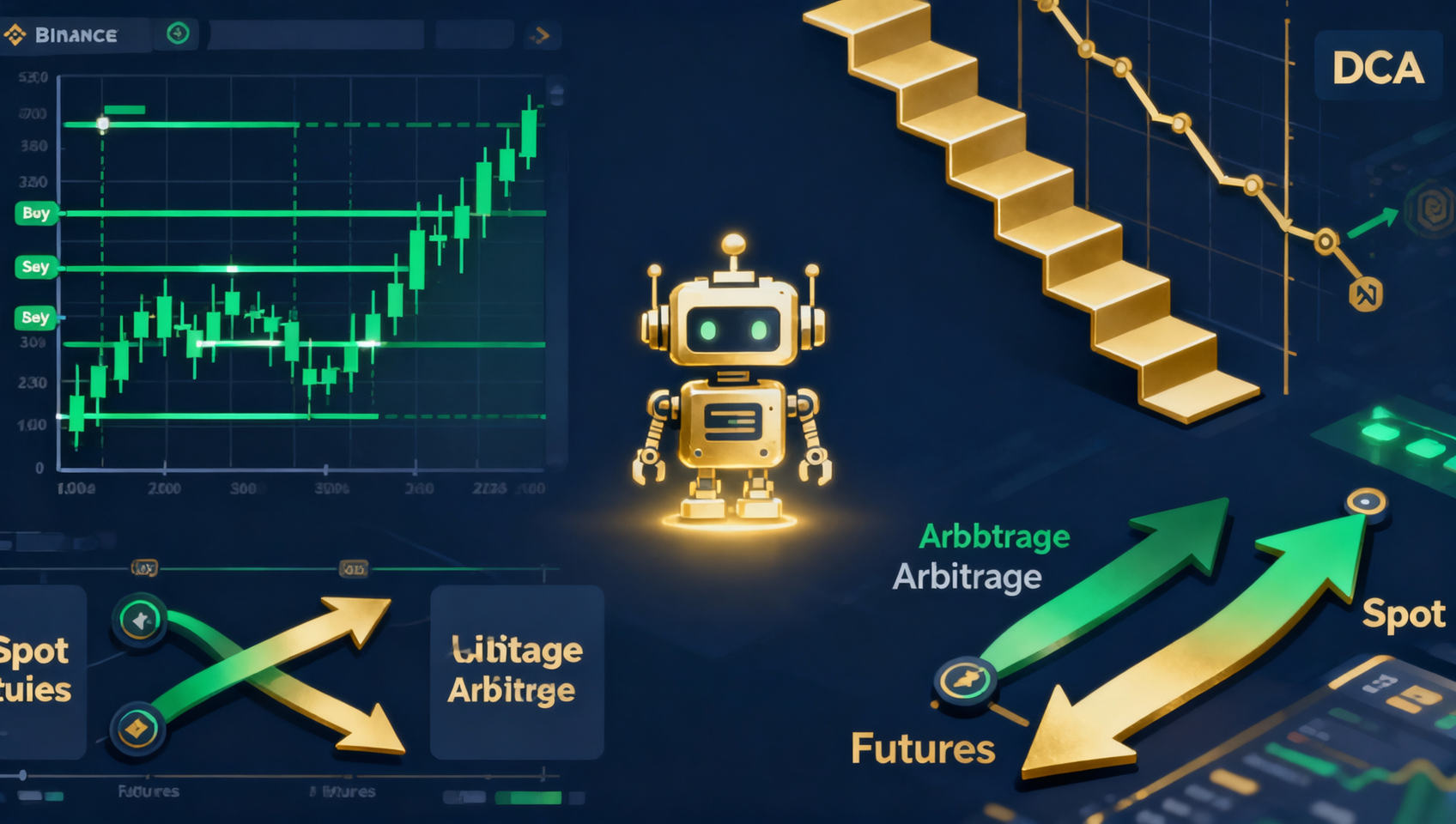
- Binance Trading Bots 2026 Guide: 9 Bots, How to Choose, and Do They Actually Make Money? — Binance has 9 auto trading bots: spot grid, futures grid, arbitrage, rebalancing, DCA, auto-invest, and TWAP/VP. This guide explains what each does, who it fits, whether it can lose money, and how to choose native vs third-party bots (3Commas, Cryptohopper) — with API security rules and real fee math.
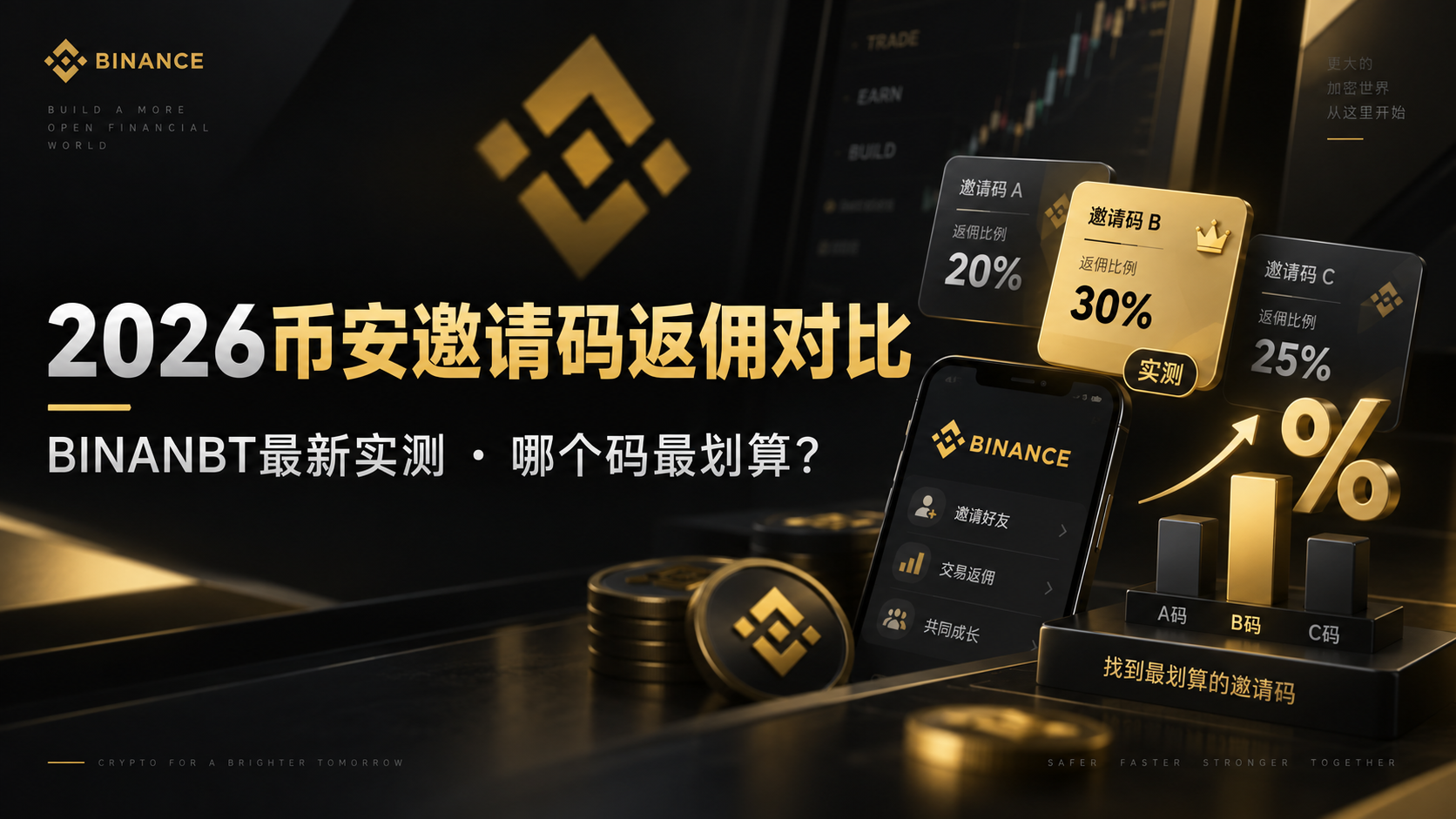
- Binance Referral Code Comparison 2026: BINANBT Tested — Which Code Actually Saves the Most? — A real comparison of Binance referral code rebates: 20% is the system cap, and pages promising 40% or 50% are dressing up the referrer’s commission as your savings. We calculate what no code, a 10% code, and a top-tier 20% code like BINANBT actually return per year at official fee rates, plus a four-question framework for judging any code, four promises that are instantly fake, and how to verify your rebate rate in 3 minutes after signing up.
- Binance Referral Code BINANBT: 20% Fee Rebate (2026) — The latest valid Binance referral code in 2026 is BINANBT. New users enter it at registration, and eligible existing users can add it later, to get a 20% rebate on spot and futures trading fees. Both paths, the rebate rate, the permanence note, and savings math explained.
- Binance Download 2026: Official Link, Android APK & iOS in Three Steps (With Anti-Fake Checks) — The fastest safe way to download the official Binance app in 2026: get the APK from binance.com or Google Play on Android, and on iOS search Binance in the App Store and verify the developer Binance Inc. A download-only quick guide — three anti-fake signals plus fixes for common download problems. One rule: only download from binance.com or the official app stores.
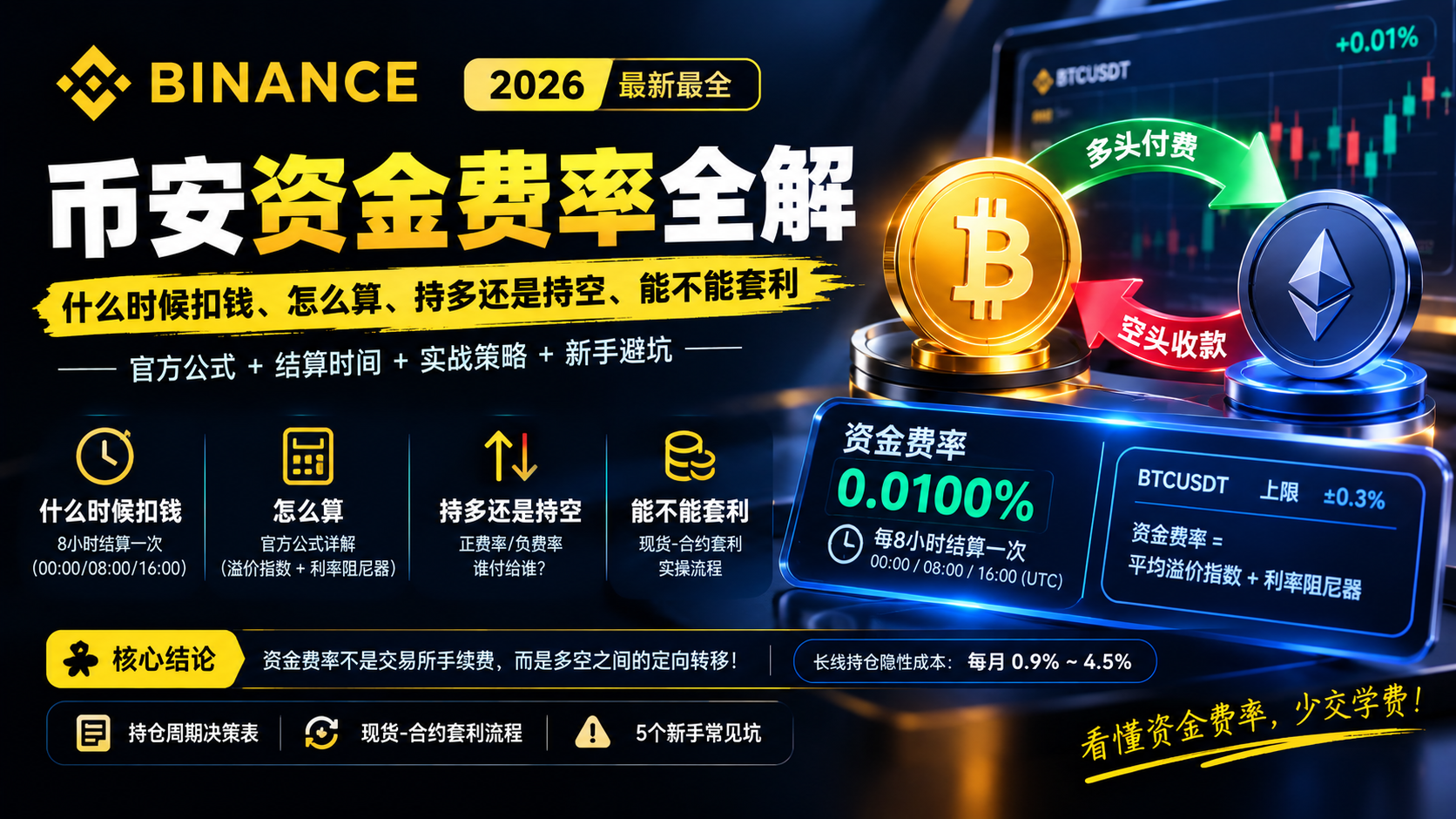
- Binance Funding Rate Explained: When It’s Charged, How to Calculate It, Long or Short, Arbitrage (2026) — Why does your futures balance drop while your position hasn’t moved? This guide settles it with Binance’s official formula: funding settles every 8 hours (00:00/08:00/16:00 UTC), funding rate = average premium index + a 0.05% interest-rate damper, the BTCUSDT cap is ±0.3%, and closing before settlement avoids the fee. The takeaway: funding isn’t an exchange fee — it’s a directional transfer between longs and shorts, and holding long-term silently costs 0.9% to 4.5% of position value per month. Includes a hold-period decision table, a spot-and-perp cash-and-carry walkthrough, and the 5 mistakes beginners make most.
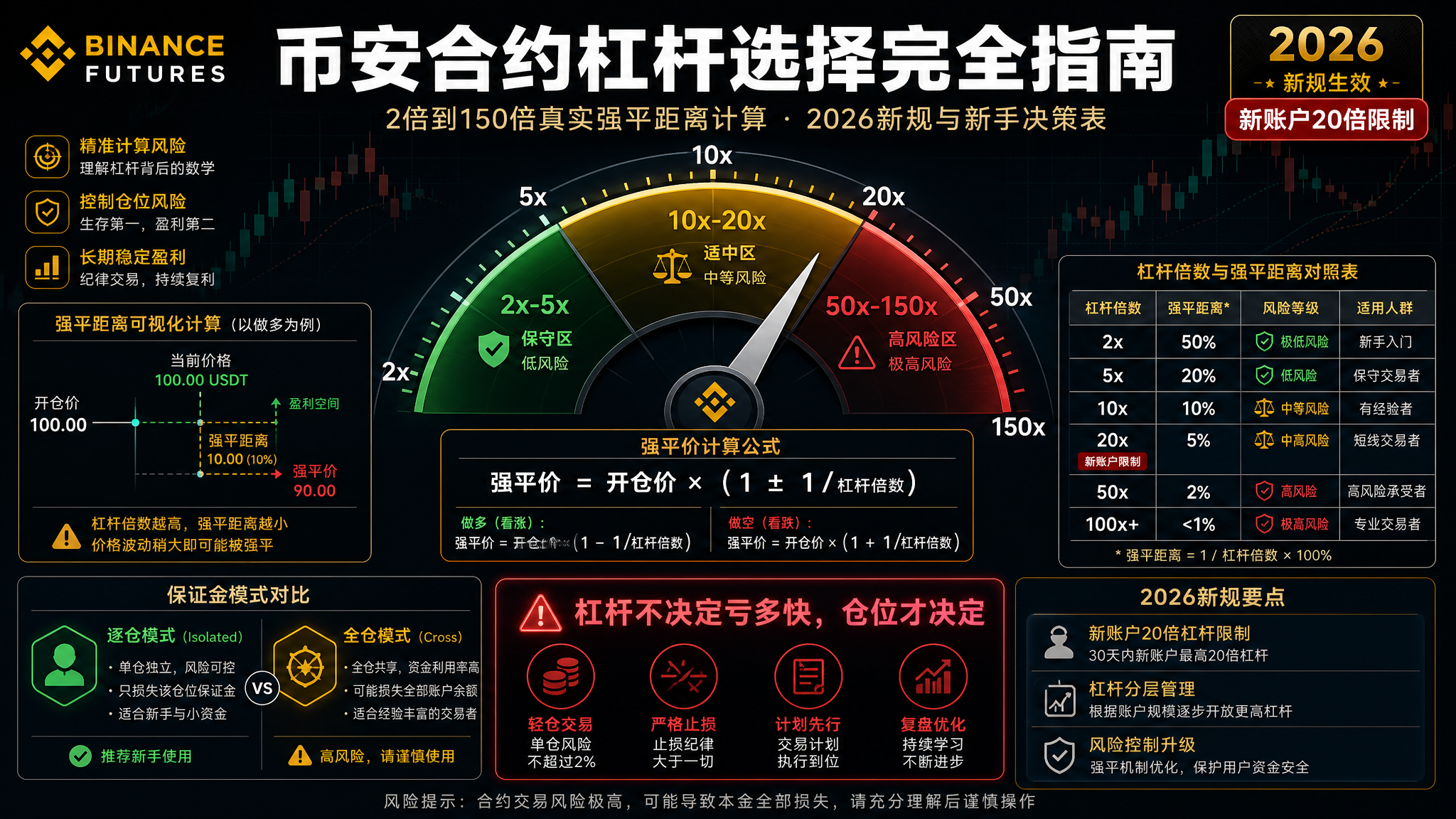
- How Much Leverage Should You Use on Binance Futures? (2026 Beginner Guide with Liquidation Math) — What leverage should you actually use on Binance futures? This guide runs the official numbers: real liquidation distances from 2x to 150x, how the 0.4% maintenance margin rate shifts your liquidation price, Binance’s 30-day 20x cap for new futures accounts, and why position size — not leverage — decides how fast you lose money. Includes a beginner decision table, a 1,000 USDT worked example, and the 5 mistakes new traders make most.