Web3 Security
Essential Web3 security guide — private key management, seed phrase backup, smart contract safety, phishing prevention and hardware wallet practices.
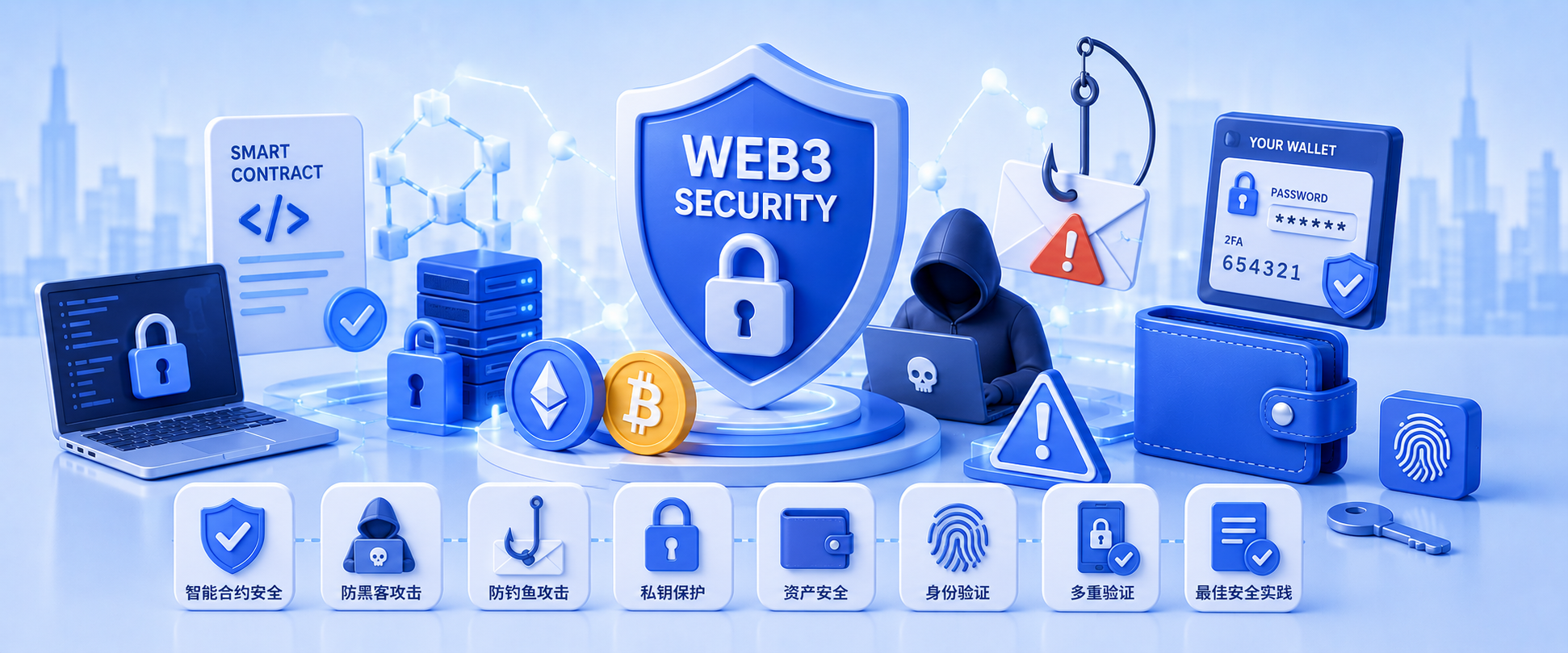
Web3 security is essential knowledge for every crypto user. In the decentralized world, you are the sole guardian of your assets — no bank can recover stolen funds. This section covers fundamental to advanced security knowledge.
Comprehensive Security
- Web3 Security Complete Guide 2026 — Comprehensive Web3 security covering private keys, contract approvals, phishing prevention
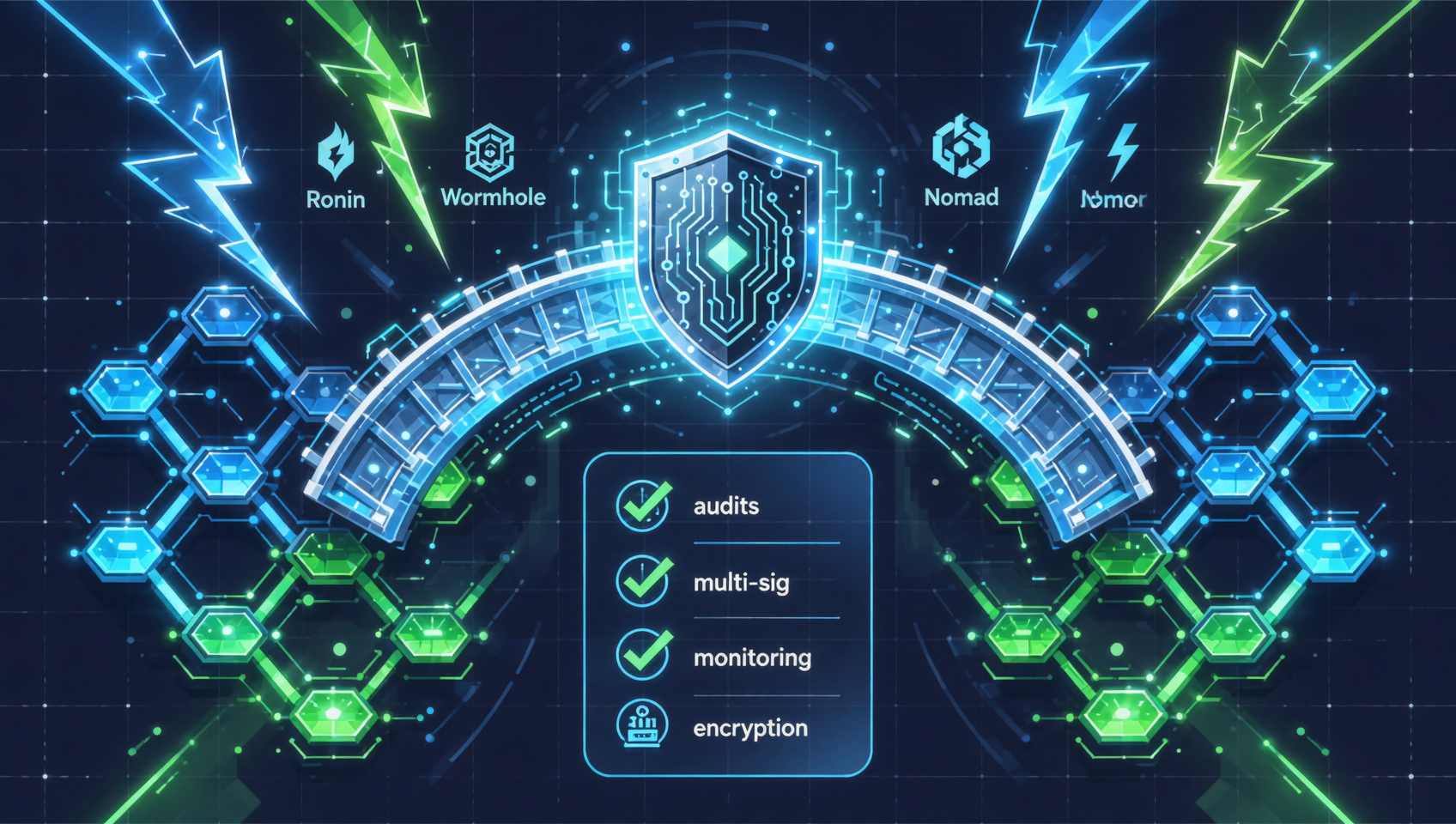
Bridge Security
- Cross-Chain Bridge Security Guide — Bridge safety best practices for one of the most attacked vectors in crypto
Anti-Phishing Guide
- Crypto Phishing Guide 2026: 7 Scams and How to Stay Safe — Fake sites, approval phishing, address poisoning, fake support and more, with layered defense tips
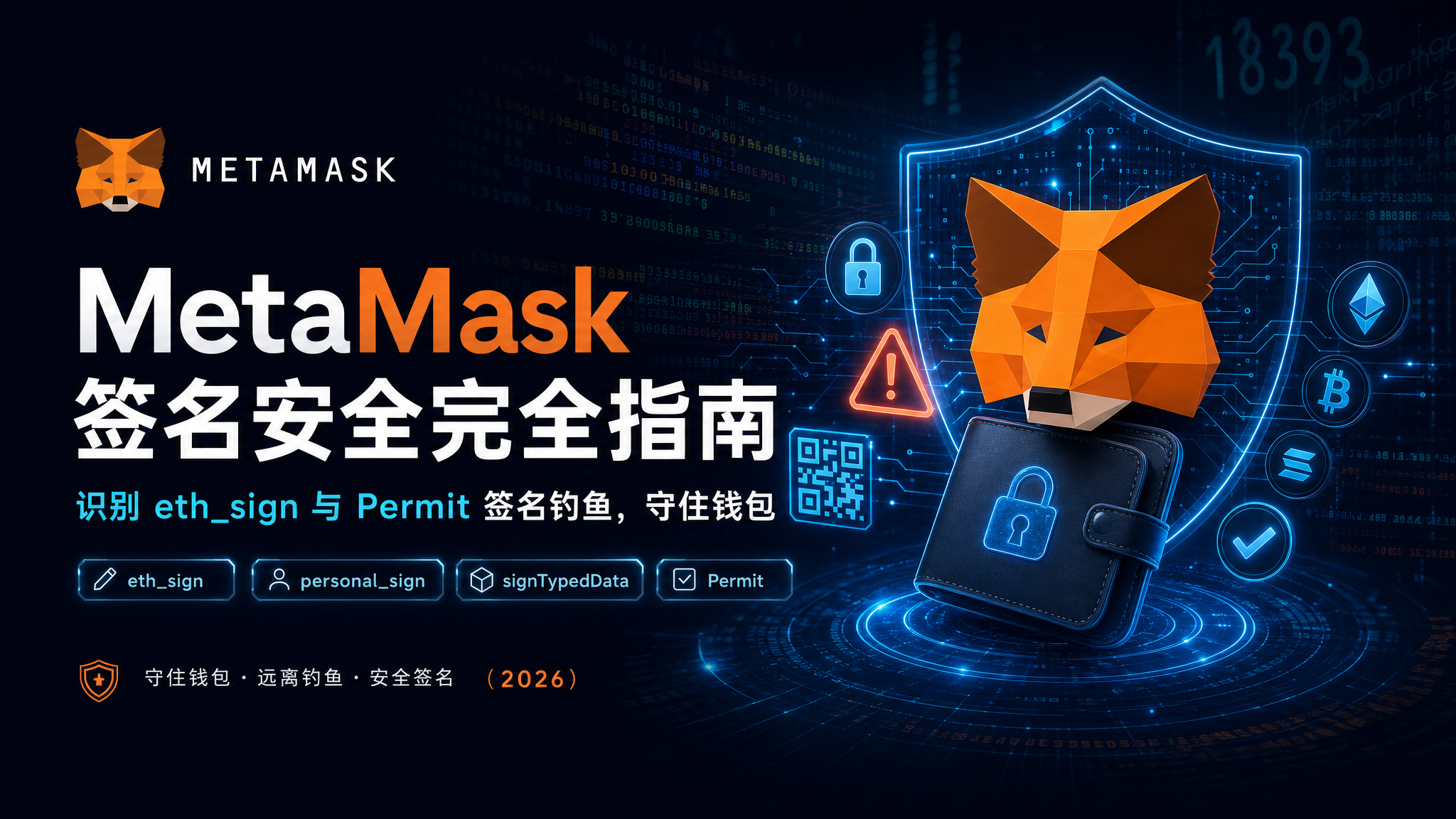
Signature Security
- MetaMask Signature Phishing Guide 2026 — How eth_sign and Permit signatures drain wallets, the difference between signing, approving, and sending, real $440K and $6.5M drain cases, plus a pre-sign checklist and emergency response
Smart Contract Security
- OWASP Smart Contract Top 10 2026 Explained — The ten most dangerous contract vulnerabilities SC01–SC10: access control, business logic, oracle manipulation, flash loans, reentrancy — plus the $1.42B 2024 loss breakdown and a DeFi safety checklist
Honeypot Token Detection
- How to Detect Honeypot Tokens 2026 — A 5-step checklist to avoid trap tokens: contract scan, buy/sell tax, liquidity lock, holder concentration, and a test sell — plus Honeypot.is, GoPlus, and DexScreener tooling and what to do if you’re already trapped
Frequently Asked Questions (FAQ)
Why is it said that “you are the sole guardian of your assets”?
Unlike banks and exchanges, in the decentralized world no third party can help you recover assets. Your private key/seed phrase is the only credential to your assets — once lost or stolen, no customer support, institution, or legal channel can restore them. This means you must take full responsibility for backup, custody, and prevention — exactly why Web3 security matters to every user.
What are the most important Web3 security principles?
① Never put private keys/seed phrases online — no screenshots, photos, or cloud storage; back up offline with paper or metal plates; ② Test with small amounts first — validate new protocols with small sums; ③ Revoke approvals regularly — clean up unneeded contract approvals with Revoke tools; ④ Verify before acting — double-check addresses and networks before transferring; beware phishing and fake DApps.
How do I use wallets like MetaMask safely?
① Install from official channels (avoid fake apps); ② Set a strong password and enable extra protection; ③ Never import private keys/seed phrases into unknown DApps in the browser extension; ④ Verify the site domain and protocol authenticity before connecting a DApp; ⑤ Regularly clean up contract approvals and keep the wallet plugin updated.
What are contract approvals and why can they be stolen?
When you use a DApp, you sign a token approval allowing the contract to spend your tokens up to a set limit. If the contract is malicious or compromised, the attacker can use your approved assets. Many “wallet hacked” incidents are actually malicious-approval exploits. So approve only trusted, audited protocols and regularly revoke unused approvals.
Are cross-chain bridges safe? What are the risks of using them?
Bridges are prime targets for hackers — historically, billions of dollars have been stolen from bridges. Risk sources: bridge contract bugs, compromised validators, malicious frontend injection. Safety tips: ① use only well-known, audited, battle-tested bridges (or native official bridges); ② test with small amounts first; ③ double-check the target chain address to avoid losing funds on the wrong chain; ④ follow official security announcements. See the cross-chain bridge security guide.
How do I defend against phishing and fake sites?
① Verify official domains; don’t click links in SMS/emails/DMs; ② Bookmark official sites and enter from your bookmarks; ③ Beware panic-inducing lures like “urgent notice” or “account anomaly”; ④ Double-check the recipient address before every transfer; ⑤ Beware fake extensions when installing wallet plugins; ⑥ Stay alert to highly realistic fake social accounts and support DMs.