
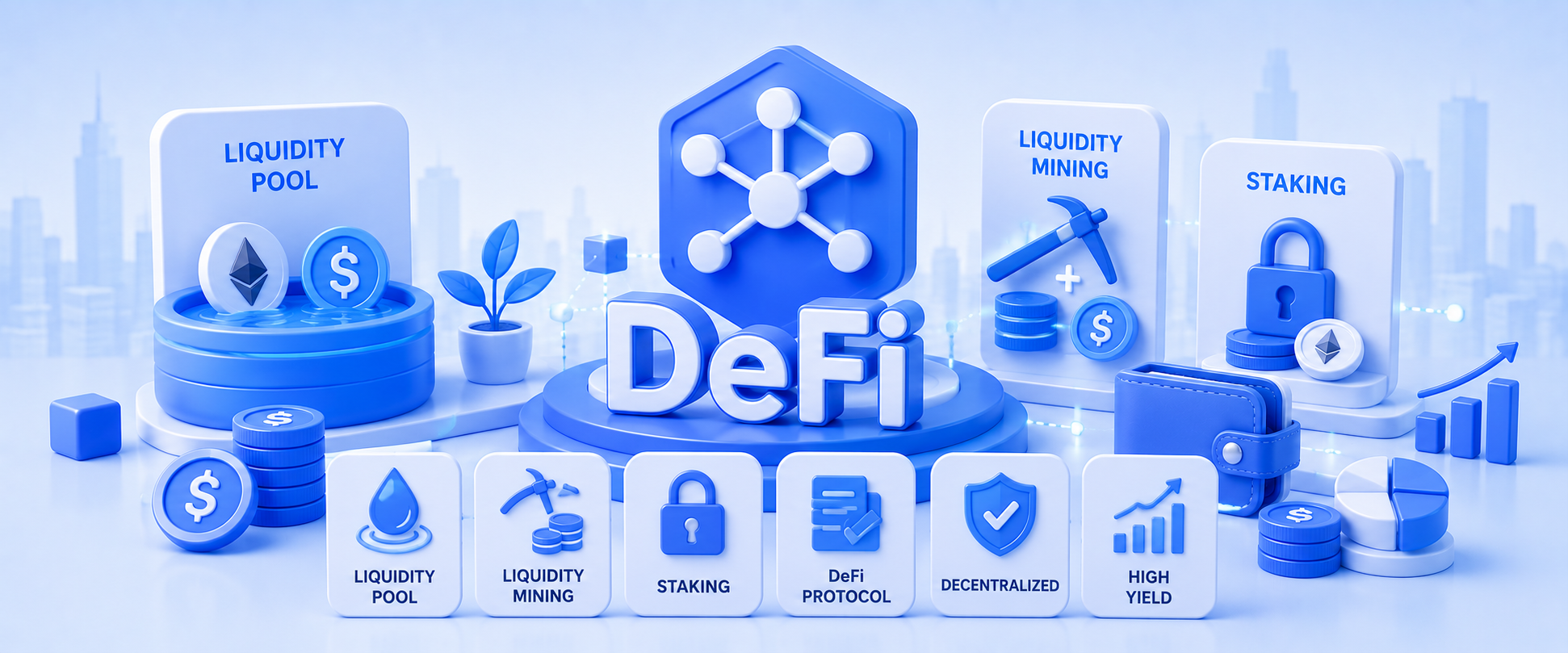
DeFi
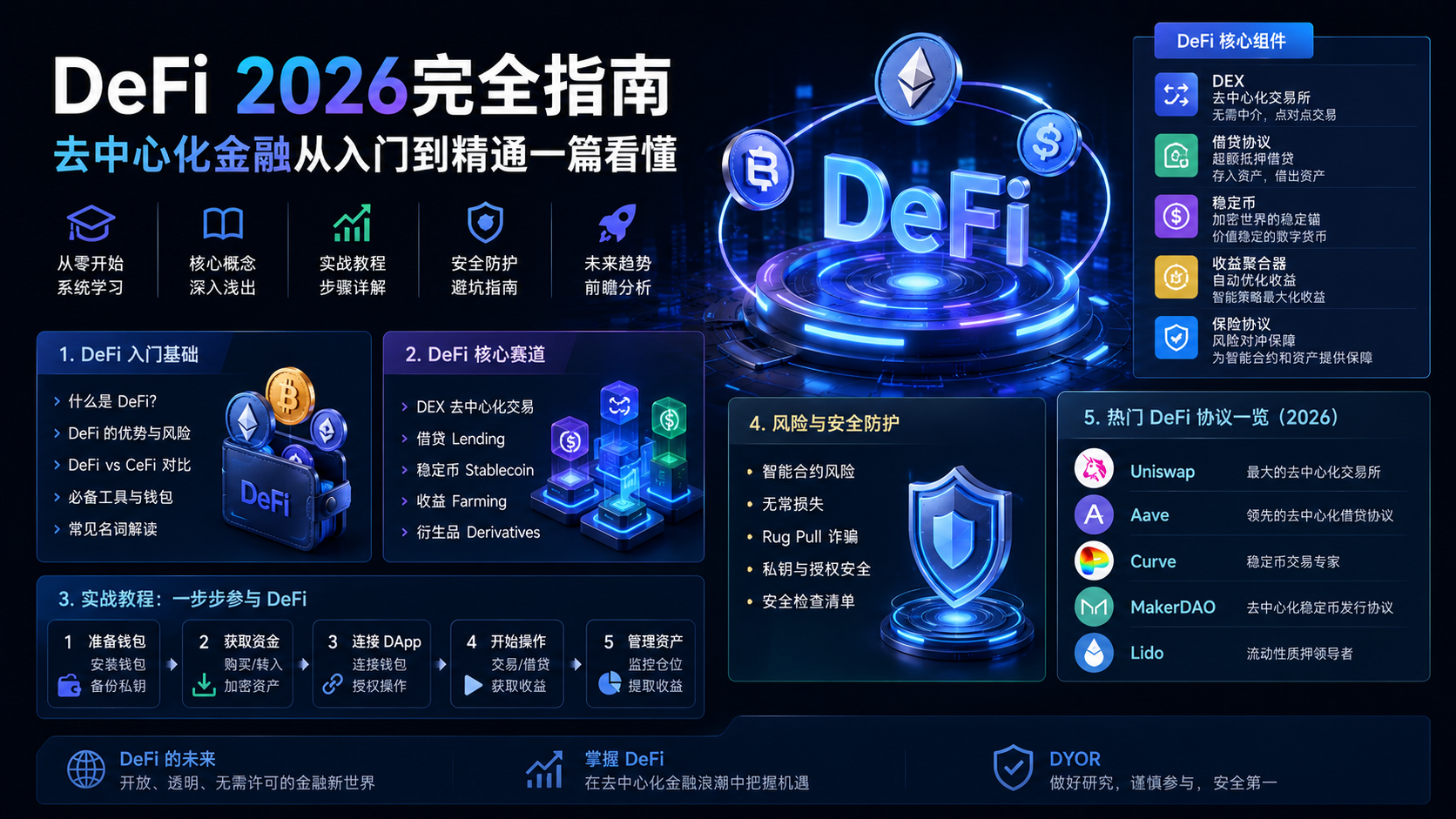
Complete DeFi guide — lending protocols like Aave, DEXs like Uniswap, yield farming, liquid staking and RWA tokenization, plus risk analysis.
DeFi (Decentralized Finance) is one of the most important applications of blockchain technology. It rebuilds traditional financial services — lending, trading, savings — on the blockchain using smart contracts, without any intermediaries.
DeFi Basics
- DeFi Complete Guide 2026: Beginner to Advanced — Systematic overview of DeFi core concepts, major protocols, and investment opportunities
Lending Protocols
- Aave Lending & Borrowing Guide — Tutorial for the world’s largest DeFi lending protocol
- Aave vs Compound 2026: Rates, TVL & Safety Compared — Full comparison of the two DeFi lending protocols, with a 30-second decision table
Staking
- Crypto Staking Complete Guide 2026 — Understanding PoS staking, Liquid Staking, and yields across different chains
- Lido vs Rocket Pool vs Frax: Liquid Staking Compared 2026 — stETH vs rETH vs sfrxETH compared, with a 30-second decision table
Liquidity Pools
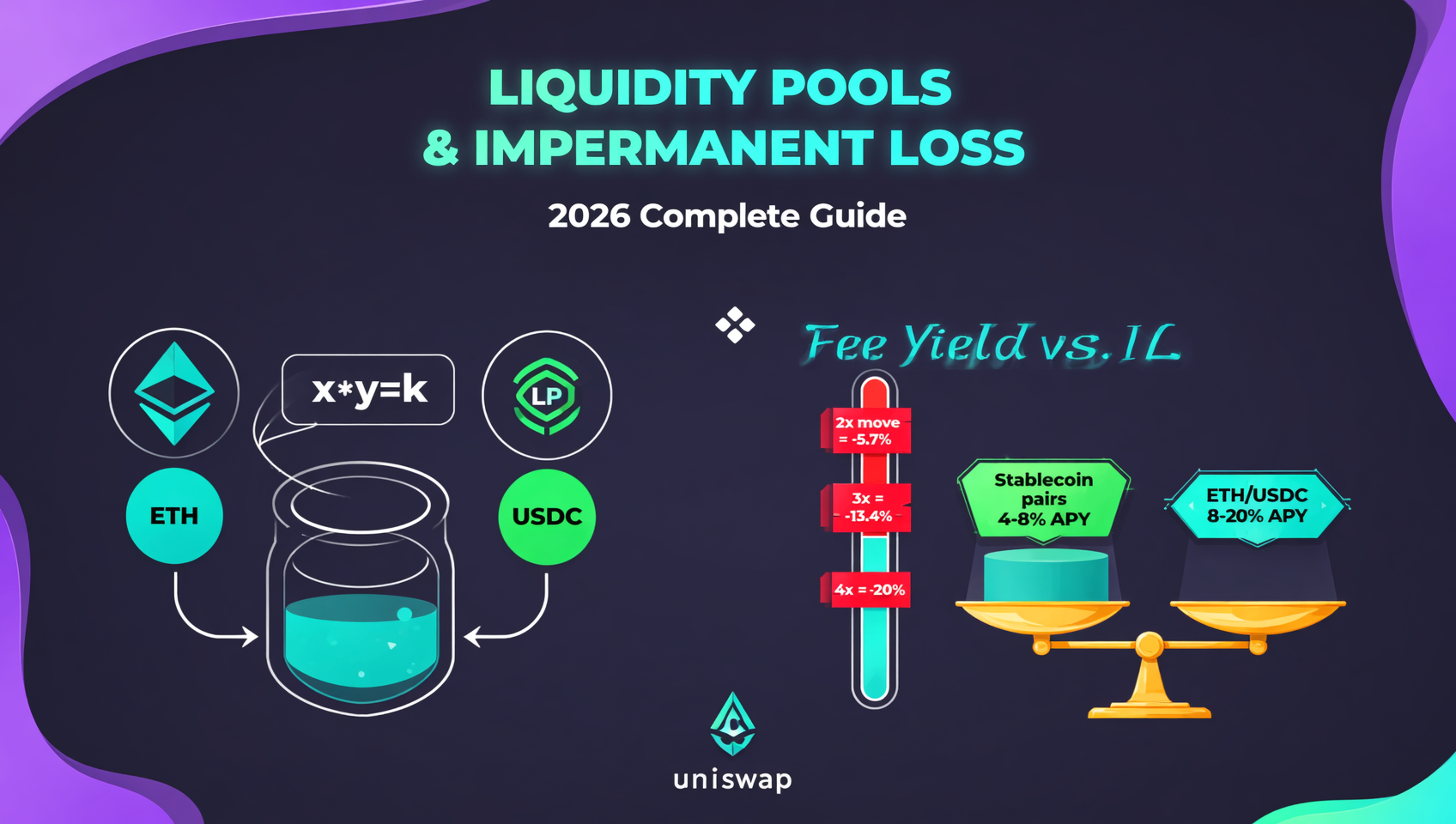
- DeFi Liquidity Pools & Impermanent Loss Guide 2026 — AMM market-making, LP yield, the impermanent loss table, and risk management
Liquidation Mechanism
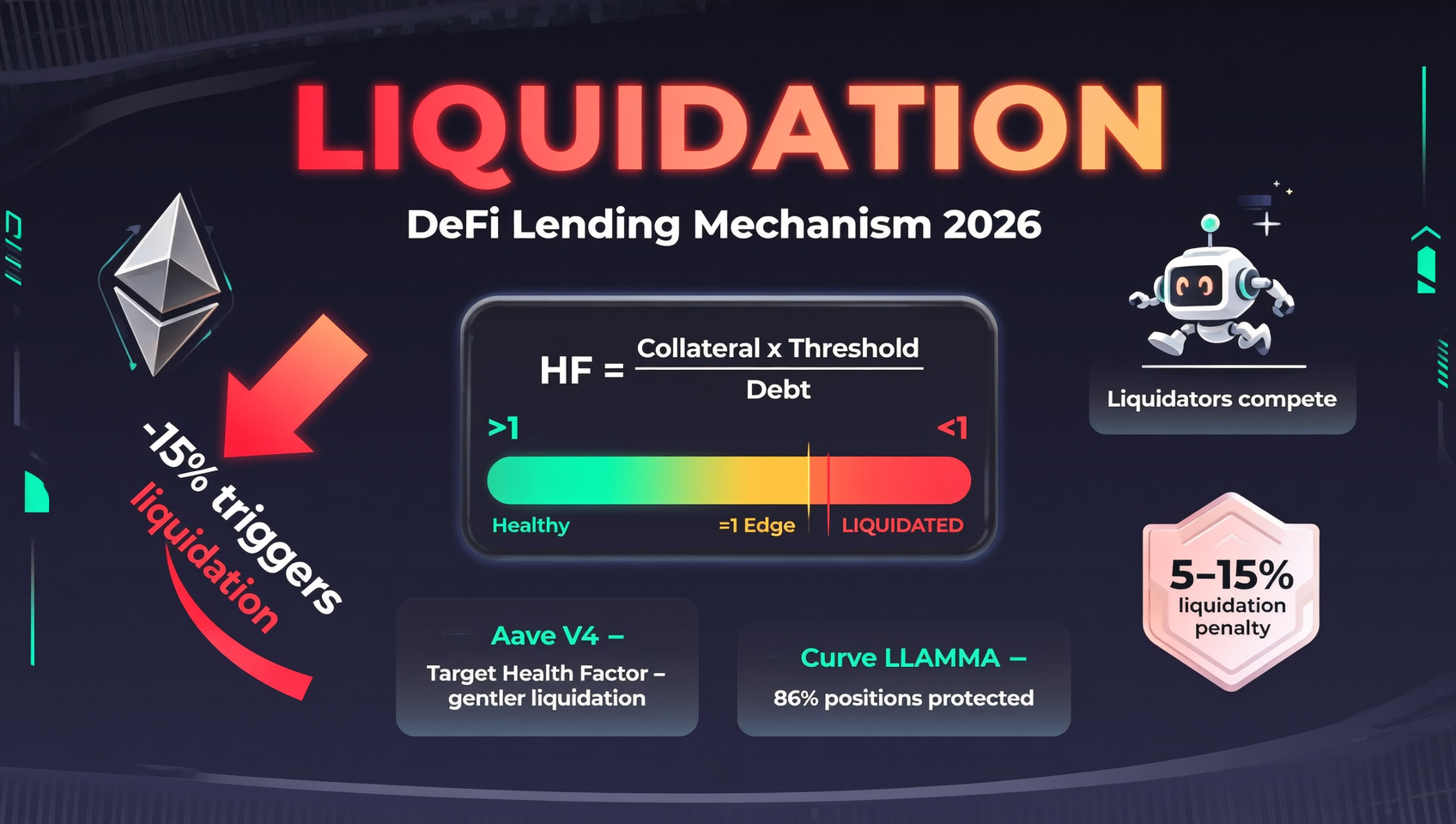
- DeFi Liquidation Mechanism Complete Guide 2026 — Health factor, liquidation triggers and penalties, and how to avoid being liquidated
Frequently Asked Questions (FAQ)
What is DeFi and how does it differ from traditional finance?
DeFi (Decentralized Finance) rebuilds traditional financial services — lending, trading, savings — on the blockchain using smart contracts, without banks or other intermediaries. DeFi is executed automatically by code, open 24/7 globally, and accessible to anyone. The trade-off: you manage the risks yourself — there is no customer support or deposit insurance.
Is DeFi safe? What are the risks?
The main risks fall into four categories: ① Smart contract bugs (funds can be stolen if code is exploited); ② Impermanent loss (opportunity cost from price volatility when providing liquidity); ③ Liquidation risk (forced liquidation when collateral backing a loan is insufficient); ④ Protocol risk (rug pulls, oracle manipulation). Mitigation: use only audited mainstream protocols (e.g. Aave, Uniswap), start with small amounts, and never put all your assets in one pool.
What is impermanent loss?
Impermanent loss occurs when you provide two tokens (e.g. ETH/USDT) to an AMM liquidity pool. When the relative price of the two tokens changes, the market-making formula automatically rebalances the pool toward the higher-priced side, so you redeem with fewer of the “expensive” token. If prices return to the levels at deposit, the loss disappears — hence “impermanent.” LP fee income usually partially offsets it; the bigger the volatility, the more noticeable the loss.
What is liquidation and how do I avoid it?
On lending protocols like Aave, when you borrow against collateral and the collateral value drops enough that the health factor falls below 1, anyone can trigger a liquidation and you incur a 5-15% penalty. How to avoid it: don’t max out your borrowing limit (if the protocol allows 80%, only use 50-55%), diversify collateral, set health factor alerts, and keep reserve funds for short-term volatility.
How does a beginner start with DeFi?
Recommended order: ① study the DeFi Complete Guide and the Aave lending guide to understand the mechanics; ② set up a self-custody wallet (e.g. MetaMask); ③ test with a small amount of money in one pool or one loan to walk through the full flow; ④ scale up gradually once familiar, always keeping a safety margin. The guide articles in each section of this page will take you through it step by step.
How do you make money in DeFi? Where does yield come from?
Main sources: ① Lending interest (deposit stablecoins into protocols like Aave for deposit yield); ② LP fees (provide liquidity to DEXs like Uniswap, earning a share of the pool’s ~0.3% trading fee); ③ Liquidity mining rewards (protocols subsidize liquidity with governance tokens); ④ Staking yield (stake PoS tokens like ETH for ~3-5% annualized). The higher the yield, the higher the risk — always understand the risk behind each source of return.
更多相关文章
- How to Find & Safely Claim Crypto Airdrops in 2026 (Scam-Proof Checklist) — A complete 2026 guide to crypto airdrops: what they are, how to find them on DefiLlama, DappRadar and exchanges, the 6 fake-airdrop scams to avoid, a 7-step safe-claiming checklist, and post-claim tax and approval cleanup. Spoiler: ~88% of airdrop tokens crash within months — it’s not free money.
- Uniswap vs PancakeSwap vs SushiSwap (2026): Which DEX Should You Use? (With Real Fee Math and a Decision Table) — A 2026 deep comparison of Uniswap, PancakeSwap and SushiSwap: live volume and TVL data, real swap-cost math for $1,000 and $10,000, V3/V4 version differences, the latest on UNI and CAKE tokenomics, and a scenario-based decision table that tells you exactly which DEX to use on which chain.
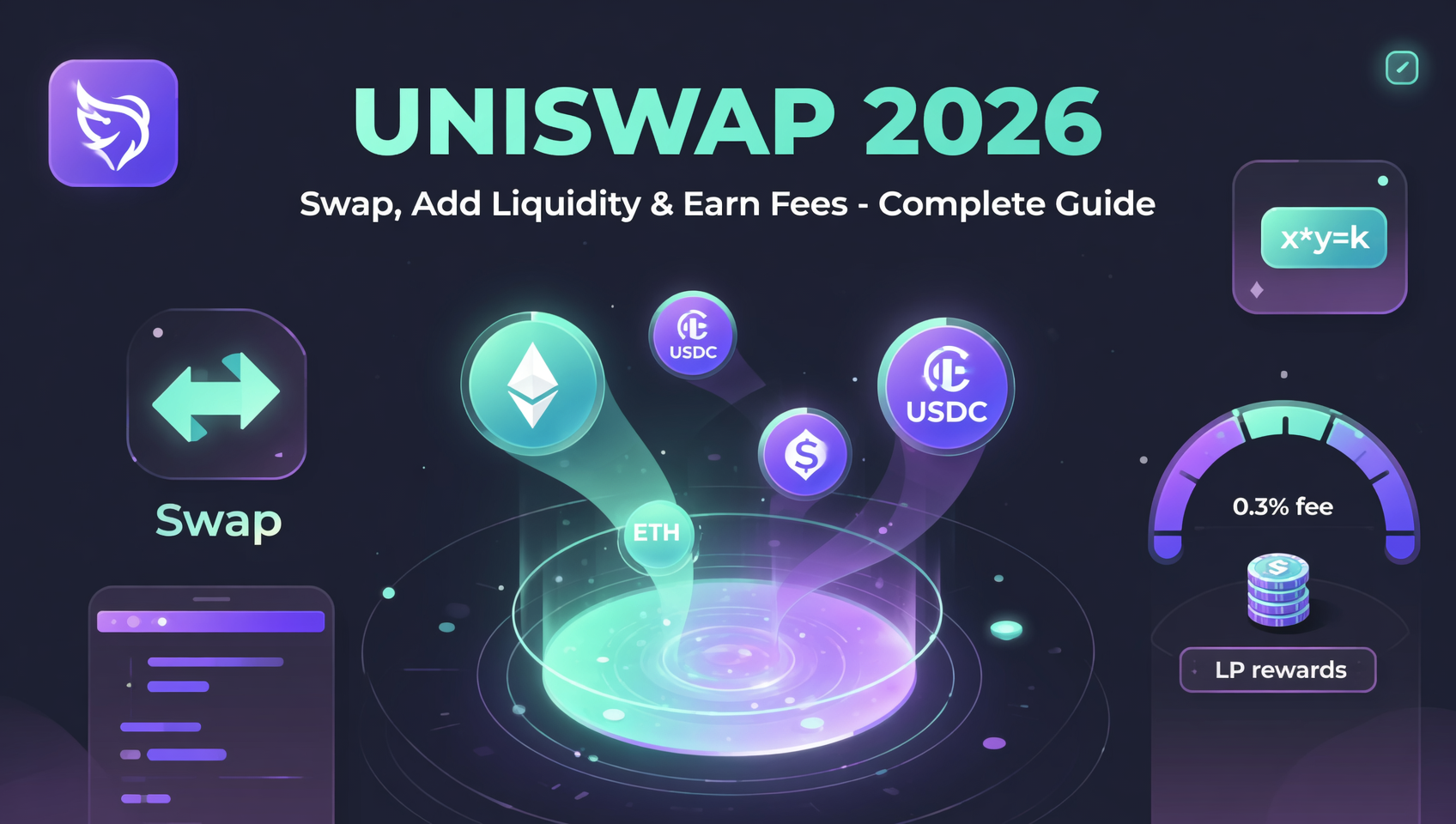
- Uniswap Tutorial 2026: How to Swap, Add Liquidity, and Earn Fees (With Real Profit/Loss Calculations) — Complete 2026 Uniswap hands-on tutorial: step-by-step guide to connecting a wallet, swapping tokens, adding liquidity to earn fees, and using $1000 to compare fee income vs impermanent loss. Directly answers whether providing liquidity earns fees or loses money, with a beginner’s pitfall checklist and security notes.