


TL;DR
Web3 security refers to a set of practices for protecting digital assets, private keys, and on-chain interactions in decentralized applications and blockchain ecosystems. In H1 2026, the Web3 space lost $1.31 billion due to security incidents, with attack frequency surging over 100% year-over-year to 207 events. Phishing and wallet intrusions were the most devastating attack vectors.1
✅ What you'll learn in this article:
- 🔑 Wallet Security — Golden rules for private key/seed phrase storage, hot/cold wallet strategies
- 🛡️ DeFi Security — Token approval management, smart contract risk identification, Rug Pull prevention
- 🔍 Security Tools — Revoke.cash, transaction simulation, on-chain tracking tools
- 📋 Checklist — Daily/weekly/monthly security habits, incident response procedures
Table of Contents
- 1. What is Web3 Security? 2026 Threat Landscape
- 2. Wallet Security: Protecting Private Keys is the First Line of Defense
- 3. DeFi Security: Deadly Traps in Smart Contract Interactions
- 4. Web3 Security Tools Collection: Build Your Defense Toolkit
- 5. The Truth and Limitations of Smart Contract Audits
- 6. New Trends in Web3 Security 2026
- 7. Personal Web3 Security Checklist
- FAQ
- Further Reading
1. What is Web3 Security? 2026 Threat Landscape
Web3 security is a comprehensive protection system encompassing blockchain wallets, smart contracts, decentralized applications (DApps), and on-chain interactions. It differs from traditional cybersecurity—in Web3, there's no "customer service to recover your password." Your private key is everything; once lost, it's gone forever.
H1 2026 Security Data at a Glance
To understand the urgency of Web3 security, consider this data:
| Metric | Value | Source |
|---|---|---|
| H1 2026 Total Loss | $1.31B (344 incidents) | CertiK Hack3D 1 |
| Attack Frequency (YoY) | +107% (83→207 incidents) | TRM Labs 2 |
| Real Growth Excluding Bybit | +28% | CertiK Analysis 1 |
| North Korean Hackers Involved | $643M (66%) | TRM Labs 2 |
| Most Devastating Attack Vector | Wallet Intrusion $445M | CertiK 1 |
| Second Most Devastating Attack Vector | Phishing $366M | CertiK 1 |
| Losses Avoided via Bug Bounties | ~$25B | Immunefi 3 |
Why Are Losses Rising in 2026?
On the surface, H1 2026 losses of $1.31B are down 47% from H1 2025's $2.47B, but this comparison is misleading—H1 2025 included the $1.45B Bybit exchange hack.4 Excluding this outlier, H1 2026 losses are actually 28% higher than H1 2025.1
More concerning is the doubling of attack frequency—from 83 to 207 incidents—indicating attackers are deploying automated scanning and AI-assisted tools at scale.2
Five Attack Surfaces
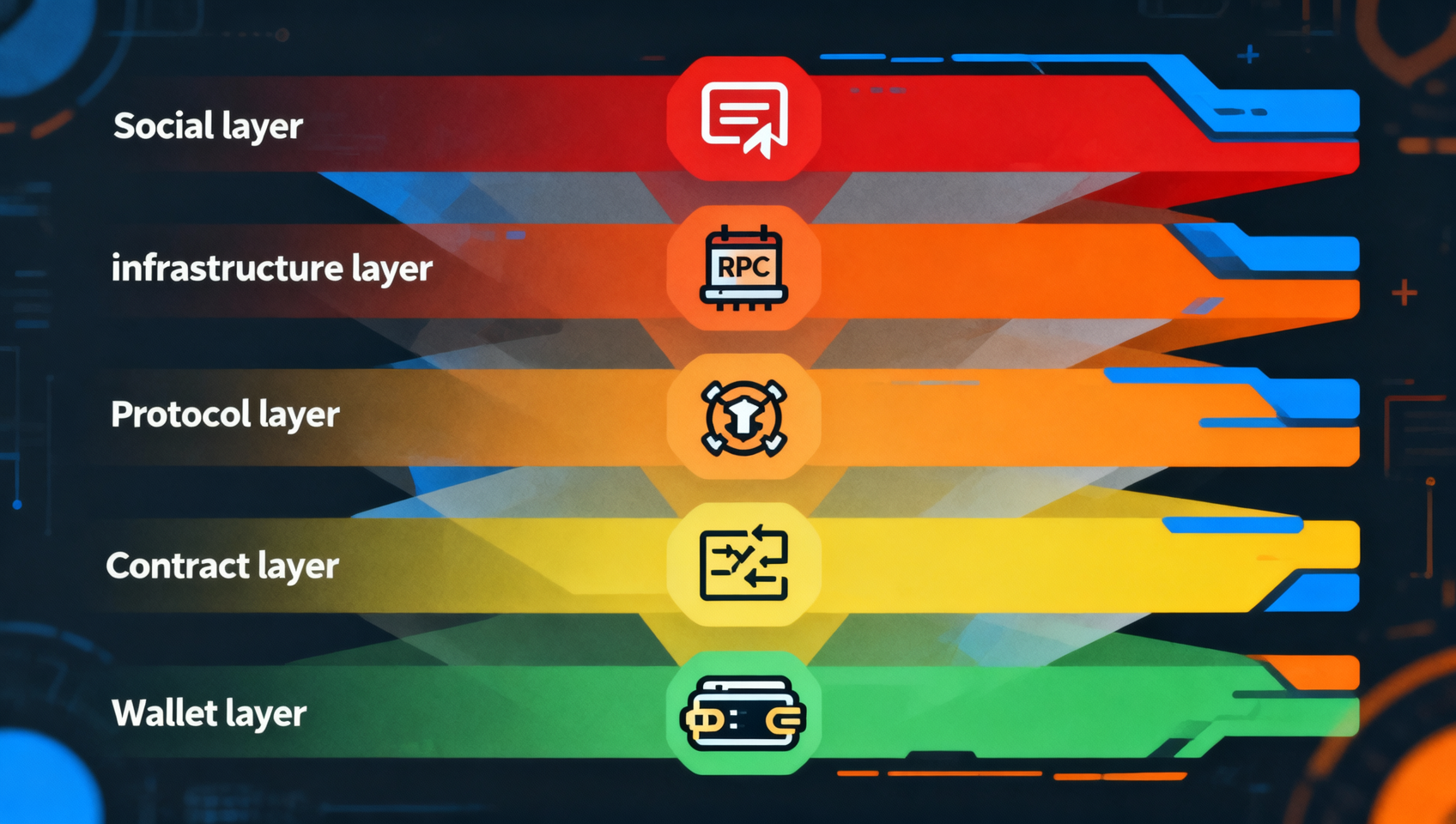
Web3 security threats span five layers, from basic to complex:
| Layer | Risk Type | Common Attack Methods |
|---|---|---|
| 🔴 Wallet Layer | Private key leaks, phishing signatures, clipboard hijacking | Fake DApps induce signing, malware replaces addresses |
| 🟠 Contract Layer | Code vulnerabilities, flash loan attacks, price manipulation | Reentrancy attacks, oracle manipulation, access control flaws |
| 🟡 Protocol Layer | Governance attacks, permission abuse, upgrade vulnerabilities | Governance proposal hijacking, proxy contract upgrades |
| 🟢 Infrastructure | RPC hijacking, domain hijacking, supply chain attacks | DNS poisoning, CDN injection, dev environment breaches |
| 🔵 Social Layer | Social engineering, fake customer service, community phishing | Fake Discord admins, impersonating project teams, airdrop phishing |
2. Wallet Security: Protecting Private Keys is the First Line of Defense
Private Keys and Seed Phrases: Your Only Asset Credentials
The first truth of Web3 asset security is: never expose your private key or seed phrase. In traditional finance, you can report a lost card; on centralized exchanges, you can reset your password. But in Web3, your private key is your signature pen—every on-chain action requires it, and the moment it's leaked, your assets are no longer yours.
Core Principles of Wallet Security
| Principle | Description | Consequence of Violation |
|---|---|---|
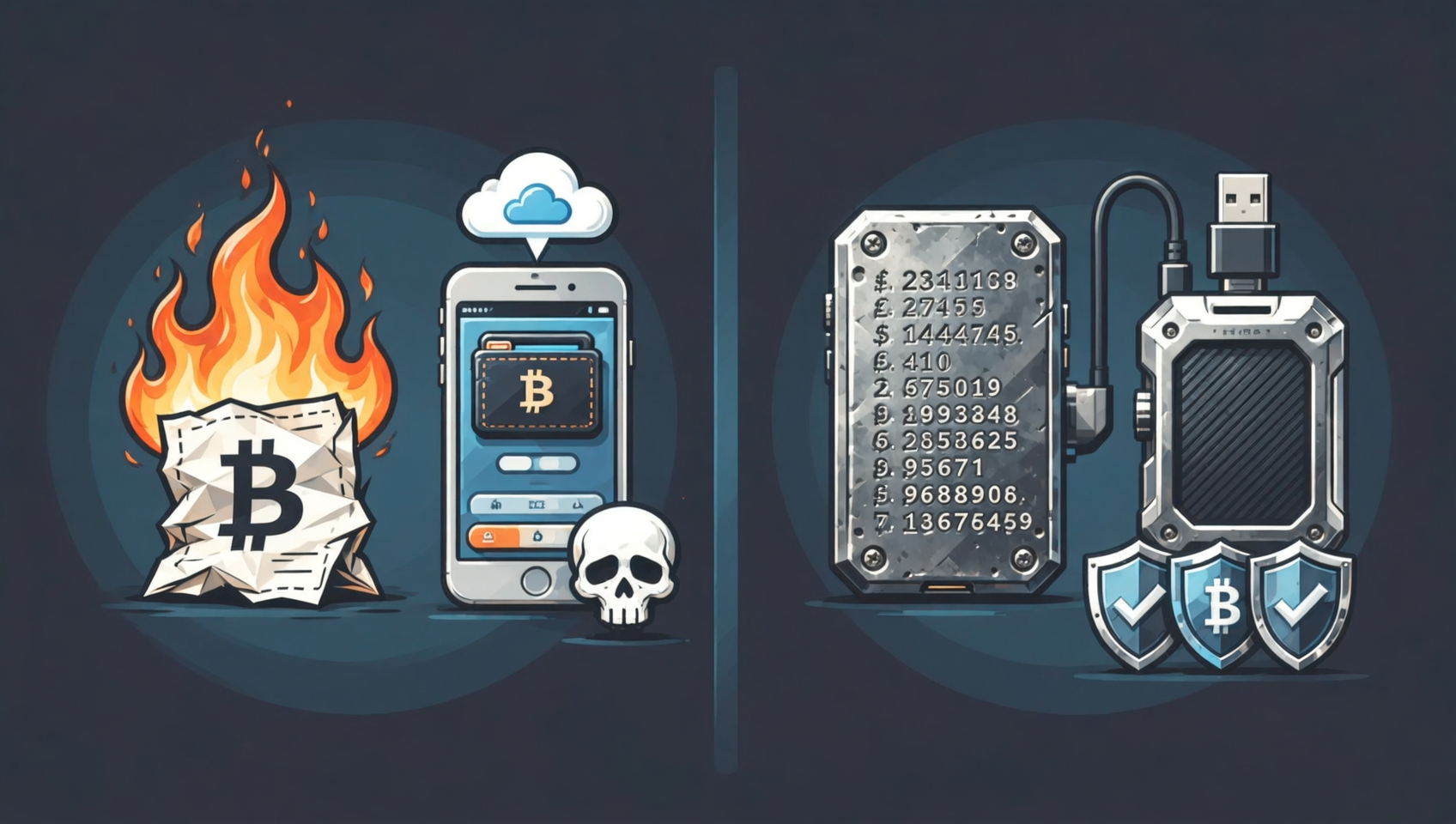
| Offline Seed Phrase Backup | No screenshots, no photos, no cloud storage | 2025 iCloud sync leak: $5M+ lost |
| Layered Wallet Management | Separate main wallet/trading wallet/hot wallet | Frequent test contract approvals → main wallet approval exploited |
| Hardware Wallet for Large Amounts | >$1,000 use Ledger/Trezor/OneKey | Hot wallet phished → all funds drained |
| Verify Before Signing | Confirm signature content, target contract, amount | Blind signing phishing tx → approval exploited by malicious contract |
Is a Hardware Wallet a Silver Bullet?
Hardware wallets protect your private key from remote theft—the key never leaves the device, even when connected to an infected computer. But the 2025 Bybit $1.4B hack sounded an alarm: even with multi-sig Safe wallets and hardware wallets, supply chain attacks can bypass these protections.
Attackers compromised Safe developers' AWS environment, injected malicious JavaScript, and displayed a fake normal transaction interface to Bybit signers. When signers confirmed the transaction with their hardware wallets, they were actually signing a transaction that handed over control of the Safe wallet to the attackers.4
Lesson: Hardware wallets protect your private key, but not "what you're signing." Always carefully verify the signature content of every transaction on the hardware wallet screen.
Common Wallet Attack Techniques
| Attack Type | Method | 2026 Trend |
|---|---|---|
| Phishing Sites | Fake DApp interfaces, trick users into connecting wallets and signing malicious transactions | Targeted social engineering replaces broad nets |
| Clipboard Hijacking | Malware replaces copied/pasted addresses, redirecting funds to attackers | Increased malware targeting Mac users |
| Fake Wallet Apps | Counterfeit wallet apps listed on app stores | Q1 2026: Google Play removed 47 fake wallets |
| Address Poisoning | Sending 0-value transactions to "poison" transaction history, tricking users into copying wrong addresses | 2026: Safe discovered 5,000 malicious fake addresses5 |
| SIM Swap | Hijacking phone numbers to reset account passwords | Targeting crypto KOLs and project teams |
3. DeFi Security: Deadly Traps in Smart Contract Interactions
DeFi (Decentralized Finance) is the most active and dangerous area of Web3. When you interact with DeFi protocols, every approval and every transaction can expose your funds.
Token Approvals: The Most Overlooked Risk
When you first interact with a DApp like Uniswap or Aave, your wallet prompts an "approval" request. This calls the ERC20 approve() function—you authorize the smart contract to transfer a certain amount of tokens from your wallet.
The problem: Many DApps request "unlimited" approval by default, and users never manage these approvals afterward. If that contract is hacked or exploited, attackers can drain your assets via old approvals.
This is why tools like Revoke.cash are so important—they help you discover and revoke forgotten, unnecessary approvals. According to Revert Finance, over 80% of wallets on Ethereum still have at least one unrevolved approval.6
Smart Contract Vulnerabilities: OWASP SCTop10 2026
OWASP released the latest Smart Contract Top 10 vulnerability list in 2026, with access control vulnerabilities rising from #4 in 2025 to the top spot, becoming the most dangerous contract vulnerability type.7
| Rank | Vulnerability Type | 2025 Losses | Notable Cases |
|---|---|---|---|
| SC01 | Access Control Vulnerabilities | $220M | UPCX ($70M), Infini ($50M) |
| SC02 | Business Logic Vulnerabilities | $189M | HegicOptions ($104M) |
| SC03 | Price Oracle Manipulation | $20.7M | Odin.fun, Loopscale |
| SC04 | Flash Loan Attacks | $27.8M | Abracadabra ($13M) |
| SC05 | Missing Input Validation | Frequent in audit reports | — |
| SC08 | Reentrancy Attacks | $42.1M | GMX ($42M) |
| SC09 | Integer Overflow/Underflow | $260M | Cetus ($260M, single event) |
Rug Pulls and Honeypot Tokens
Rug Pulls are scams where project teams abscond with funds. Typical methods in 2025-2026 include:
- Honeypot Tokens: Contract code looks normal but uses blacklists or whitelists to prevent selling
- Price Manipulation Rugs: Project adds small liquidity to LP pool, buys heavily to pump price, then dumps and drains liquidity
- Backdoor Functions: Contract includes privileged functions only callable by the project team, allowing them to drain all LP pool funds
Detection methods: Use DEXTools to check token holder distribution, liquidity lock status, and test with a small amount before buying to see if you can sell.
Cross-Chain Bridges: Hackers' "Prime Target"
Cross-chain bridges are among the most costly attack targets in Web3 history:
| Incident | Year | Loss | Cause |
|---|---|---|---|
| Ronin Bridge | 2022 | $624M | 5/9 validator private keys stolen |
| Wormhole | 2022 | $320M | Signature verification vulnerability |
| Nomad Bridge | 2022 | $190M | Initialization parameter misconfiguration |
| Multichain | 2023 | $126M | Project private key leak/exit scam |
When choosing a cross-chain bridge, prioritize: multiple audits by reputable firms, >12 months of operation, TVL >$1B, and trust-minimized design. Always test with a small amount before large cross-chain transfers.
4. Web3 Security Tools Collection: Build Your Defense Toolkit
Approval Management Tools
| Tool | Function | Chains Supported | Recommended Use |
|---|---|---|---|
| Revoke.cash 🔥 | Check and revoke ERC20/NFT approvals | 15+ EVM chains | Monthly must-use |
| Rabby Wallet | Built-in approval management + pre-transaction risk scanning | 20+ EVM chains | Daily wallet |
| Etherscan Token Approval | View approvals via block explorer | Mainnet + forks | Backup option |
| DeBank | Multi-chain approval viewing (redirects to revoke) | 10+ EVM chains | Quick preview |
Transaction Simulation Tools
Preview transaction effects before signing to avoid phishing scams:
- Tenderly Simulation — Most comprehensive transaction simulator, supports pre-simulation for every transaction
- Fire — Rabby Wallet's built-in transaction simulation, auto-detects high-risk signatures
- Blowfish — Browser wallet extension, real-time scanning and blocking of suspicious transactions
- MetaMask Simulation — Built-in transaction simulation post-2025, auto-marks malicious contracts
On-Chain Security Monitoring
| Tool | Function | Target Audience |
|---|---|---|
| Etherscan | Basic block explorer and contract verification | Everyone |
| Arkham Intelligence | Visual on-chain tracking and risk alerts | Intermediate/advanced users |
| GoPlus | Token security detection API, auto-scans contract risks | Everyone (integrated with DEXTools) |
| Hacken | Contract security scoring and audit report lookup | DeFi users |
| Forta Network | Real-time threat detection, automatic alerts | Project teams and advanced users |
Anti-Phishing Tools
- Wallet Guard — Chrome extension, blocks known phishing sites and malicious contract interactions
- Pocket Universe — Alerts you before signing if the contract you're interacting with is suspicious
- Scam Sniffer — Real-time phishing domain detection, blocked 290,000+ phishing transactions in 20265
5. The Truth and Limitations of Smart Contract Audits
What is an Audit?
A smart contract audit is a systematic review of contract code by security experts to identify vulnerabilities, logic errors, and potential attack surfaces. A complete audit typically includes:
- Automated Scanning — Using tools to scan for known vulnerability patterns (e.g., Slither, Mythril)
- Manual Code Review — Senior auditors line-by-line logic checks
- Threat Modeling — Simulating possible attack paths
- Test Coverage — Supplementing boundary and edge case tests
Major Audit Firms
| Firm | Founded | Characteristics | Price Range |
|---|---|---|---|
| CertiK | 2018 | Largest scale, clear KYC rating system | $100K-$500K |
| Trail of Bits | 2015 | Oldest top-tier security firm, best technical depth | $150K-$600K+ |
| OpenZeppelin | 2015 | Ethereum ecosystem standard setter, highest library code quality | $50K-$300K |
| SlowMist | 2018 | Most active Asian security team, most cases | $30K-$200K |
| Code4rena | 2021 | Crowdsourced audit model, competitive vulnerability discovery | $20K-$150K |
Five Limitations of Audits
An audit is not insurance. Here are five reasons why audited contracts can still be hacked:
- Limited Audit Window — A single audit typically lasts 2-6 weeks, cannot find all vulnerabilities
- Logic Vulnerabilities Hard to Detect — Business logic flaws (e.g., oracle design, economic model bugs) often require domain experts to identify
- Composition Risk — Interactions between protocols can create risks auditors cannot foresee
- Version Updates Break Security — Contract upgrades can introduce new vulnerabilities (2025: 38% of contract attacks were due to upgrade-introduced bugs)
- Audit ≠ Never Expires — 2026 attackers use AI to scan old contracts that have been waiting for years7
Core advice: Look for projects verified by multiple reputable audit firms. Projects audited by CertiK + Trail of Bits + Code4rena are far safer than single audits. Also, the newer the audit, the better—be wary of audits older than 18 months.
6. New Trends in Web3 Security 2026
1. AI-Assisted Attacks vs AI Defense
The most significant change in 2026 is attackers fully adopting AI tools. CertiK's report notes attackers using AI to scan old contracts, auto-generate phishing content, and simulate social engineering scripts, dramatically increasing attack efficiency.1
Meanwhile, defenders are fighting back with AI:
- Transaction Simulation AI — Auto-detects and flags suspicious transaction patterns
- On-Chain Threat Intelligence — Real-time analysis of on-chain behavior, early warning of potential attacks
- Code Audit AI — Assists auditors in finding vulnerabilities (still requires human verification)
2. Account Abstraction (ERC-4337) Impact on Security
Ethereum's ERC-4337 (Account Abstraction) is changing wallet security infrastructure. It enables:
- Social Recovery — Recover wallet via pre-set guardians, no seed phrase dependency
- Spending Limits — Set daily maximum transfer amounts, reducing loss ceiling from single leaks
- Session Keys — Grant temporary permissions to specific DApps instead of permanent approvals
- Batch Transactions — Combine approve and swap into one transaction, reducing approval windows
These features significantly reduce operational risk for average users but introduce new attack surfaces—guardian collusion and session key leaks.
3. MPC Wallets: Eliminating Single Points of Failure
MPC (Multi-Party Computation) wallets are becoming the new standard for institutions and high-net-worth users. They shard the private key across multiple devices or parties:
- No Single Private Key — Attackers must compromise multiple devices simultaneously to steal assets
- Strategic Transactions — Can set multi-factor rules (e.g., >10K USDT requires 2/3 signatures)
- Enterprise-Grade Recovery — Even if one shard is lost, recovery is possible via other means
2026 Representative Products: Fireblocks, ZenGo, MPCVault
4. OpSec (Operational Security) Becomes the New Battlefield
The "OpSec" concept proposed by Nexus Mutual gained widespread recognition in 2026.8 The core idea: the most severe losses are no longer due to code vulnerabilities, but operational security failures.
H1 2026 data validates this trend:
- Infrastructure/operational-level security incidents accounted for ~76% of stolen funds
- Social engineering, private key leaks, RPC hijacking, and other OpSec issues far exceeded pure contract vulnerability attacks2
7. Personal Web3 Security Checklist
Daily Check (~2 minutes)
- Check wallet for any unusual transactions (use a small wallet for DApp browsing)
- Monitor project security announcements and threat alerts (via Telegram or Discord)
- Confirm no anomalies in wallet extension and website permissions
Weekly Check (~5 minutes)
- Review latest security news—any new phishing techniques circulating
- Check browser wallet extension approval permissions
- Review DApps interacted with this week, confirm no anomalies
Monthly Check (~15 minutes)
- Open Revoke.cash → Connect wallet → Full check of all chain approvals
- Revoke unused DApp approvals (especially unlimited ones)
- Confirm hardware wallet firmware is updated to latest version
- Check latest audit reports and contract changes for all held projects
- Use transaction simulation tools to review credibility of recent large transactions
Emergency Response After an Attack
If you unfortunately experience a security incident, follow these steps immediately:
🚨 Attack/Theft Detected
- Immediately transfer unaffected assets — Create a new wallet, transfer safe assets, stop all old wallet interactions
- Revoke malicious contract approvals — Use Revoke.cash to revoke suspicious approvals, as fast as possible
- Isolate affected device — Disconnect from internet, scan for malware, change all associated passwords
- Track and report — Record attacker address on Etherscan, contact project/CEX for freeze, report on Chainabuse.com, contact police immediately for large losses
Summary
Web3 security is not a static goal but an ongoing process. As attack methods evolve in 2026 (AI-assisted attacks, targeted social engineering, supply chain infiltration), maintaining security awareness is more important than ever.
Three core actions:
- 🔑 Private Key is Everything — Use hardware wallets for large assets, back up seed phrases offline, never store on connected devices
- 🔍 Regularly Check Approvals — Use Revoke.cash monthly to check and revoke expired approvals, reject unlimited approvals
- 🧠 Stay Vigilant — Be skeptical of all signature requests, use transaction simulation tools to preview effects, never share wallet information with strangers
Web3's core principle is "Not your keys, not your crypto." Master security skills to truly own your assets.
⚠️ This article is for Web3 security education only and does not constitute investment advice. Security tools and projects mentioned are for reference only; please assess risks before use. Cryptocurrency and DeFi transactions involve high risk; make decisions based on your own situation.
📚 延伸阅读: 链上指南 - 从零开始学区块链 — 区块链技术入门与链上数据分析教程
📖 Related Reading:
Footnotes
-
CertiK, Hack3D H1 2026 Report, July 8, 2026. ↩ ↩2 ↩3 ↩4 ↩5 ↩6 ↩7
-
TRM Labs, H1 2026 Crypto Hacks Report, July 2026. ↩ ↩2 ↩3 ↩4
-
Immunefi, Crypto Hacks and Scams H1 2026 Report, July 2026. ↩
-
Bloomberg, "Bybit Hit by Crypto's Worst Hack With Almost $1.5 Billion Stolen," February 21, 2025. ↩ ↩2
-
Scam Sniffer, Wallet Errors and Phishing Attacks Report 2026 Q1, April 2026. ↩ ↩2
-
Revert Finance, Token Approval Statistics, 2026. ↩
-
Nexus Mutual, "Why OpSec Is Crypto's Next Risk Frontier," 2026. ↩