

Crypto Basics
Learn blockchain fundamentals, Ethereum smart contracts, USDT stablecoin mechanics and core crypto concepts — from technical principles to real applications.
Cryptocurrency and blockchain technology are redefining finance, data, and value transfer. Whether you’re a complete beginner or an experienced investor, understanding the underlying technology is crucial. This hub covers fundamental Crypto concepts.
Blockchain Technology
- Blockchain Technology Principles: How Hash Chains Work 2026 — From hash functions to block linking, explained in simple terms
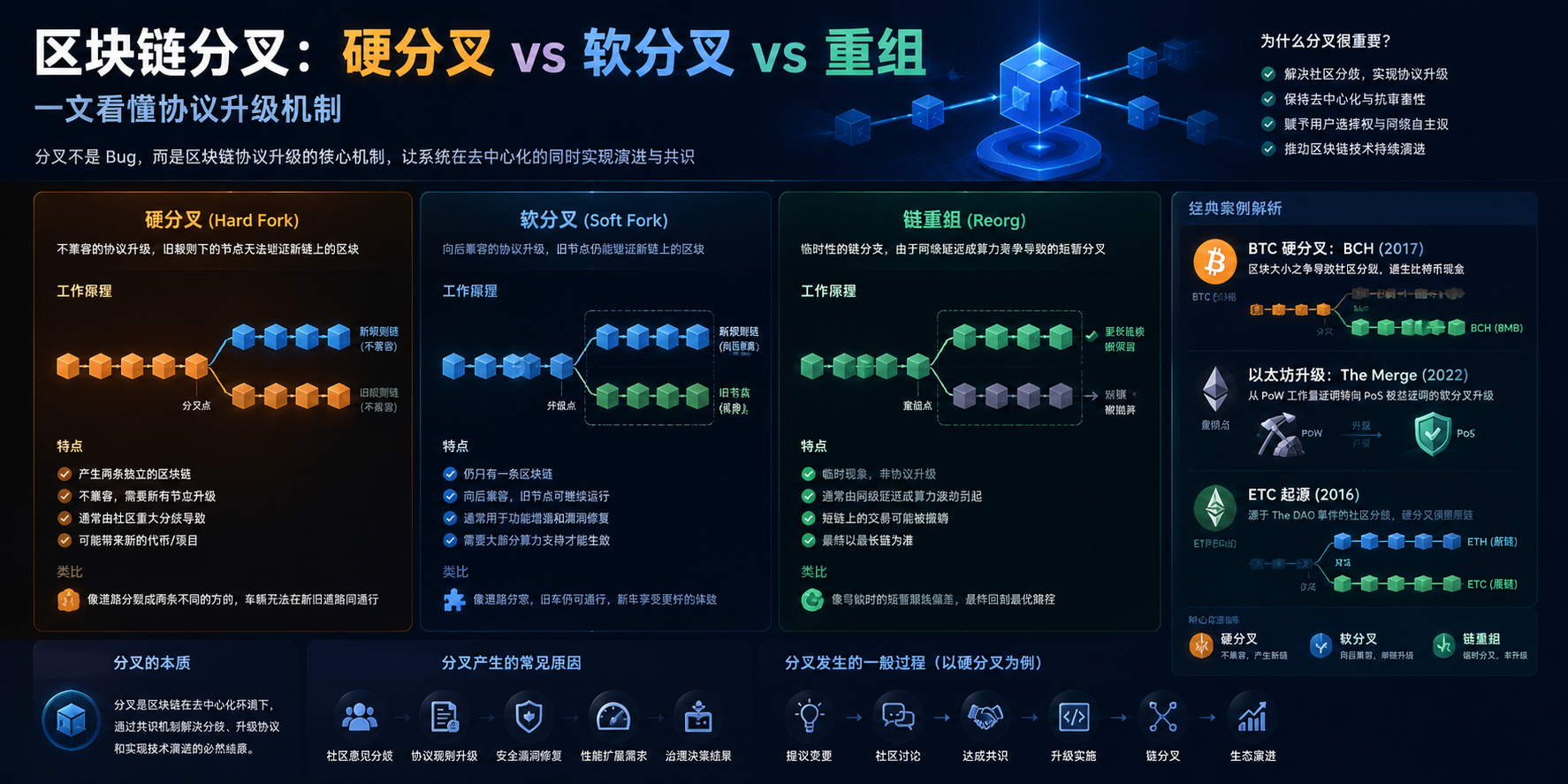
- Blockchain Fork: Hard Fork vs Soft Fork vs Reorg 2026 — Complete guide to hard forks, soft forks, and chain reorgs with classic cases (BTC→BCH, ETH→ETC, SegWit, Taproot)
- Blockchain Node Types: Full Node, Light Node & Archive Node 2026 — Full node vs Light node (SPV) vs Archive node: technical differences, hardware requirements, and decentralization explained
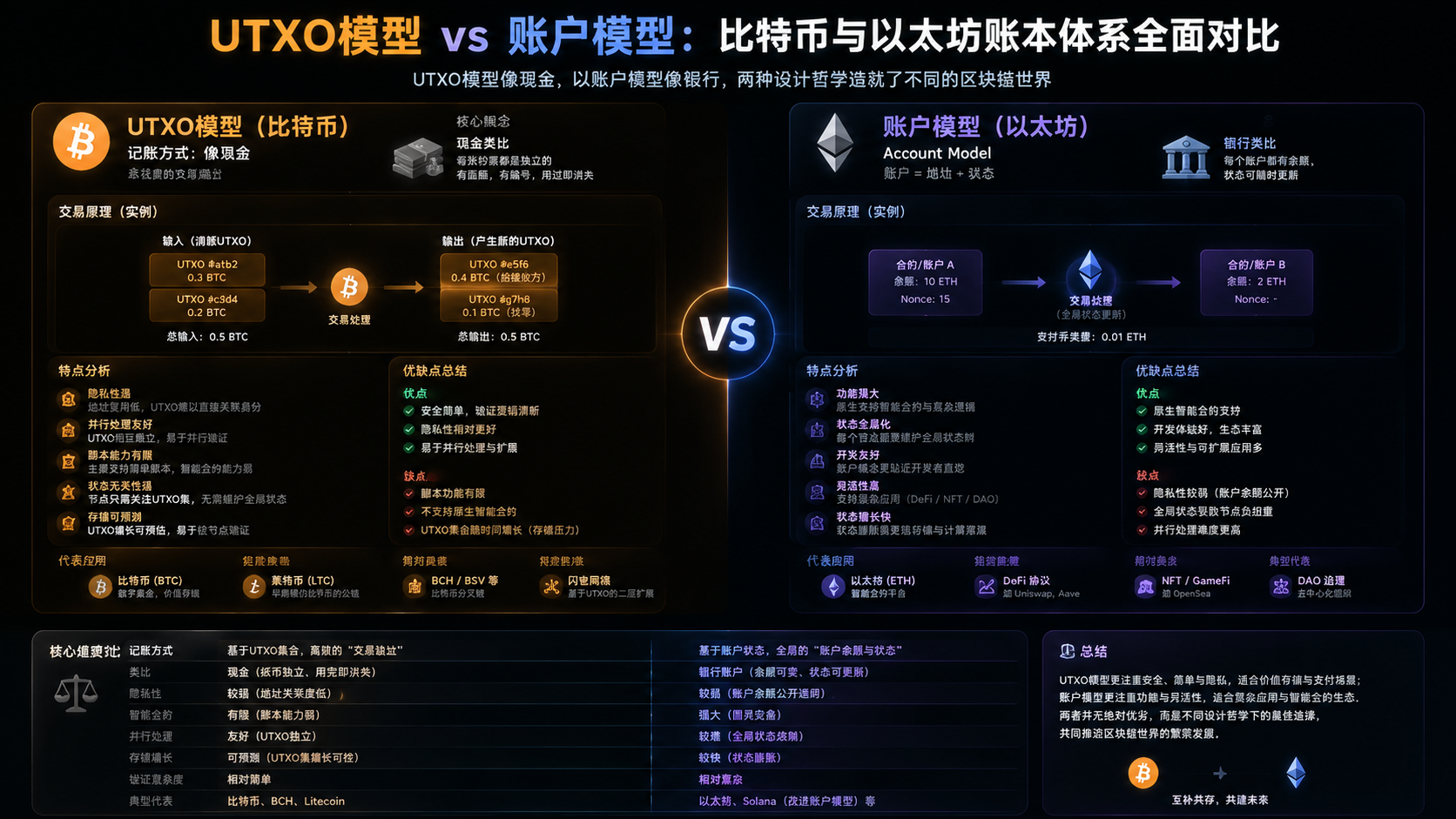
- UTXO Model vs Account Model: Bitcoin vs Ethereum Ledgers Compared — UTXO ledger works like cash, account model works like a bank: transaction mechanics, privacy, and scalability compared
Stablecoin Mechanics
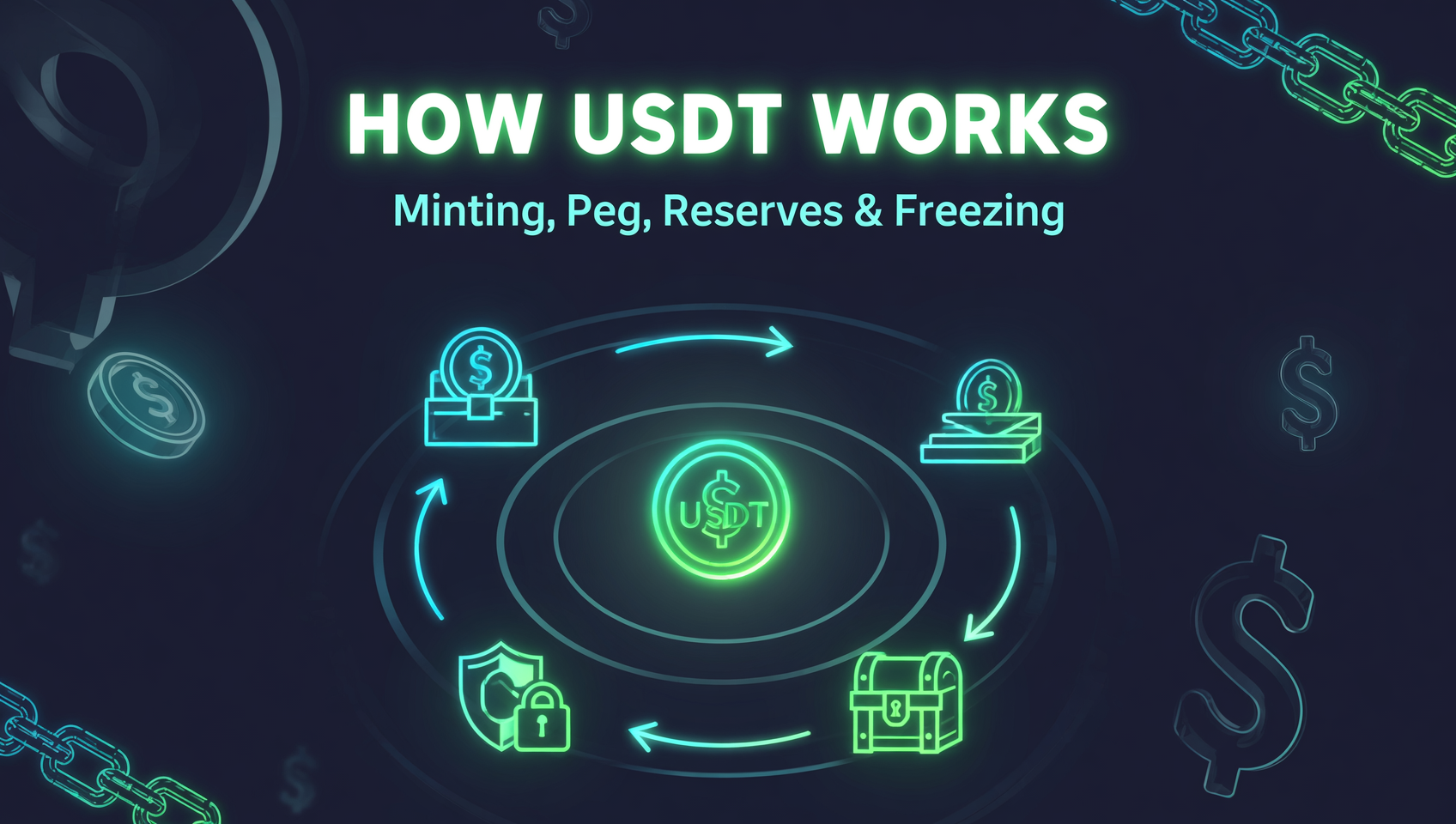
- How USDT Actually Works: Minting, the $1 Peg, Reserves and Freezing — Why USDT stays at $1: not code, but arbitrage and redemption, with a breakdown of reserves and freezing
Ethereum & Smart Contracts
- How Smart Contracts Actually Run: The EVM, Solidity Compilation and Gas Metering — What the EVM is, how Solidity compiles to bytecode, and why gas exists (metering that solves the halting problem)
Frequently Asked Questions (FAQ)
What exactly is a blockchain?
A blockchain is a decentralized distributed ledger — every computer (node) in the network holds the same full copy of the ledger, with transactions chained together in blocks via cryptography (hash functions). Once written, it can’t be tampered with. It lets parties who don’t trust each other reach consensus without a central authority — the underlying technology of Bitcoin, Ethereum, and other cryptocurrencies.
What’s the relationship between blockchain and Bitcoin?
Bitcoin is the first and most famous application of blockchain — using it to record who owns how much BTC. Blockchain is the underlying technology that can power many applications: Ethereum uses it to run smart contracts and decentralized apps; enterprises use it for supply chains and records. Think of it as: Bitcoin is the “product,” blockchain is the “technology foundation.”
What is a hash function and why is it important?
A hash function converts input of any length into a fixed-length string (e.g. a 256-bit hash), with one-wayness (can’t recover the original from the hash) and determinism (the same input always yields the same output). In blockchain it’s used to: ① “fingerprint” and chain block contents; ② Proof-of-Work mining (compute a hash meeting difficulty); ③ guarantee transactions can’t be altered.
What are hard forks and soft forks?
Forks happen when nodes disagree on blockchain rules. A hard fork is an incompatible upgrade — new nodes no longer accept old rules and the chain splits in two (e.g. BTC→BCH, ETH→ETC); original holders get coins on both chains. A soft fork is backward-compatible — old nodes keep working (e.g. SegWit), no new coin is created. A chain reorg is a block rollback, usually from an attack or network anomaly.
What’s the difference between full, light, and archive nodes?
Full nodes download and verify all blocks, maximizing security and decentralization, but require lots of disk and bandwidth. Light nodes (SPV) download only block headers and query full nodes — ideal for mobile wallets. Archive nodes keep all historical state on top of full data, using the most disk (can reach terabytes), mainly for query and analytics services. Security and resource requirements decrease in that order.
What’s the difference between the UTXO model and the account model?
The UTXO model (Bitcoin) works like cash — each transaction consumes old “unspent outputs” and creates new ones, offering better privacy and safer parallel validation, but complex programming. The account model (Ethereum) works like a bank — each account has a balance and transfers adjust it directly, simpler to program and easier for smart contracts, but needs extra protections (e.g. replay protection). This is the core design difference between the Bitcoin and Ethereum ledgers.