


Is Binance safe? One-sentence conclusion: Safe, but not "zero risk." Binance is the world's largest cryptocurrency exchange (323 million registered users)1, with a $1 billion SAFU fund as a backstop, 1:1 verifiable reserves, and it fully compensated users after 7,000 BTC were stolen from its hot wallet in 2019. What you really need to worry about are two things: first, "the exchange itself having problems" (already hedged by three mechanisms: SAFU, PoR, and multi-jurisdiction regulation), and second, "users being scammed by fraudsters impersonating Binance" (this is the pitfall ordinary people are most likely to fall into). This article takes no sides and reviews every safety fact you can verify, item by item.
⚠️ First, the most important point: Don't click "Register" directly in the App—that way you won't get any newbie rewards. Only by registering through an invitation link or entering an invitation code (Binance BINANBT / OKX 60895497) will the new user benefits take effect.
Binance's Fund Security: Can the $1 Billion SAFU Fund Really Backstop Losses?
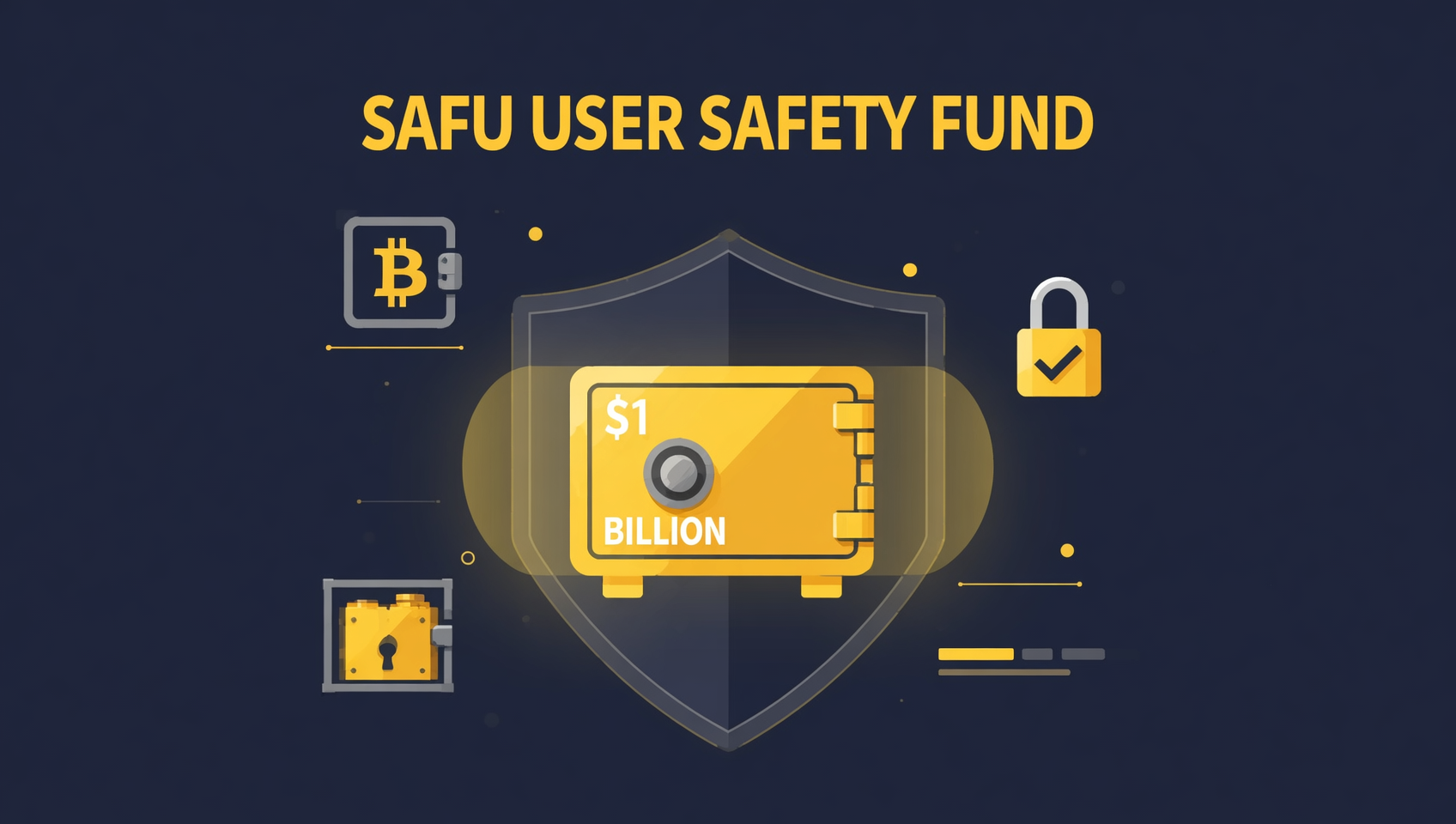
Yes. SAFU is an emergency insurance fund established by Binance in July 2018, maintained at around $1 billion for a long time, specifically used to compensate users for losses in extreme security incidents. 2
SAFU (Secure Asset Fund for Users) is funded by a percentage of Binance's trading fees and is independent of operating funds. In February 2026, Binance gradually converted SAFU from stablecoins to Bitcoin holdings and enabled whitelist address restrictions—any withdrawal can only be sent to pre-approved addresses, mechanically eliminating the possibility of "insiders secretly transferring the fund out"3.
For ordinary users, the significance of SAFU is: if Binance itself is hacked and user assets are damaged, the platform will compensate you first, rather than "playing dead when something happens" like some small exchanges. This is the first essential difference between it and countless exit scams.
Practical tip: SAFU only compensates for losses caused by "the exchange's own security vulnerabilities." If you yourself give your password/mnemonic/verification code to a scammer, or click a phishing link and your assets are transferred out, SAFU will not compensate—such losses are user operational errors, and no exchange provides a backstop.
Proof of Reserves: Does Binance Hold 1:1 Assets, and Will It Misappropriate User Funds?
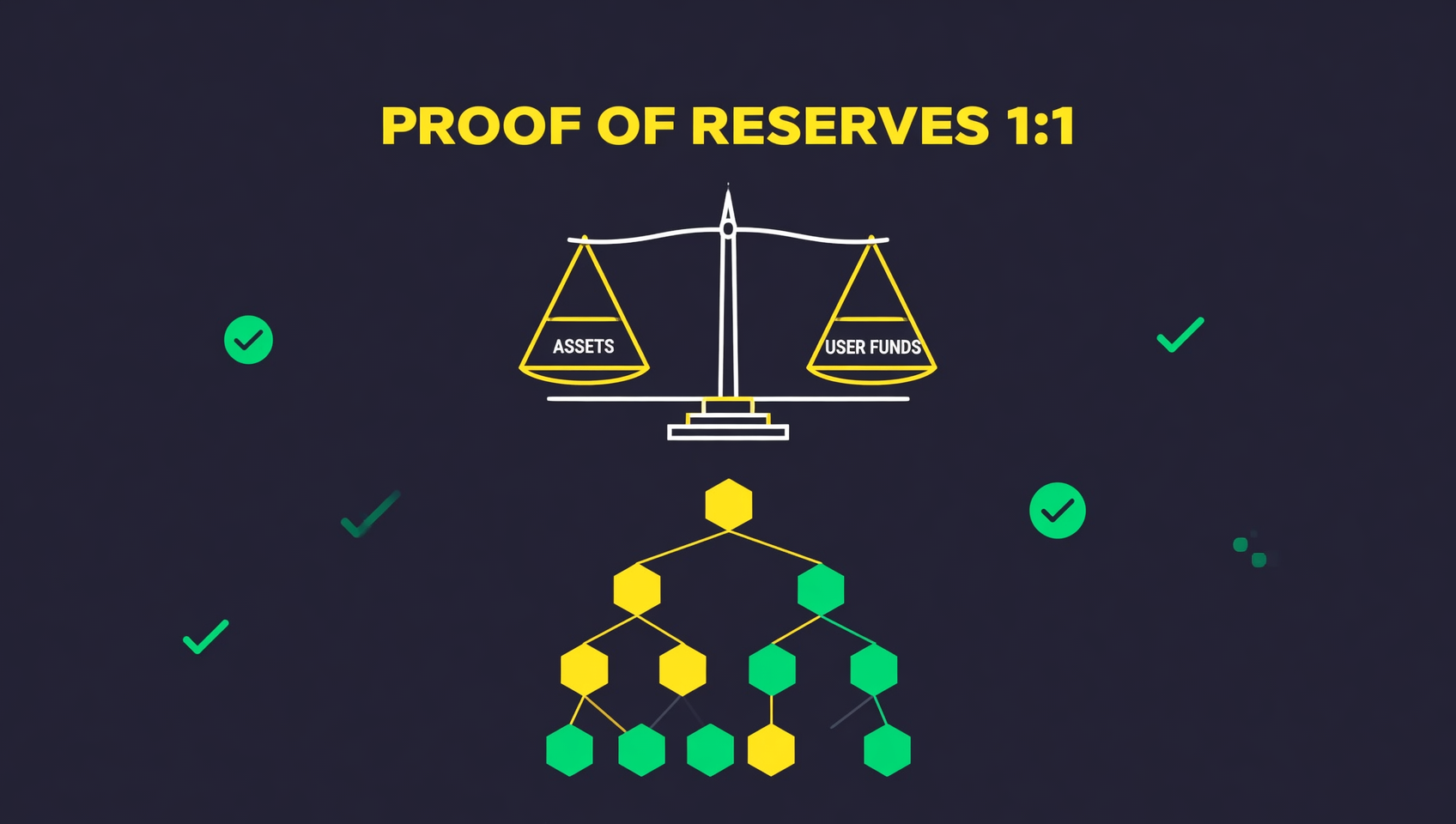
Yes. Binance uses a Merkle Tree proof of reserves, publicly disclosing assets and liabilities, and users can verify 1:1 themselves. As of the end of 2025, it covered approximately $162.8 billion in user assets and 45 assets. 4
This is the most important transparency tool in the industry after the FTX collapse. FTX collapsed because it misappropriated user funds for high-risk investments and ultimately became insolvent. Proof of Reserves (PoR) is designed to prevent this: the exchange creates a Merkle tree from on-chain asset snapshots and user liabilities, and any user can use their account's unique hash to verify on-chain that "my money is indeed still there."
On-chain data also confirms this: data from on-chain analytics firm CryptoQuant shows that Binance holds approximately 659,000 BTC, basically flat compared with the end of 2025, and even during the market sell-off in 2025-2026, there was no substantial reserve outflow5. The claim that "Binance is the next FTX" has been directly disproven by multiple third-party on-chain data sources.
| Transparency Metric | Binance Current Status | Description |
|---|---|---|
| Proof of Reserves (PoR) | ✅ Public | Merkle tree, users can verify themselves |
| Coverage | 45 assets / approx. $162.8B | As of end of 2025 |
| On-chain BTC reserves | Approx. 659,000 BTC | CryptoQuant data, no signs of outflow |
| Asset redemption model | 1:1 holdings | Former CEO publicly stated, not fractional reserve |
Historical Security Incidents: Has Binance Been Hacked? Were Users Compensated?
Yes, it has been hacked, but users were fully compensated—the most serious incident was the May 2019 hot wallet theft of 7,000 BTC, which Binance fully compensated using SAFU.
This was the largest security incident in Binance's history. On May 7, 2019, hackers stole 7,000 BTC (then worth about $40 million) from Binance's hot wallet through phishing and malware, accounting for about 2% of Binance's total holdings at the time. Binance immediately disclosed the incident and activated the SAFU fund, fully compensating all affected users without making users bear a single cent6.
There have been several incidents since, but of a different nature:
- October 2022 BSC cross-chain bridge attack: Approximately $570 million in assets were stolen, but this mainly affected on-chain smart contracts; Binance subsequently froze and recovered most of the funds7.
- 2023 settlement with US regulators: Binance and its founder reached a settlement with the US Department of Justice and others over anti-money laundering and other allegations, paying approximately $4.3 billion in fines and forfeiture8. This is a regulatory compliance issue, not theft of user funds, but it has been sensationalized by many Chinese self-media headlines as "Binance exit scam/bankruptcy," which needs to be distinguished.
Key conclusion: From 2019 to the present, there has been no record of "users permanently losing assets due to the exchange's own security vulnerabilities" at Binance. Security incidents did occur, but the compensation mechanism worked every time.
"Will Binance Exit Scam?": Where Did This Rumor Come From?
No. All verifiable public information points to the same conclusion: there are no signs of Binance exiting scam, and the rumors mostly come from clickbait or coordinated disinformation.
The claim that "Binance will exit scam" resurfaces periodically, usually accompanied by market crashes. We reviewed the most common "evidence" item by item:
| Rumor | Verification Result |
|---|---|
| "Binance has withdrawal difficulties/fund chain rupture" | ❌ Former CEO Changpeng Zhao publicly stated that Binance holds user assets 1:1 and "can be 100% withdrawn"9; deposits and withdrawals remain normal to this day |
| "Binance reserves have significantly outflowed" | ❌ CryptoQuant data shows approximately 659,000 BTC in stable reserves, no signs of stress5 |
| "Binance is the next FTX" | ❌ Binance's funding model differs from FTX's, and PoR remains publicly verifiable4 |
| "Official team collectively unreachable" | ❌ Binance customer service, official social media, and deposit/withdrawal channels are all operating normally |
A useful criterion: platforms that exit scam usually show uniform warning signs before collapsing—official team unreachable, customer service halted, social media accounts cleared, deposit/withdrawal channels suddenly closed. Binance has shown none of these.
The real thing to be vigilant about is not "whether Binance will run," but "how many people are using Binance's name to scam you." Because of its greatest fame, Binance has become the most impersonated brand globally, and impersonation scams are the number one source of financial loss for ordinary people.
Binance Account Security: What Does the Platform Use to Protect Your Account from Theft?
Binance uses an "8-level account protection system" + AI risk control + multi-factor authentication to prevent account takeover, but the most critical part is the switches you turn on yourself.
Platform-side security measures (2026):
- 8-level account protection system: Multi-channel notifications, OTP verification, passkeys (Passkey/FIDO), facial recognition, forced logout on anomalies, single withdrawal rejection, withdrawal function lockdown, etc., intercepting account takeover level by level10.
- AI risk control: Deployed 100+ AI models; from Q1 2025 to Q1 2026, intercepted approximately $10.53 billion in risky funds and protected 5.4 million+ users; in Q1 2026 alone, intercepted 22.9 million scam/phishing attempts11.
- Compliance and anti-fraud: Annual compliance investment exceeds $300 million, with a 1,500+ person compliance team; since 2021, assisted in recovering over $8.2 billion in user assets12.
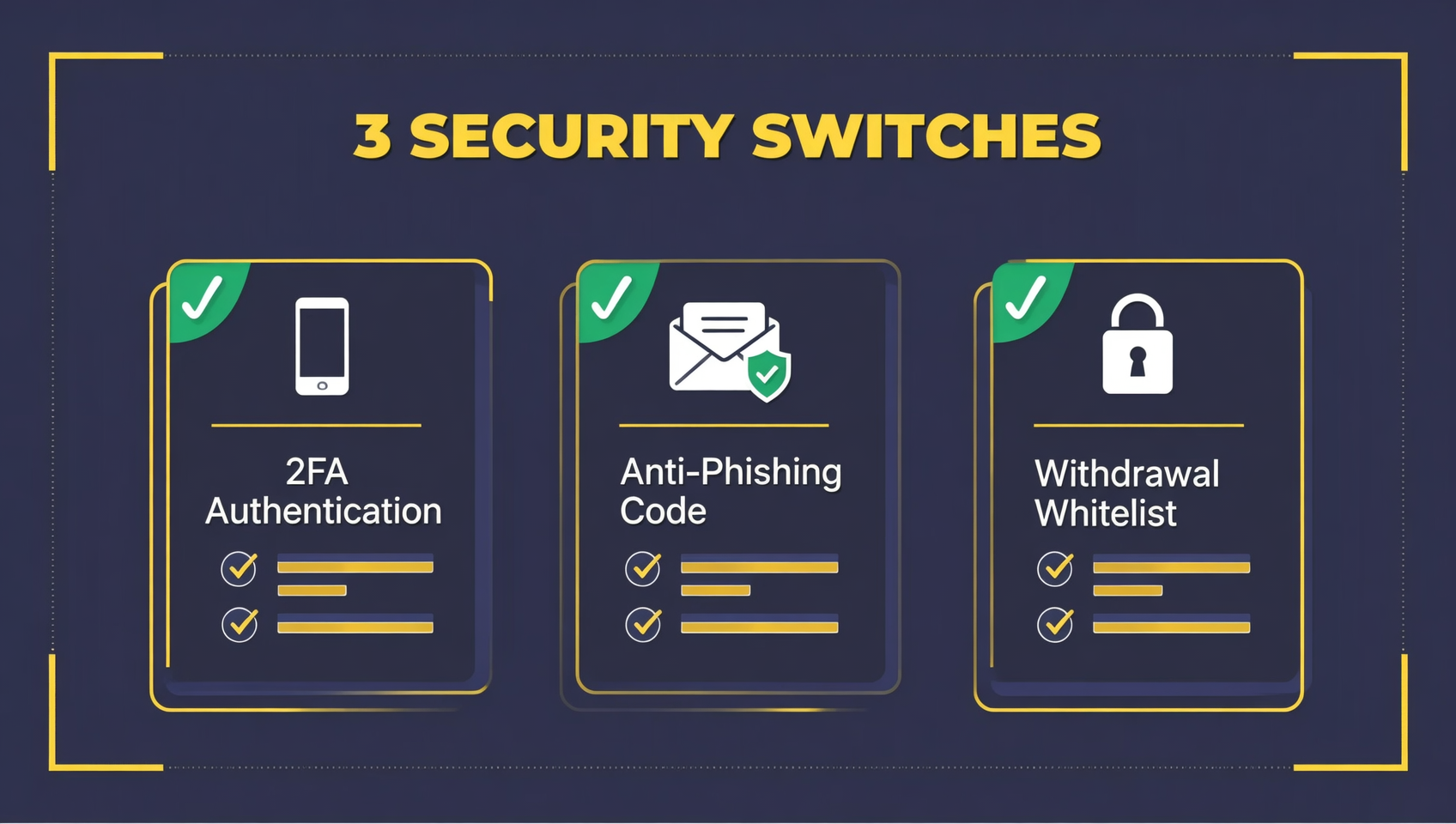
But these can only protect "platform-side" security; the last mile of account security is in your own hands. The following three switches are recommended for every user to turn on (tested paths):
- 2FA two-factor authentication: Binance App → Personal Center → Security → Enable Google Authenticator or Passkey (don't rely only on SMS; SMS can be hijacked via SIM swap).
- Anti-Phishing Code: Set a phrase only you know; every official email from Binance will include it. Any email without the anti-phishing code is fake.
- Withdrawal Whitelist: Only allow withdrawals to addresses you have pre-added; even if your account is compromised, scammers cannot transfer funds to unfamiliar addresses.
Remember in one sentence: The platform's security mechanisms determine "whether Binance will go bankrupt"; your security habits determine "whether your coins will be lost." The former is already guaranteed; the latter depends only on you.
Binance's Regulation and Licenses: Is It Compliant?
Binance is the most licensed exchange globally with the largest compliance investment, but it encountered a notable setback in the EU in 2026.
On the positive side: Binance has obtained licenses or registrations in 20+ jurisdictions worldwide, including Abu Dhabi ADGM (from January 2026, Binance's global platform moved under ADGM regulatory framework), Dubai VARA, Japan FSA, Bahrain CBB, etc., and holds ISO 27001 and other information security certifications13.
On the negative side: After the EU's MiCA (Markets in Crypto-Assets Regulation) fully took effect in July 2026, Binance suspended crypto trading services in some EU countries such as France, Italy, Spain, and Poland (withdrawals still available) because it had not obtained an EU license, and is seeking to obtain a MiCA license through member states such as France14.
The implication for safety is twofold: on one hand, it shows Binance is willing to pay the price for compliance (preferring to suspend services rather than operate without a license); on the other hand, it reminds you that Binance's global service scope will adjust with regulatory developments—confirm whether your region is supported before registering.
Mainland Chinese Users Using Binance: Safe? Legal?
Technically safe, but legally in a gray area; the risk is yours to bear.
On February 6, 2026, the People's Bank of China and seven other departments issued the "Notice on Further Preventing and Handling the Risks of Virtual Currency Trading Speculation" (Yin Fa [2026] No. 42), repealing the 2021 No. 237 document, and reclassified "exchange between legal tender and virtual currency, and overseas platforms providing services to domestic entities" as illegal financial activities, with individuals bearing their own investment losses15.
Two things need to be distinguished here:
- "Will Binance take your money and run" (fund security): Guaranteed by SAFU, PoR, and regulatory mechanisms, consistent for global users.
- "Is your use of Binance in mainland China compliant" (legal risk): Currently, mainland regulators clearly do not support it; individual participation is at your own risk, and there is no such thing as "legal/regular buying coins in mainland China."
Therefore, this article's stance is: not persuading you to buy, nor judging legal risk for you, but only stating the facts clearly. If you decide to use it, be sure to understand and bear both legal and financial risks yourself, and do not treat Binance as "principal-protected wealth management."
Binance Is Safe, but "Using It the Wrong Way" Is the Biggest Risk
Scams impersonating Binance are a more realistic threat than "Binance's own security"—the vast majority of "Binance hacked" cases are actually users being phished.
The most common scripts used by scammers (still prevalent in 2026):
- Fake customer service privately messages you, saying "your account is abnormal, you need to transfer to a safe account for verification";
- Fake websites imitating binance.com, tricking you into entering your password and verification code;
- Fake Apps posing as official downloads, stealing your mnemonic once installed;
- "Internal channels with high returns" luring you into pig-butchering scams.
Unified anti-fraud principles: Official customer service will never proactively private message you, never ask for your password/verification code, and never ask you to transfer money. Recognize the only domain binance.com, and download only from the official website or official app stores. To systematically identify phishing tactics, see our Binance Anti-Phishing and Anti-Fraud Identification Guide.
FAQ
Is Binance safe? Will it take the money and run?
As of October 2026, there is no evidence that Binance will exit scam. On-chain data, proof of reserves, and official statements all show that Binance holds user assets 1:1 with no reserve outflow. However, centralized exchanges inherently carry counterparty risk; it is recommended not to keep 100% of assets on a single platform long-term.
Has Binance been hacked? Were users compensated?
Yes, it has been hacked; the most serious was the May 2019 hot wallet theft of 7,000 BTC, which Binance fully compensated using the SAFU fund. Since then, there has been no record of "users permanently losing assets due to exchange vulnerabilities."
Is Binance safe to use in mainland China? Is it legal?
Fund security mechanisms are consistent globally; however, legally, mainland China has been in a gray area since the February 2026 Yin Fa [2026] No. 42 document, with individual participation at own risk and no "regular/legal" designation.
How to tell if a Binance website/customer service is real or fake?
Recognize the only domain binance.com, and verify via the official verification page binance.com/zh-CN/official-verification. Official customer service will never proactively private message, never ask for password/verification code, and never ask you to transfer money.
Is it safer to keep coins on Binance or withdraw to my own wallet?
There is no absolute answer. Exchanges are convenient + have SAFU backstop; cold wallets give you private key ownership + are not afraid of platform bankruptcy. A compromise: keep large long-term holdings in a cold wallet, and short-term trading funds on Binance.
Which is safer, Binance or OKX?
Technical security is at the same level; Binance wins on scale and SAFU, OKX wins on Web3 self-custody ecosystem. More important is to enable 2FA, anti-phishing code, and withdrawal whitelist yourself.
Conclusion
Is Binance safe? Yes, safe, but not zero risk. The $1 billion SAFU fund, 1:1 proof of reserves, and the most global compliance licenses—these three things make it fundamentally different from "exit scams"; the track record of full compensation after the 2019 theft of 7,000 BTC also proves that its compensation mechanism can truly be implemented.
What you really need to manage are two other types of risk: first, the inherent risk of centralized custody (don't put 100% of your wealth on one platform long-term), and second, the operational risk of impersonation scams (enable 2FA, anti-phishing code, withdrawal whitelist, and never give your password or verification code to anyone).
If you have decided to use Binance, registering through the invitation link below and completing these security settings is the most worry-free path.
Recommended Registration:
📚 Further Reading:
- Binance 2026 Complete Review: In-Depth Analysis of Security, Fees, and Features
- Binance Registration and KYC Verification Complete Tutorial
- Binance Anti-Phishing and Anti-Fraud Identification Guide
- Binance vs OKX 2026 In-Depth Comparison
- On-Chain Guide - Learn Blockchain from Scratch
⚠️ Disclaimer: This article is only an objective fact-check of Binance's security and does not constitute investment advice or compliance endorsement of any action. Cryptocurrency trading is extremely risky, prices are highly volatile, and regulatory policies vary greatly across jurisdictions (such as mainland China's regulatory stance). Please make prudent decisions based on the laws of your region and your own risk tolerance. Data in this article is as of October 22, 2026; platform features, fees, and regulatory status may change at any time.
Footnotes
-
Binance 9th Anniversary Official Announcement and H1 2026 Data, July 2026. ↩
-
Binance SAFU Fund Official Description and FAQ, 2026. ↩
-
Binance Announcement on SAFU Fund Conversion to Bitcoin Holdings and Whitelist Addresses, February 2026. ↩
-
Binance Proof of Reserves Official Page and 2025 Year-End Report. ↩ ↩2
-
CryptoQuant On-Chain Data and Analysis of the "FTX 2.0" Claim, 2026. ↩ ↩2
-
Binance May 2019 Security Incident Official Announcement and SAFU Compensation Explanation. ↩
-
BSC Cross-Chain Bridge Attack Public Reports and Binance Recovery Statement, October 2022. ↩
-
US Department of Justice (DOJ) and Binance Settlement Announcement, November 2023. ↩
-
Changpeng Zhao's Public Statement on 1:1 User Asset Holdings and 100% Withdrawability (CNBC, etc.), December 2022. ↩
-
Binance "8-Level Account Takeover Defense System" Official Description, 2026. ↩
-
Binance AI Risk Control and Anti-Fraud Results Disclosure (Intercepted $10.53 Billion in Risky Funds), 2026. ↩
-
Binance Compliance Transparency Report (Annual Compliance Investment Over $300 Million, 1,500+ Compliance Team), 2026. ↩
-
Binance Global Licenses and Compliance Progress Public Information, 2026. ↩
-
Binance Announcement on Suspending Services in Some EU Countries After MiCA Takes Effect, July 2026. ↩
-
People's Bank of China and Seven Other Departments "Notice on Further Preventing and Handling the Risks of Virtual Currency Trading Speculation" (Yin Fa [2026] No. 42), February 6, 2026. ↩