
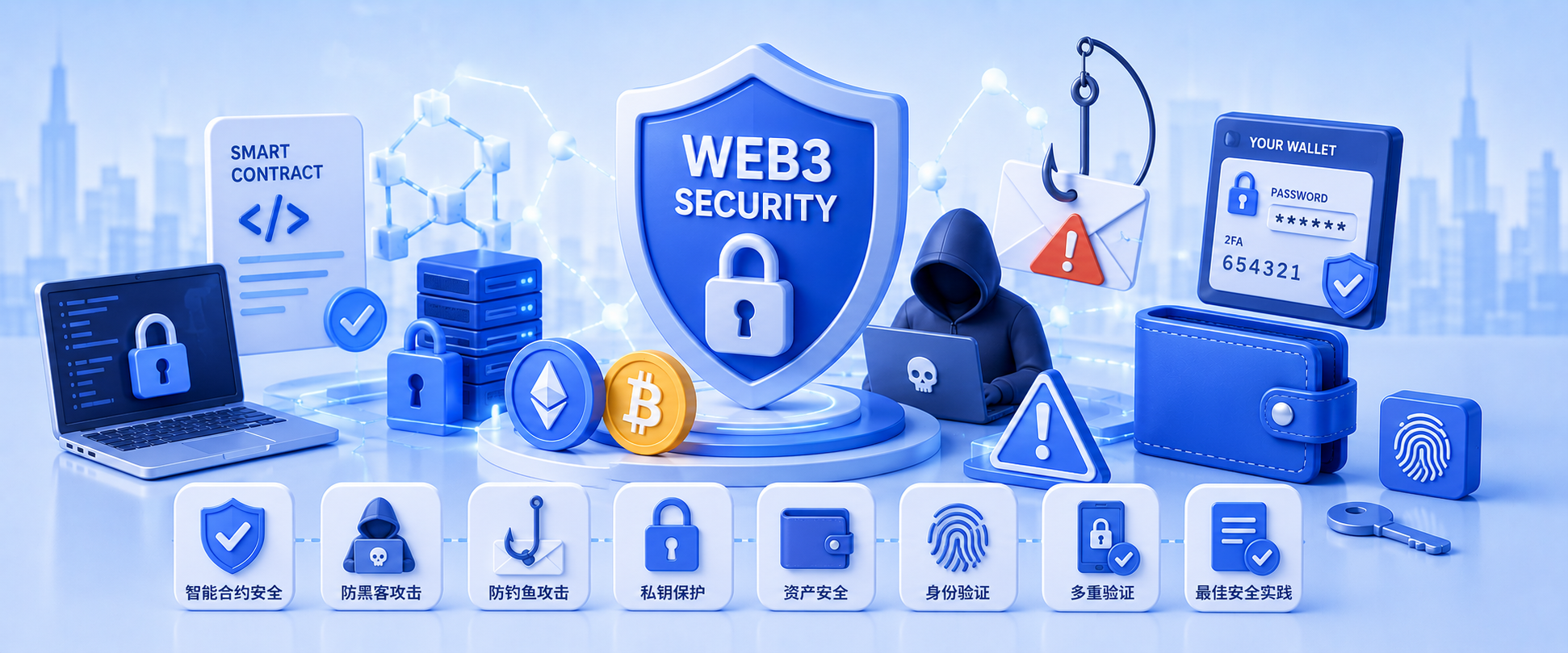
Web3 Exploration Guide
Explore the decentralized Web3 world — DeFi, RWA, NFT and on-chain assets. Understand the blockchain ecosystem beyond crypto basics.
Welcome to the Web3 Exploration Guide! Web3 represents the next generation of the internet — a decentralized digital world where users control their data and assets. This guide curates CoinVado’s best content on DeFi, RWA, NFTs, on-chain assets, and more.
DeFi: Decentralized Finance
DeFi provides blockchain-based financial services without traditional intermediaries.
- DeFi Complete Guide 2026 — From basics to Aave lending, Uniswap DEX, and liquid staking
- What is DeFi? Beginner’s Guide — DeFi core concepts for absolute beginners
- Aave Lending & Borrowing Guide — How to earn interest and borrow on Aave
Goal: Understand DeFi vs traditional finance, master lending and trading basics.
RWA: Real World Assets
RWA tokenization is one of the most important trends, bridging real estate, bonds, and other assets to the blockchain.
- On-Chain Assets Guide: Wallet to RWA — Understand on-chain assets and RWA tokenization trends
- RWA Real World Assets Investment Guide 2026 — Deep RWA sector analysis
- Top 5 RWA Projects Analysis — Side-by-side comparison of the most promising RWA projects
Ethereum & Smart Contracts
Ethereum is Web3’s infrastructure — understanding it is key to exploring the ecosystem.
- Ethereum Complete Guide 2026 — Smart contracts, EVM, L2 scaling, ERC standards
- Ethereum Smart Contracts Beginner Guide — How smart contracts work and their applications
Stablecoins
- Stablecoin Complete Guide: USDT vs USDC vs DAI — Issuance mechanisms and peg principles
- USDT vs USDC 2026 Deep Comparison — Comparing security, transparency, and regulation
Continue Learning
After exploring Web3, reinforce your foundations:
- Crypto Beginner’s Complete Guide — Full learning roadmap
- Bitcoin Complete Guide — Understand the king of crypto
- Wallet Security Guide — Protect your digital assets
Frequently Asked Questions (FAQ)
What is Web3? How is it different from Web2?
Web3 is the decentralized next-generation internet — users own their data, identity, and assets instead of a few big companies controlling them centrally like in Web2. Core elements: blockchain (decentralized ledger), smart contracts (programmable rules), wallets (digital identity), and tokens (economic incentives). It lets users “own” their assets and relationships on the internet rather than “renting” platform services.
What is DeFi and what can I do in it?
DeFi (Decentralized Finance) is financial services built on blockchain, without banks or intermediaries. You can: ① Lend/borrow (deposit for interest or borrow against collateral on protocols like Aave); ② Trade (swap tokens on DEXs like Uniswap); ③ Stake/liquidity mine (earn yield through staking or providing liquidity). Risks include smart contract bugs, impermanent loss, and liquidation — start small. See the DeFi complete guide.
What is RWA and why is it an important trend?
RWA (Real World Assets) refers to tokenizing real-world assets (real estate, bonds, commodities, etc.) onto the blockchain. Its importance: connecting traditional finance with the on-chain ecosystem, giving trillion-dollar traditional assets on-chain liquidity, composability, and global accessibility. BlackRock’s BUIDL fund and Ondo Finance are leading examples. For investors, RWA offers new channels for asset allocation. See the RWA investment guide.
What tools do I need to start with Web3?
Three essentials: ① A wallet (e.g. MetaMask) — your Web3 identity and asset management tool; ② ETH — gas fees and trading assets on mainstream chains; ③ A browser extension or mobile app — the gateway to DApps. Optionally set up a hardware wallet for large holdings. Note: always learn wallet security first (backup seed phrases, avoid phishing). See the wallet complete guide.
How do I tell if a Web3 project is legitimate?
Several dimensions: ① whether the contract is audited and open-source; ② whether the team background is transparent and traceable; ③ whether the tokenomics is sound (real utility, fair distribution); ④ community activity and actual user numbers; ⑤ beware of “guaranteed returns” or “zero risk” claims. Anything promising fixed high returns is basically a scam. Rely on analyses from authoritative researchers (e.g. Binance Research).
What role do stablecoins play in Web3?
Stablecoins are the infrastructure of Web3, providing value-stable, programmable USD equivalents: as trading units of account (switching volatile assets to stablecoins to hedge), as loan collateral and interest vehicles, and as liquidity bridges across chains and platforms. Main choices: USDT (widest acceptance), USDC (compliant and transparent), DAI (decentralized). They play a core role in all Web3 applications, from DeFi to RWA. See the stablecoin complete guide.