



What is crypto staking? In simple terms, staking means locking your cryptocurrency in a Proof of Stake (PoS) blockchain to help validate transactions and produce new blocks — and earning rewards for doing so. Think of it as earning interest on a deposit, except your "deposit" is crypto and the "interest" comes from the blockchain's inflation rewards and transaction fees.
As of July 2026, approximately 34 million ETH is staked on the Ethereum network, representing 28% of total ETH supply1, with a combined value exceeding $110 billion. PoS has become the dominant consensus mechanism — over 70% of the top 20 cryptocurrencies by market cap now use some form of Proof of Stake2.
This guide covers everything you need to know about crypto staking: how it works, different staking methods, yield comparisons across major blockchains, liquid staking and restaking, and the risks every staker should understand.
What Is Crypto Staking?
Staking is the core mechanism of any Proof of Stake blockchain. In a PoS system, users "lock up" (stake) their tokens with the network, becoming or delegating to validators. Validators are responsible for packaging and verifying transactions and producing new blocks. In return, they receive newly minted tokens and a share of transaction fees from the blocks they create. Staking is one of the main income sources in DeFi — for a full overview, see our DeFi 2026 complete guide.
Key parameters of staking:
| Parameter | Description | Ethereum Example |
|---|---|---|
| Minimum Stake | Minimum tokens to run a validator | 32 ETH |
| Annual Yield (APR) | Yearly return on staked amount | 3.0%-5.0% |
| Unstaking Period | Time from exit request to withdrawal | 12h-several days |
| Slashing Penalty | Penalty for validator misbehavior | Up to 1 ETH |
As of July 2026, Ethereum's base staking yield (protocol issuance) is approximately 3.0%-3.5% APR. Combined with priority fees and MEV rewards, the effective annual return reaches 3.5%-5.0%1.
The security foundation of PoS staking is "economic punishment" — validators who attempt to cheat the network (double-signing, double-voting, or extended downtime) get part of their staked tokens automatically slashed (confiscated). This mechanism makes the cost of attacking the network far exceed any potential reward.
Staking Rewards Comparison Across Major Blockchains
Different blockchains offer widely varying staking yields, determined by inflation rate, staking ratio, and network activity. Here are the key staking metrics for major PoS blockchains as of July 2026:
| Blockchain | Staking APR | Staking Ratio | Min. Stake | Unstake Period |
|---|---|---|---|---|
| Ethereum (ETH) | 3.0%-5.0% | 28% | 32 ETH / 0.01 ETH* | 12h-several days |
| Solana (SOL) | 6.5%-7.5% | 65% | 0.01 SOL | 2-3 days |
| Cardano (ADA) | 3.0%-4.0% | 62% | 1 ADA | 20 days |
| Polkadot (DOT) | 12%-16% | 52% | 1 DOT | 28 days |
| Avalanche (AVAX) | 8%-11% | 57% | 25 AVAX | 2 weeks |
| BNB Chain (BNB) | 4%-8% | 11% | 0.1 BNB | 7 days |
*32 ETH is the threshold for running a personal validator node; 0.01 ETH is the minimum for liquid staking or exchange staking.
Polkadot offers the highest yields (12%-16%) but also the longest unstaking period (28 days) and DOT's price can be volatile. Ethereum's base yield is modest at 3%-5%, but combining liquid staking with DeFi strategies can push effective yields to 6%-12%. Solana strikes a good balance at 6.5%-7.5% APR with a moderate unstaking period3.
Four Ways to Stake Your Crypto
Depending on your technical comfort and available capital, there are four main approaches to staking:
1. Run Your Own Validator Node
Running a personal Ethereum validator requires 32 ETH (approximately $100,000) and technical know-how. You need a 24/7 server, validator client software, and ongoing maintenance. This approach maximizes returns (no middleman fees) but is impractical for most individual users. There are approximately 1 million active validators on Ethereum as of July 20261.
2. Liquid Staking Protocols
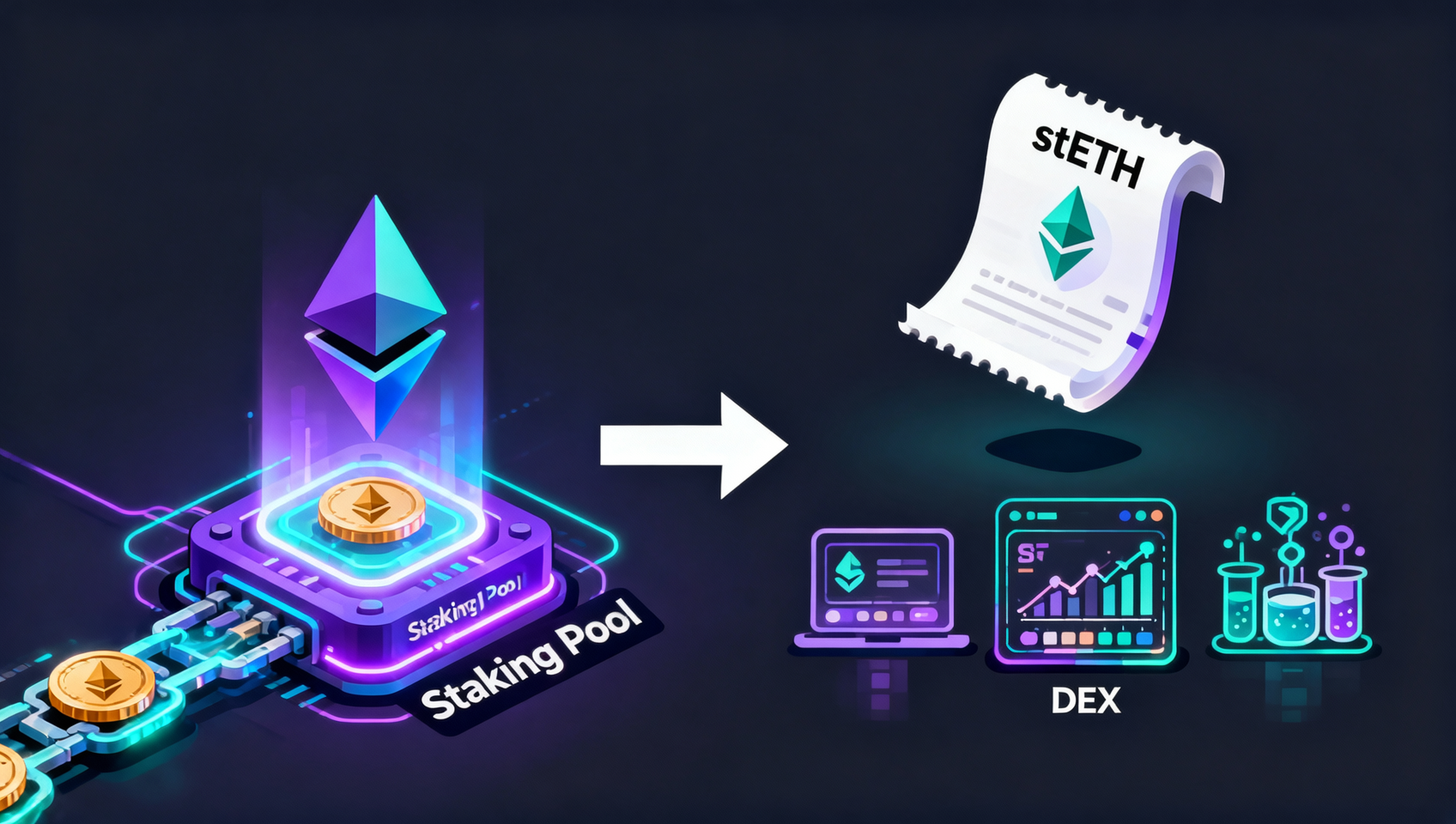
Liquid staking has become the dominant staking method in 2026. You deposit ETH through protocols like Lido or Rocket Pool, which operate validators on your behalf and give you a "receipt token" (stETH or rETH) representing your staked position. The key innovation: you can use this receipt token elsewhere in DeFi while your ETH continues earning staking rewards.
- Minimum Investment: Just 0.01 ETH (~$30)
- Advantage: Capital efficiency — use your staked position in multiple DeFi protocols
- Leading Protocols: Lido (market share 28%), Rocket Pool (market share 10%), Frax Finance4
3. Centralized Exchange Staking
Binance, OKX, Coinbase, and other major exchanges all offer one-click staking services. Simply find the "ETH Staking" or "Staking" product in the Earn section and activate it. The exchange handles validator operations, reward distribution, and withdrawal processing.
- Best For: Beginners who don't want to manage technical details
- APR: Typically 0.5%-1% lower than on-chain staking (exchange fee)
- Advantage: No minimum threshold, flexible redemption (some products have lock-up periods)
4. Staking Pools
Decentralized staking pools like StakeWise and Kiln aggregate multiple users' ETH to run validators collectively, distributing rewards proportionally. Similar to liquid staking but typically without tradeable receipt tokens.
Liquid Staking: A Deep Dive
Liquid staking is one of the most critical infrastructure layers in the 2026 DeFi ecosystem. Its core innovation solves the "liquidity paradox" of traditional staking — you want to earn staking rewards, but you don't want your capital locked up.
Why Liquid Staking Matters
Traditional staking has an obvious pain point: once your ETH is staked, it's frozen. If the market rallies sharply, you can't sell or use the capital — you can only wait through the unstaking process.
Liquid staking solves this by issuing a receipt token that accumulates value over time. You deposit ETH into Lido and receive stETH (Lido Staked ETH), whose exchange rate against ETH gradually increases as staking rewards accumulate:
- Sell your stETH on DEXs like Curve or Uniswap for ETH at any time
- Deposit stETH into Aave or Compound to earn additional lending interest
- Use stETH as collateral for loans — all while the original ETH keeps earning staking rewards
Lido vs Rocket Pool
| Comparison | Lido | Rocket Pool |
|---|---|---|
| Receipt Token | stETH | rETH |
| Market Share | 28% | 10% |
| Minimum Stake | 0.01 ETH | 0.01 ETH |
| Node Model | Whitelisted operators | Permissionless anyone-can-run |
| Decentralization | Medium (DAO-governed) | High (anyone can run a node) |
| DeFi Integration | ⭐⭐⭐⭐⭐ | ⭐⭐⭐⭐ |
Lido excels in liquidity and ecosystem integration — virtually every major DeFi protocol natively supports stETH. Rocket Pool leads in decentralization — anyone holding 16 ETH (mini-pool) or 32 ETH can apply to become a node operator without whitelist approval4.
Restaking: The Advanced Staking Strategy
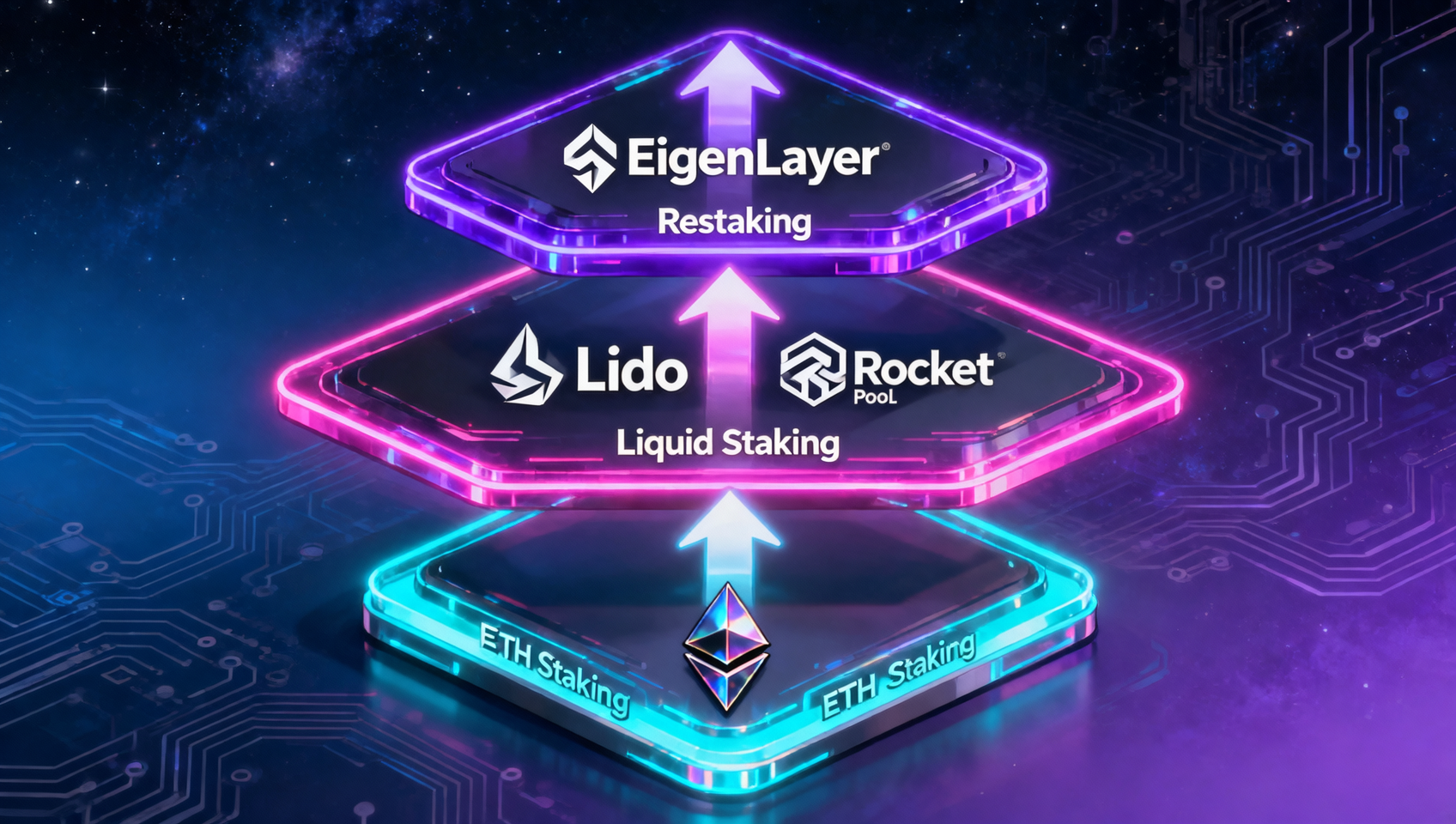
Restaking is the most innovative staking mechanism to emerge in 2024-2026. Pioneered by EigenLayer, restaking lets you take your liquid staking tokens (stETH, rETH) and stake them again to help secure other protocols called AVSs (Actively Validated Services), earning additional rewards.
How Restaking Works
- Layer 1 Staking: Stake ETH through Lido to receive stETH
- Layer 2 Restaking: Restake your stETH into EigenLayer
- Stacked Rewards: Original ETH staking yield + additional restaking rewards
As of July 2026, the restaking ecosystem (including EigenLayer native staking and LRTs — Liquid Restaking Tokens) has surpassed $20 billion in total value locked5. AVSs on EigenLayer include oracles, bridges, data availability layers, and more — providing diverse yield sources for restakers.
Restaking Risks
Higher returns come with higher risks. Beyond standard staking risks, restaking adds:
- Multi-protocol exposure: More protocols means a larger smart contract attack surface
- AVS slashing risk: Not just the beacon chain — the AVS services you protect can also slash
- LRT liquidity risk: LRT tokens may trade at significant discounts during market panic
Staking Risks You Must Understand
All investment carries risk, and staking is no exception. Here are the four critical risks every staker needs to know:
1. Price Volatility (The Biggest Risk)
Price decline is the hidden risk that dwarfs all others. If you bought ETH at $3,500 and staked it, and a year later ETH is at $2,000 — a 43% drop — no 3%-5% staking yield can compensate. Staking rewards can never make up for a significant price decline.
2. Slashing Risk
Validators who violate protocol rules (double-signing, extended offline periods) face slashing — partial confiscation of staked tokens. When using Lido or exchange staking, slashing risk is borne by the protocol or exchange, not individual users. But if you run your own validator, maintaining reliable uptime is essential.
3. Liquidity Lock-Up Risk
Staking inherently locks your capital in exchange for yield. While liquid staking provides much better liquidity, stETH and similar tokens can trade at a discount during extreme market conditions. During the FTX collapse in November 2022, stETH traded at a 5% discount to ETH.
4. Protocol Risk
Liquid staking and restaking protocols are smart contracts — they can be hacked. Choose well-audited, battle-tested protocols with significant TVL and long track records. Lido and Rocket Pool have both undergone multiple independent security audits with no major security incidents to date.
How to Start Staking: A Beginner's Four-Step Guide
Staking is simpler than you might think. Here's how to start earning ETH staking rewards from scratch:
Step 1: Set up a wallet and buy ETH. Install a non-custodial wallet like MetaMask or OKX Web3 Wallet. Purchase ETH on an exchange and transfer a small amount to your wallet. Start with 0.1 ETH to learn the process. No wallet yet? Read our complete MetaMask tutorial.
Step 2: Choose your staking method. For beginners, liquid staking or exchange staking is recommended. If you already use Binance or OKX, you can stake directly in the Earn section. For a non-custodial experience, use Lido or Rocket Pool.
Step 3: Execute the stake. Visit Lido (stake.lido.fi), connect your wallet, enter the amount of ETH to stake, and confirm the transaction. You'll receive stETH within minutes.
Step 4: Manage your position. You can simply hold stETH for passive yield, or take it further by depositing into Aave for lending rewards or using it as collateral. Monitor yields and protocol updates regularly.
Frequently Asked Questions
What is crypto staking and how does it work?
Crypto staking means locking your cryptocurrency in a Proof of Stake (PoS) blockchain network to help validate transactions and produce new blocks. In return, you earn staking rewards — newly minted tokens and transaction fees. Think of it as earning interest on a savings account, but your "deposit" is crypto and the interest comes from the blockchain network.
How much can I earn staking ETH in 2026?
As of July 2026, ETH staking yields approximately 3.0%-3.5% APR from protocol issuance alone. When adding priority fees and MEV rewards, the combined APR reaches 3.5%-5.0%1. Compared to traditional savings rates of 0.1%-0.5%, ETH staking still offers meaningful returns.
What's the difference between staking and liquidity mining?
Staking directly secures a blockchain network by validating transactions — rewards are relatively stable, and the main risks are price volatility and slashing penalties. Liquidity mining means depositing assets into DeFi protocol liquidity pools, earning protocol tokens and transaction fees. Returns are typically higher but so are risks — impermanent loss, smart contract vulnerabilities, and rug pulls.
Liquid staking vs traditional staking — what's the difference?
Traditional staking locks your tokens on-chain — you can't use them for anything else. Liquid staking gives you a "receipt token" (stETH or rETH) that can be freely traded on DEXs, used as collateral in lending protocols, or deposited in DeFi farms — all while your original ETH continues earning staking rewards.
Lido vs Rocket Pool — which is better?
Lido is the largest liquid staking protocol with approximately 28% market share, supporting multiple chains with deep DeFi integration. Rocket Pool is more decentralized — anyone can run a node without whitelist approval. Choose Lido for liquidity and convenience, Rocket Pool for decentralization.
What are the risks of crypto staking?
The main risks are: price volatility (a 50% drop far outweighs any staking yield), slashing (validators who violate rules can have tokens confiscated), and liquidity lock-up (unstaking can take hours to weeks). Liquid staking protocols also carry smart contract risk.
What is restaking (EigenLayer) and how does it work?
Restaking, pioneered by EigenLayer, lets you take your liquid staking tokens (like stETH or rETH) and stake them again to help secure other networks called AVSs. This generates additional yield. As of July 2026, the restaking market exceeds $20 billion in total value locked5.
Can I stake with less than 32 ETH?
Absolutely. Running your own validator requires 32 ETH ($100,000), but you can start with as little as 0.01 ETH ($30) through liquid staking protocols or exchange staking services.
Is staking on Binance or OKX safe?
Exchange staking is convenient for beginners but your assets are custodial. Exchange staking APRs are typically 0.5%-1% lower than on-chain staking. For maximum security, use non-custodial liquid staking.
Can I withdraw my staked crypto at any time?
Traditional staking does not allow instant withdrawal. On Ethereum, exiting takes approximately 12-24 hours, extendable to several days. Liquid staking is more flexible — stETH or rETH can be sold on DEXs at any time.
Further Reading
- What is Gwei? Complete Ethereum Gas Fee & Gwei Indicator Guide — Understand the Gwei unit, EIP-1559 base and priority fees, and how to read network congestion
- On-Chain Guide — Blockchain from Zero — Beginner crypto tutorials and blockchain fundamentals
- Ethereum Official Staking Documentation — Ethereum Staking Launchpad official guide
- Messari Research: The Crypto Theses 2026 — Comprehensive crypto market research including staking economy analysis
- Bloomberg Crypto — Mainstream financial coverage of the crypto market
- question: What is crypto staking and how does it work? answer: | Crypto staking means locking your cryptocurrency in a Proof of Stake (PoS) blockchain network to help validate transactions and produce new blocks. In return, you earn staking rewards — newly minted tokens and transaction fees. Think of it as earning interest on a savings account, but your "deposit" is crypto and the interest comes from the blockchain network. Major PoS blockchains include Ethereum, Solana, Cardano, and Polkadot.
- question: How much can I earn staking ETH in 2026? answer: | As of July 2026, ETH staking yields approximately 3.0%-3.5% APR from protocol issuance alone. When adding priority fees and MEV (Maximal Extractable Value) rewards, the combined APR reaches 3.5%-5.0%1. Compared to traditional savings rates of 0.1%-0.5%, ETH staking still offers meaningful returns. However, staked ETH cannot be withdrawn instantly — you must wait for the exit queue, and market volatility during this period is your own risk.
- question: What's the difference between staking and liquidity mining? answer: | Staking directly secures a blockchain network by validating transactions — rewards are relatively stable, and the main risks are price volatility and slashing penalties. Liquidity mining means depositing assets into DeFi protocol liquidity pools for traders to swap against, earning protocol tokens and transaction fees. Returns are typically higher but so are risks — impermanent loss, smart contract vulnerabilities, and rug pulls are all real concerns.
- question: Liquid staking vs traditional staking — what's the difference? answer: | Traditional staking locks your tokens on-chain — you can't use them for anything else while staked. Liquid staking gives you a "receipt token" (like Lido's stETH or Rocket Pool's rETH) that represents your staked position plus accumulated rewards. This receipt token can be freely traded on DEXs, used as collateral in lending protocols, or deposited in other DeFi farms — all while your original ETH continues earning staking rewards.
- question: Lido vs Rocket Pool — which is better? answer: | Lido is the largest liquid staking protocol with approximately 28% market share of staked ETH. It supports multiple chains, requires a minimum of just 0.01 ETH, and has the deepest DeFi integration — stETH is accepted by virtually every major DeFi protocol. Rocket Pool is more decentralized — anyone can run a node without whitelist approval. Both are excellent choices. Choose Lido for liquidity and convenience, Rocket Pool for decentralization.
- question: What are the risks of crypto staking? answer: | The main risks are: price volatility (a 50% price drop far outweighs any staking yield), slashing (validators who violate protocol rules can have part of their staked tokens confiscated), and liquidity lock-up (unstaking can take hours to weeks depending on the chain). Liquid staking protocols also carry smart contract risk. However, reputable protocols like Lido and Rocket Pool have never experienced a slashing event.
- question: What is restaking (EigenLayer) and how does it work? answer: | Restaking, pioneered by EigenLayer, lets you take your liquid staking tokens (like stETH or rETH) and stake them again to help secure other networks called AVSs (Actively Validated Services). This generates additional yield on top of your original staking rewards. As of July 2026, the restaking market exceeds $20 billion in total value locked5. Restaking introduces additional risks — broader slashing conditions and higher protocol complexity.
- question: Can I stake with less than 32 ETH? answer: | Absolutely. Running your own Ethereum validator node requires 32 ETH (approximately $100,000), but you can start staking with as little as 0.01 ETH (about $30) through liquid staking protocols (Lido, Rocket Pool) or centralized exchange staking services (Binance, OKX, Coinbase). This makes staking accessible to virtually anyone.
- question: Is staking on Binance or OKX safe? answer: | Exchange staking is the most convenient option — perfectly suitable for beginners. The exchange handles validator operations, and you receive rewards with a single click. However, your assets are custodial — if the exchange experiences issues, your staked assets could be affected. Exchange staking APRs are typically 0.5%-1% lower than on-chain staking due to platform fees. For maximum security, use non-custodial liquid staking.
- question: Can I withdraw my staked crypto at any time? answer: | Traditional staking (running your own validator) does not allow instant withdrawal. On Ethereum, exiting the validator queue currently takes approximately 12-24 hours, and can extend to several days during congestion. Liquid staking is far more flexible — your stETH or rETH can be sold on DEXs at any time without waiting for the unstaking queue, though slippage and market liquidity affect the final amount received.
Footnotes
-
Dune Analytics, Ethereum Staking Dashboard, queried July 29, 2026. ↩ ↩2 ↩3 ↩4 ↩5
-
Staking Rewards, Major Blockchain Staking Data Summary, July 2026. ↩
-
Messari, The Crypto Theses 2026 — Staking Economy Chapter. ↩
-
DefiLlama, Liquid Staking Protocol Data, July 29, 2026. ↩ ↩2
-
EigenLayer Official Dashboard, Restaking TVL, July 2026. ↩ ↩2 ↩3